

Combo combines 7 years worth of John Hinshaw's articles
Combo combines 7 years worth of John Hinshaw's articles
Combo combines 7 years worth of John Dolan's articles
Nearly every chromatographer needs to do some kind of method development at one time or another.
E-Separation Solutions
Joining us for this discussion are Charles Sadowksi of Smiths Detection; Staff Scientists from Torion Technologies Inc.; and Gareth M. Roberts of Markes International Ltd.
E-Separation Solutions
Without question, the current acetonitrile shortage has become the hottest topic in the chromatography world in recent memory.
E-Separation Solutions
Few of us could have foreseen the dramatic changes that have taken place in the world in general and in the field of chromatography in particular in the months since last summer's first PharmSep Symposium.
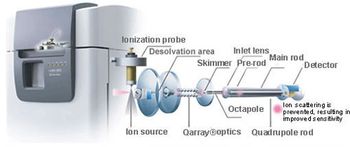
Delivering the world's fastest scanning speed and outstanding sensitivity, the compact LCMS-2020 quadrupole mass spectrometer is truly a jet engine for quicker and more accurate detection of trace impurities, environmental pollutants and other contaminants.
LCGC Europe eNews
The Massachusetts Biotechnology Council (MBC) has announced an alliance with Fisher Scientific, part of Thermo Fisher Scientific. As a primary supplier, Fisher Scientific will support the product and supply chain service needs of Massachusetts biotechnology companies and will help to accelerate the industry's growth.
LCGC Europe eNews
NLG Analytical has signed ZefSci as its distributor for the company?s IQ/OQ/PQ qualification kit in the US and Canada. The agreement, which was formalized at this year?s Pittcon, will allow distribution of the v-kit, which provides IQ/OQ/PQ qualification of HPLC and GC instruments.
After the acquisition of Genentech by Roche last month, the integration of the two companies has begun with the announcement of some changes to the organizational structure and key management positions.
Agilent Technologies (Santa Clara, California) announced its support of prostate cancer research by the University of Michigan?s (Ann Arbor) Center for Translational Pathology through a grant of instruments and funding.
Aigelent Podcast-Tip #4: The Importance of Collecting the Appropriate Number of Data Points Across a Peak for Accurate Results
The Column
Standard HPLC is often performed with mixtures of organic solvents and buffers. Methods have been defined and accepted for several years. A large number of separation methods run with high concentrations of organic solvents depending on the type of stationary phase with more or less environmental hazardous chemicals.
Aigelent Podcast- Tip #1: Reducing Your Consumption of Acetonitrile by 50%
Dionex Corporation (Sunnyvale, California) announced that its next president, chief executive officer (CEO), and member of its board of directors will be Dr. Frank Witney, effecive April 30, 2009.
Researchers from the University of Thessaly (Volos, Greece) used a single-drop microextraction technique with gas chromatography (GC) and nitrogen?phosphorus and electron-capture detection to analyze pesticides in vegetables.
Scientists from Sezione di Tecnologie Alimetari (Firenze, Italy) and the University of California, Davis (Davis, California) analyzed grape aroma compounds in Cabernet Sauvignon grapes using headspace solid-phase microextraction (SPME) with gas chromatography?mass spectrometry (GC?MS).
Waters Corporation (Milford, Massachusetts) announced that the National Cancer Institute?s Center for Cancer Research (Bethesda, Maryland) has purchased the company?s ACQUITY UPLC?Synapt High Definition mass spectrometry (MS) and ACQUITY UPLC?Xevo TQ MS systems for metabolomics research programs.
The SQL*LIMS laboratory information management system (LIMS) from Applied Biosystems (Foster City, California) was selected for the Frost and Sullivan 2008 Vertical Market Penetration Leadership Award for the European LIMS market.
Thermo Fisher Scientific (Philadelphia, Pennsylvania) announced the signing of a partnership with Symyx Technologies (Sunnyvale, California) to market and sell Symyx Notebook and Isentris decision support software.
Researchers from the University of Waterloo (Waterloo, Canada) designed and constructed a cold fiber solid-phase microextraction (SPME) device and applied it to the analysis of off flavors in a rice sample.
Supelco, a division of Sigma-Aldrich (St. Louis, Missouri), announced that its HybridSPE-Precipitation technology has won the SelectScience.net 2009 Scientists? Choice Award for Best New Separations Product in 2008.
Researchers from the Chinese Academy of Sciences (Beijing, China), Beijing Technology and Business University (Beijing, China), and Hebei University (Shijiazhuang, China) used dispersive liquid?liquid microextraction and ultrahigh-pressure liquid chromatography to analyze triclosan, triclocarban, and methyl-triclosan in aqueous samples.
The Column
Today's chromatographers are well aware that low production and high demand for acetonitrile has led to significant price increases in ACN, a favorite solvent used in HPLC.