

All News
Advertisement
E-Separation Solutions
Good morning and welcome to this, the first day of LCGC's daily coverage of Pittcon 2009 from the McCormick Place Convention Center in Chicago, Illinois.
Advertisement

E-Separation Solutions
Welcome back to Chicago and Pittcon 2009. It?s likely to be a lot colder here than it was for Pittcon 2008 in New Orleans, but there should be no shortage of interesting sessions to attend this week.
E-Separation Solutions
Longtime LCGC contributor Dr. Frantisek Svec will receive the prestigious Dal Nogare Award at Pittcon 2009 in Chicago during a technical session on Monday morning.
E-Separation Solutions
Sunday afternoon's plenary lecture at Pittcon 2009 was presented by George M. Whitesides, Woodford L. and Ann A. Flowers University Professor, Department of Chemistry and Chemical Biology, Harvard University. The lecture was titled "Paper Diagnostics - Using First World Science in Developing Economies."
E-Separation Solutions
Pittcon 2009 has brought us back to the windy city, where the technical sessions are sure to be anything but breezy. Sunday afternoon's session titled, "New Stationary Phases for GC and LC," is a prime example of a session that was filled with new information for separation scientists to enjoy.
Advertisement
LCGC Europe eNews
NextGen Sciences has sold its electrophoresis business to Sigma-Aldrich in exchange for a cash payment and royalty payments on revenues for three years. The deal involves the acquisition of the automated gel casting unit, the a2DEoptimizer and optigels, the range of large format pre-cast gels.
LCGC Europe eNews
Tecan and GE Healthcare have announced that the two suppliers will be working together to bring increased quality and efficiency to process development.
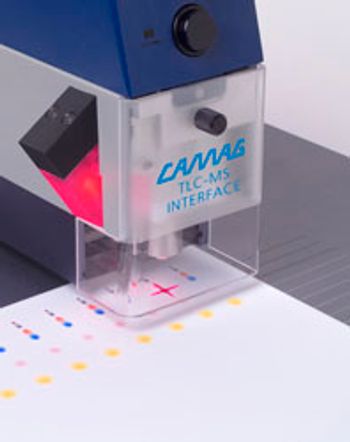
The new CAMAG TLC–MS Interface is a versatile instrument to extract compounds from a TLC/HPTLC plate and feed them into a mass spectrometer for substance identification or structure elucidation. The device can be connected to any brand of LC-coupled mass spectrometer.
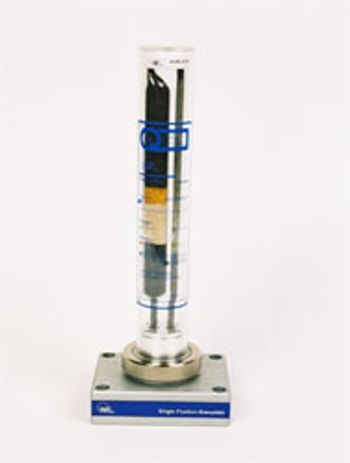
Scientific Glass Technology has introduced the Super Clean Gas filter, which has multiple adsorbents and saturation indicators for purification of helium in GC?MS.
Advertisement
Waters has announced that at the end of February 2009, its Board of Directors authorized the company to repurchase up to $500 million of its outstanding common shares over the next 24 months.
Researchers at the Munich Technical University and Bavarian Health and Food Safety Authority have developed a comprehensive mycotoxin screening method based on the use of an LCTech GPC ULTRA gel permeation chromatography (GPC) instrument, which is distributed in North America by Pickering Laboratories (Mountain View, California) for sample cleanup before separation and detection.
A research group from the University of Valencia (Valencia, Spain) and the University of Alicante (Alicante, Spain) used ionic liquid?based single-drop microextraction followed by gas chromatography (GC) to analyze chlorobenzenes in real water samples.
PerkinElmer (Waltham, Massachusetts) announced the development of interface software for Agilent?s (Santa Clara, California) EZChrom Elite chromatography data system to control PerkinElmer?s Clarus gas chromatographs.
Scientists from Xiamen University (Xiamen, China) employed solid-phase microextraction (SPME) with a carbon nanotube?coated fiber to analyze phenols in aqueous samples.
Metrohm AG (Herisau, Switzerland) has released a method for the determination of melamine in milk powder and other food using ion chromatography after in-line sample dialysis.
Varian, Inc. (Palo Alto, California) announced that its board of directors has elected Garry W. Rogerson, the company?s president and chief executive officer, as chairman of the board.
Researchers from the University of Murcia (Murcia, Spain) developed a sample pretreatment system based on solid-phase microextraction (SPME) followed by gas chromatography with mass spectrometry detection (GC?MS).
Thermo Fisher Scientific (Waltham, Massachusetts) announced that its liquid chromatography?tandem mass spectrometry (LC?MS-MS) instrumentation has been used in the Kenneth L. Maddy Analytical Chemistry Laboratory (Davis, California) for equine drug testing.
Researchers at Universidad Miguel Hernandez (Elche, Spain) analyzed polycyclic aromatic hydrocarbons (PAHs) in aerosols using a thermal desorption gas chromatography?mass spectrometry (GC?MS) method.
LCGC (Chromatographyonline.com) has developed a pilot program with EARL (EARL2learn.com), the most extensive online library of interactive web-based learning material for analytical chemistry.

E-Separation Solutions
Joining us for this discussion are Sky Countryman of Phenomenex and Nicholas H. Snow of Seton Hall University.
E-Separation Solutions
The answer to the following question was provided by LCGC's "LC Troubleshooting" columnist John Dolan. Q: Since acetonitrile is in short supply and the prices have sky-rocketed in recent months, what can be done about replacing this solvent with others for various chromatography applications?
E-Separation Solutions
FMS introduces the first and only "Total Solution" Sample Prep system available that combines three sample prep processes into one economical package. The Total-Rapid-Prep performs the extraction, sample clean-up and concentration for six samples simultaneously in less than a few hours, producing the highest recoveries and best results for all analytes.
E-Separation Solutions
Streptomycin and neomycin are members of the family of antibiotics called aminoglycosides. Aminoglycoside antibiotics are complex organic molecules produced by streptomyces strains and are extremely important in clinical medicine, due to their efficacy and low cost.
E-Separation Solutions
A miniature gas chromatograph is described having the following key features: a miniaturized chemical trap for enrichment, rapid thermal desorption of the trap, a resistively heated capillary column for programmed GC analysis, and a micro-chip based plasma emission detector (PED).
The Column
Incognito The "Ultimate Chromatography Social and Professional Network"...Probably As the trend for using social and professional networking sites takes off, Incognito contributes to the hype by commenting on what's out there for chromatographers. Rapid Large Volume Injection/GC–MS Analysis of Pesticides in Food Prepared by the QuEChERS Method Karin Friedrichs, Heinz-Dieter Winkeler and Hans-Ulrich Baier An SPE-LC–MS–MS Method for Analysing Antidepressants and their Metabolites in Plasma Maria del Mar Ramírez Fernández, Sarah M.R. Wille, Nele Smayn, Michelle Wood, Manuel López-Rivadulla and Gert De Boeck News An analytical thermal desorption alliance, a comprehensive mycotoxin screening method, odour recognition for ants and honeybee research are in the news this month Market Trends and Analysis Market Profile: Molecular Spectroscopy Techniques Glenn Cudiamat

LCGC North America
The authors set out to perform a separation of seven water-soluble vitamins without the use of ion-pair reagents.
Advertisement
Advertisement