

E-Separation Solutions
Polymer Laboratories, now a part of Varian, Inc. has published an application note entitled Efficient Analysis of Biodiesel by HPLC and ELSD.
E-Separation Solutions
Polymer Laboratories, now a part of Varian, Inc. has published an application note entitled Efficient Analysis of Biodiesel by HPLC and ELSD.
E-Separation Solutions
Wyatt Technology has published an application note on branching in high molar mass synthetic amyloses. Amylose is an occasionally-branched biopolymer and, together with amylopectin, the hyper-branched component, a constituent of starch. Determination of branching in amylopectin on the basis of amyloses may be performed with the help of synthetic amyloses. Synthetic amyloses from enzymatic (phosphorolytic) reaction were checked for their linearity.
E-Separation Solutions
Polymer Standards Service-USA Inc., has published an Application Note #10271 on GPC/SEC analysis of Gelatin. A PSS SECcurity GPC System with refractive index detector was used in this analysis.
E-Separation Solutions
Supercritical fluid chromatography (SFC) is gaining wide acceptance in the pharmaceutical industry in support of drug discovery and medicinal chemistry compound separation and purification.
LCGC North America, the leading information provider and most trusted source among chromatographers, has announced PharmSep, a Premiere Symposium for Separation Scientists in Pharmaceuticals.
Ameritox, Ltd. (Midland, Texas), a U.S. leader in pain prescription urine drug monitoring, announced its addition of an LC-MS-MS method for detecting prescription pain medications.
The Column
Automation of Vitamin D Analysis to Provide Higher Throughput Jacqueline Rippington Mixed-Mode Solid-Phase Extraction of Basic Drugs from Biological Fluid Matthew Cleeve Enhancing GC-MS Analysis of Trace Compounds using a Dynamic Approach to Reducing Background Interference Damien Rosser, Gareth Roberts and Liz Woolfenden LC-MS-MS Analysis of Antibiotics in Wastewater Eleni Botitsi, Charalmapia Frosyni, Emmanuel Dasenakis, Despina Tsipi and Dipankar Ghosh News All the news from July 2008 Market trends & analysis Glenn Cudiamat provides a report on India with a specific look at the growth of the analytical instrumentation market. Incognito: Rapidly Becoming Confused! Incognito assesses the choice between superficially porous silica and sub 2 micron stationary HPLC phases. Q&A: SFC - The Innovative Approach The Column spoke to Jeffrey Kiplinger from Averica Drug Discovery about the benefits of using SFC as a purification tool in drug discovery.
The Column
The Unsweet Smell of Success Professor Ling from the National Tsiang Hua University in Taiwan talks about the use of chromatography to monitor air quality. Hyphenated Techniques in Ion Chromatography Andrea Willw, Stefanie Czyborra and Alfred Steinbach Tips & Tricks: GPC/SEC Daniela Held News All the news from August 2007 Time to Rethink Outsourcing? Is outsourcing R&D the future for science, Zosimus wonders. Market Trends & Analysis Glenn Cudiamat reports on the latest developments in single-cell whole genome amplification PCR.
LCGC North America
Thermo Fisher Scientific Inc. (San Jose, California), has been presented with two 2008 Frost & Sullivan Best Practices awards for Market Leadership and Competitive Strategy Leadership in Informatics.
LCGC North America
Ronald E. Majors, a senior chemist at Agilent and LCGC's "Column Watch" and "Sample Preperation Perspectives" columnist, received the Chromatographic Society's 2007 Martin Gold Medal at HPLC 2008.
LCGC Europe
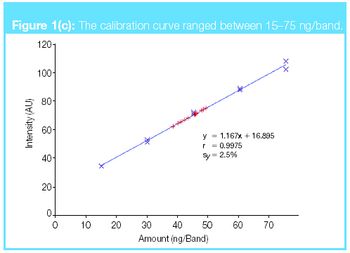
Planar chromatography celebrates its 70th birthday. The technique dates back to 1938 when, at the Pharmaceutical Institute in Kharkov, Ukraine, N.A. Izmailov and M.S. Shraiber first devized a circular thin-layer chromatogram,1 which was called spread layer or spot chromatography at the time.
LCGC Europe
Planar chromatography celebrates its 70th birthday. The technique dates back to 1938 when, at the Pharmaceutical Institute in Kharkov, Ukraine, N.A. Izmailov and M.S. Shraiber first devized a circular thin-layer chromatogram,1 which was called spread layer or spot chromatography at the time.
LCGC North America
Walt Jennings briefly sketches a path, occasionally humorous, occasionally somber, from the time of his Ph.D. candidacy in 1953 to the present day.

LCGC Europe
In gradient mode, the quality of the analysis will be influenced by the performance of the proportioning and mixing of the eluents at any time during a given chromatogram.
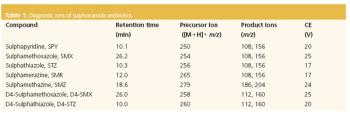
This article describes the development of a method for the determination of sulphonamide antibiotics at trace levels in effluent wastewaters by LC?MS?MS to determine its capability for the detection of pharmaceutical compounds before they reach the aquatic environment.
LCGC North America
RVM Scientific (Santa Barbara,California), a manufacturer of direct heating/cooling systems for laboratory instruments, has been acquired by Agilent Technologies (Palo Alto, California).
LCGC Europe
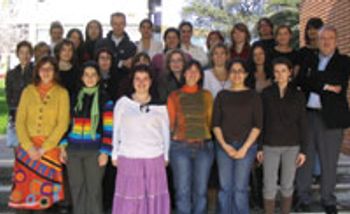
Research Group: Professor Maria Celia Garcia-Ãlvarez-Coque, Department of Analytical Chemistry, Faculty of Chemistry, University of Valencia, Valencia, Spain.
LCGC North America
The Pittsburgh Conference announced the launch of its 2009 website, www.pittcon.org, containing relevant information for conferees and exhibitors about Pittcon 2009, which will be in Chicago, Illinois, McCormick Place, March 8–13, 2009.
LCGC Europe
ESA Biosciences has archived its most recent webinar called "Is Ion Analysis Bringing You Down?" which was produced to give chromatographers insight into efficient and cost-effective strategies for ion analysis using high performance liquid chromatography (HPLC). The webinar addresses many of the concerns that many chromatographers face with ion analysis and includes presentations and a Q&A session featuring ESA scientist, Dr. Ian Acworth, along with industry experts from Synomics Pharmaceutical Services and Johnson & Johnson Pharmaceutical.
LCGC Europe
A decade or two ago, the primary users of mass spectrometers were probably graduates of doctoral programmes specializing in mass spectrometry (MS). But as the science evolved and merged with the analytical mainstream, manufacturers redoubled their efforts to make their instruments and operating software user-friendly. These days, specialists in various disciplines use MS as an analytical tool, a development that demands that instrument and software engineers pay close attention to ease-of-use issues and better understand how - and for what purposes - their instruments are used.
LCGC Europe
Research Group: Professor Maria Celia Garcia-Ãlvarez-Coque, Department of Analytical Chemistry, Faculty of Chemistry, University of Valencia, Valencia, Spain.
Waters Corporation (Milford, Massachusetts) has unveiled its new brand showcase celebrating the achievements of customers and their scientific advancements made possible with Waters technology.

LCGC Europe
ISC 2008 - the 27th International Symposium on Chromatography will be held from 21–25 September 2008 in Münster, Germany.
US researchers have developed a new LC-MS-MS method of detecting if athletes have taken drugs to artificially boost testosterone and increase physical performance.
Workers at the University of Waterloo (Waterloo, Ontario, Canada) combined a needle trap device and a dynamic headspace method to sample an aqueous BTEX (benzene, toluene, ethylbenzene, and p-xylene) mixture.
OI Corp (College Station, Texas), a provider of a variety of technologies in the chemical analysis field, has entered into an agreement with DANI Instruments SpA (Cologno Monzese, Italy), a developer of GC instruments and accessories.
Analtech Inc. (Newark, Delaware) has launched a unique ad campaign designed to get younger generations interested in chromatography.
Biotage (Uppsala, Sweden) announced plans to sponsor summer programs for chemists to learn about the latest approaches for the rapid production of novel compounds.
A group of researchers from Universita degli Studi di Parma (Parma, Italy) developed sol-gel?synthesized coatings for solid-phase microextraction (SPME) fibers for analyzing trace-level polycyclic aromatic hydrocarbons in water.
Researchers from the UFZ-Helmholtz Centre for Environmental Research (Leipzig, Germany) used an accelerated membrane-assisted cleanup technique for the analysis of organic compounds in lipid-rich biological samples.