
LCGC Interviews
Latest News
Advertisement
Latest Videos
Advertisement
More News
Antonio Ferracane discusses moving to minimal sample preparation for PAH analysis, and why matrix-matched calibration can replace cleanup steps.
Antonio Ferracane outlines a combined technique using cryogenic peak compression and pseudo-MRM to sharply boost sensitivity for trace PAHs.
Giorgia Purcaro from the University of Liege (Belgium) discusses a laboratory technique for more accurately detecting harmful oil contaminants in edible oils than the current official method.
During her PhD at BOKU University Vienna, Lidija Kenjerić developed a multi-class UHPLC–MS/MS quantitative method covering 931 mycotoxins and secondary metabolites within an 11-min runtime, providing a scalable solution for routine testing, regulatory, and emergency response.
Gas chromatography-mass spectrometry (GC–MS) and liquid chromatography-mass spectrometry (LC–MS) identify volatile and nonvolatile flavor drivers shaping lager liking among high-flavor-preference consumers.
Stefan Van Leuwen and Jana Pulkrabova—co-chairs of RAFA 2026—elaborate on why separation scientists involved in food analysis should attend RAFA 2026, which takes place at the Clarion Congress Hotel Prague, Prague, Czech Republic, from November 3–6, 2026.
MOH contaminants in food pose safety risks, making reliable chromatographic detection essential.
LCGC International spoke to Maria Halabalaki, an associate professor at the National and Kapodistrian University of Athens, about how dried spot microsampling could transform food testing.
Ana Rodríguez-Bernaldo de Quirós of the University of Santiago de Compostela discusses how non-targeted gas chromatography–mass spectrometry (GC–MS) can reveal complex chemical mixtures in bioplastic food packaging, raising important safety questions and concerns for consumers.
Hans-Gerd Janssen explores the reality of real-time analytical measurement.
HTC-19 Insights: Strategies To Improve Peak Integration Accuracy and Data Reliability
Published: | Updated:
30% of GC–MS peak annotations and integrations have been observed to be inaccurate. Hans-Gerd Janssen highlights some of the most promising strategies to improve data reliability and reduce errors.
Hans-Gerd Janssen highlights the important innovations and challenges remaining using hyphenated separation science techniques in food analysis.
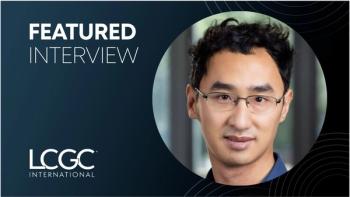
Bingchuan Wei describes how to cultivate a culture of innovation and calculated risk-taking while operating within the compliance demands of biopharmaceutical drug development.
Bingchuan Wei shares practical guidance for early-career scientists seeking to transition into industry drug development across diverse therapeutic modalities.
Bingchuan Wei reflects on how to connect high-level patient and medical goals to the highly technical analytical tools required to meaningfully support ADC drug development decisions.
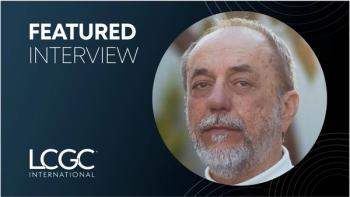
Fernando Lanças discusses miniaturized liquid sample preparation for greener LC–MS/MS workflows in environmental analysis, favoring SUPRAS and DES solvents.
Bingchuan Wei discusses how robust ADC characterization strategies meet regulatory expectations and how stronger methodologies can accelerate candidate selection to clinical approval.
Bingchuan Wei identifies the toughest unresolved analytical challenges in ADC development and highlights the emerging technologies he sees as most capable of closing those gaps.
Bingchuan Wei of Genentech explains how HIC-MS integrates separation and mass detection to resolve and quantify individual DAR species with greater precision than standalone HIC or MS alone.
"Peak to Plate: Expert Insights in Food Analysis" explores how chromatography and mass spectrometry help experts detect contaminants, verify authenticity, and advance food analysis.
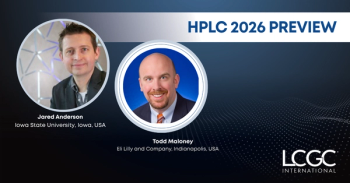
The 55th International Symposium on High Performance Liquid Phase Separations and Related Techniques (HPLC 2026) conference will take place from June 6–11, 2026, in Indianapolis, Indiana. Conference Chairs, Todd Maloney from Eli Lilly and Company and Jared Anderson from Iowa State University, highlight what the conference has to offer the chromatography community.
Alba Rodriguez Otero combined liquid chromatography with high resolution mass spectrometry (LC–HRMS) with hierarchical cluster analysis to interpret the non-targeted features to assess this novel workflow to asses novel materials for wastewater treatment.
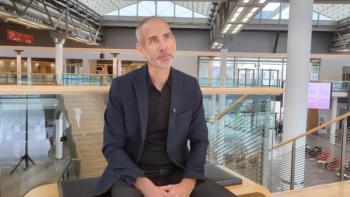
Jef Focant on whether workflows transfer between biological matrices, and which holds the most promise for minimally invasive disease monitoring.
Jef Focant considers how far we are from fully automated, standardized GC×GC data processing pipelines accessible to labs without specialist chromatography knowledge.
André Striegel gives an update on the evolution of macromolecular separation science and the rationale behind recently publishing his aptly named reference text book: "Macromolecular Separation Science".
Advertisement
Advertisement
Trending on LCGC International
1
Industry Roundup: Shimadzu Unveils New High-End UHPLC System Aimed at Reducing Laboratory Downtime
2
VASE-GC-MS Detects Personal Care Products in Fish
3
LC-MS/MS Compares Hair Hormone Sampling Methods
4
Industry Roundup: Gerstel Showcased New Twister Phases and Automated Liner Exchange Technology at EPRW 2026 in Rotterdam
5