
LCGC Interviews
Latest News
Advertisement
Latest Videos
Advertisement
More News
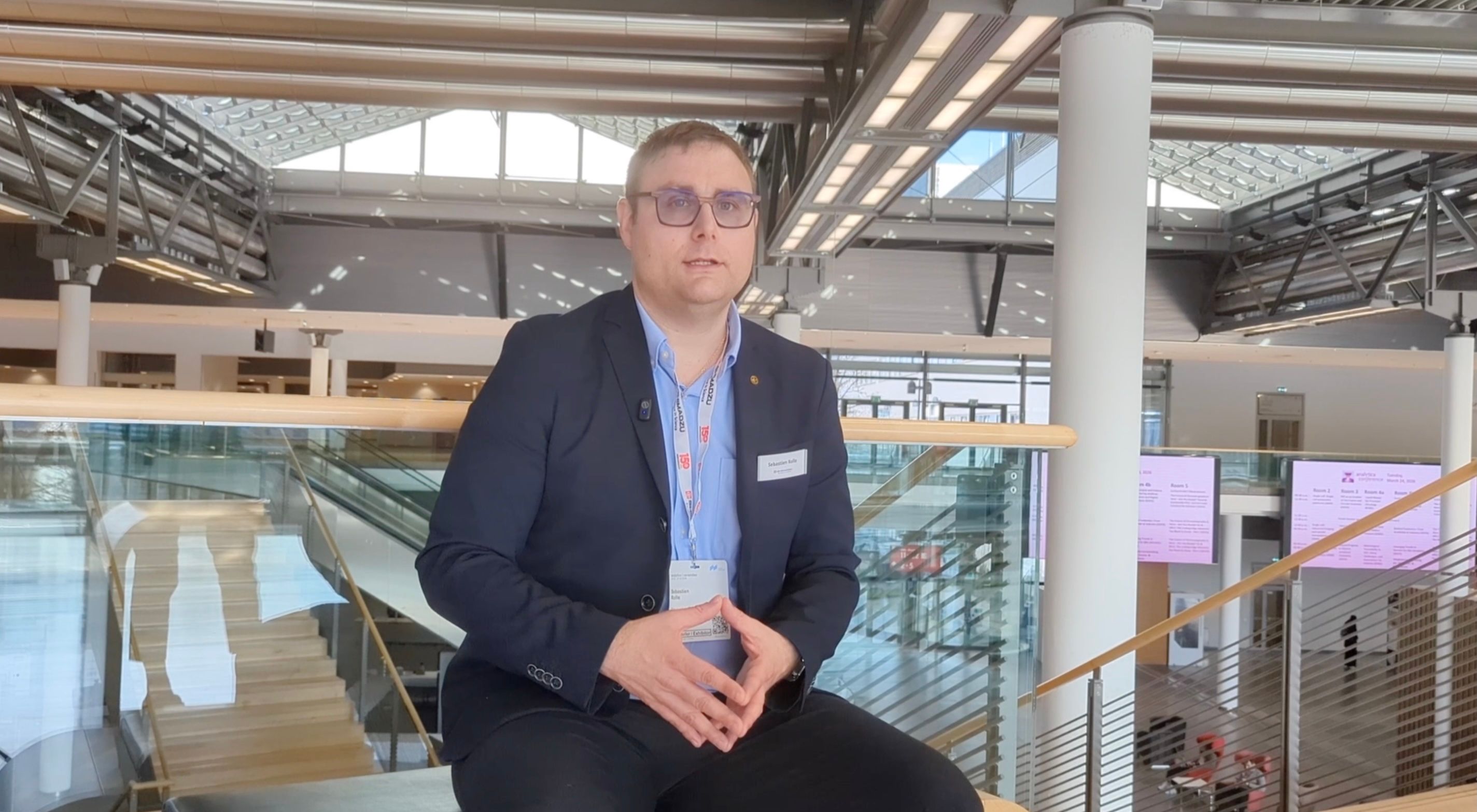
Sébastien Rolle explores the practical barriers preventing wider adoption of SFE and SFC, and what instrument manufacturers can do to lower them.
Sébastien Rolle discusses the trade-offs between greener instrument design and analytical performance, addressing sensitivity, throughput, and method robustness for laboratory scientists.
With open access to GreenSOL, Elia Psillakis describes how laboratories are adopting it in practice.
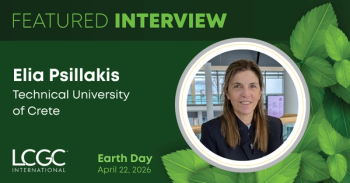
The first assessment of deuterated solvents reveals significant, often overlooked environmental burdens tied to essential analytical reagents.
Elia Psillakis challenges the assumption that bio-based solvents are always greener, urging labs to adopt evidence based choices over simple origin claims.
Elia Psillakis discusses how a life cycle view of solvents exposes unexpected impacts in chemicals long considered safe, challenging entrenched ideas of greenness in analytical labs.
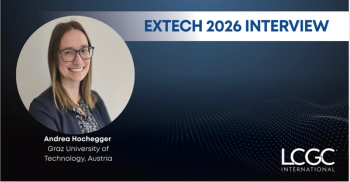
Andrea Hochegger from Graz University of Technology, Austria describes the benefits that comprehensive two-dimensional GC (GC×GC–MS) offers over conventional GC–MS to resolve complex mixtures from recycled packaging materials. Andrea will present on this topic at Extech 2026, which will take place at the University of Liege, Gembloux, Belgium from July 6–9 2026.
Sébastien Rolle examines four levels of manufacturer sustainability impact and questions whether the analytical chemistry industry is moving fast enough across all fronts.
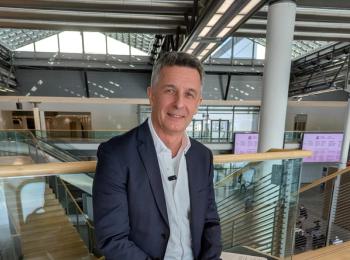
Gauthier Eppe discusses the vast data complexity that arises when ion mobility is layered on top of HRMS in non-targeted contaminant screening workflows.
Gauthier Eppe discusses how applicable the SWIM approach is beyond halogenated POPs.
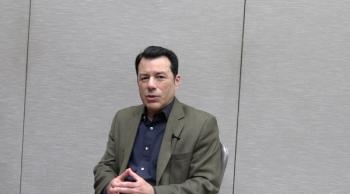
André Striegel recently published a book called "Macromolecular Separations". In this segment, he highlights the most significant technological advances and changes in macromolecule analysis in the last ten years.
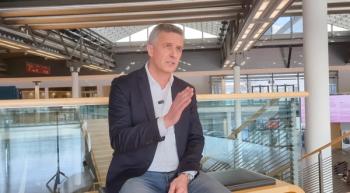
The sliding windows in ion mobility (SWIM) approach leverages predictable correlations between retention time and collision cross-section values to improve confidence in identifying semi-volatile contaminants by GC-IMS-HRMS.
André Striegel examines the major hurdles facing macromolecular separations today and discusses how chromatographers can work to overcome them.
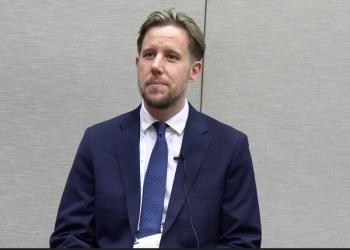
At Pittcon 2026, LCGC International Emerging Leader Award Winner, Bob Pirok, emphasized the importance of incorporating chromatographic expertise into machine learning approaches for successful automated method development.
At analytica 2026, Gauthier Eppe described adding ion mobility–HRMS to GC–HRMS workflows to support analysis of environmental pollutant mixtures.
André Striegel discusses how work in industry, academia, and government has shaped his view of innovation in separation science and practical impact.
At Pittcon 2026, Dal Nogare Award winner André Striegel discusses unresolved chromatography fundamentals and outlines research paths for progress.

Rasmus Bro shows how generative AI extends chemometrics by automating curation, linking analytical data with text knowledge, and improving interpretation.
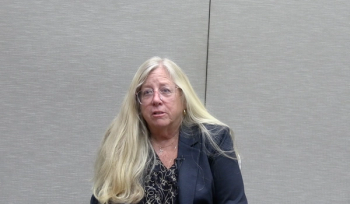
At Pittcon 2026, Mary Ellen McNally discussed sustainable chromatography, highlighting SFC, low-solvent LC, and greener sample prep to cut waste in industrial labs.

Kevin Schug identifies the key challenges preventing wider uptake of molecular encoding and machine learning tools in everyday analytical laboratory settings.
Kevin Schug examines how models trained on known compounds perform when applied to unseen molecules or transferred to new experimental setups.
Kevin Schug outlines the criteria used to select machine learning methods for analytical problems and how success is defined and evaluated.

Peter Tranchida on the robustness of enantiomeric ratio profiling across food types.
Kevin Schug explores how molecular encoding bridges chemistry and data science to enhance precision and intelligence in analytical measurements.
Peter Tranchida on how cryogenic band compression boosts sensitivity across analytes.
Advertisement
Advertisement
Trending on LCGC International
1
Industry Roundup: Shimadzu Unveils New High-End UHPLC System Aimed at Reducing Laboratory Downtime
2
VASE-GC-MS Detects Personal Care Products in Fish
3
LC-MS/MS Compares Hair Hormone Sampling Methods
4
Industry Roundup: Gerstel Showcased New Twister Phases and Automated Liner Exchange Technology at EPRW 2026 in Rotterdam
5