
Trends

Latest News


Figure-3_web.jpg

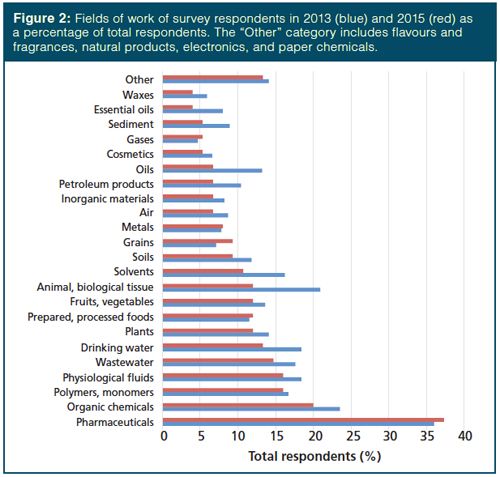
A survey of LCGC readers on sample preparation techniques and methodology investigated trends in technologies being used, sample loads, sample sizes, automation, the use of SPE devices (cartridges, disks, plates, tips), SPE chemistries, selection criteria, and problems encountered.

B_Natalini-860439-1417772668864.jpg

Benedetto Natalini spoke to LCGC about the driving forces in pharmaceutical analysis, including the importance of regulation, chirality, and miniaturization. Natalini also discussed his recent research in chiral chromatography, as well as developments in diagnostics using novel orthogonal liquid chromatography methods to quantify neurotransmitters involved in Parkinson?s disease

Trends in LC–MS

Michal Holcapek from the University of Pardubice in the Czech Republic discusses the surprising advantages of LC–MALDI coupling and gives reasons why ion mobility mass spectrometry is gaining more attention.

Our interviews with separation science experts in specific application areas, such as environmental, food, forensics, and pharmaceutical analysis, have provided the LCGC audience with insights into what's going on in those fields. Here, we have excerpted several recent interviews that were published in our application-focused newsletters and our digital magazine, The Column.

There are some interesting shifts going on in sample preparation. In this interview, Doug Raynie discusses what is behind the trends – starting with the fundamental differences in strategies for solid and liquid samples.

The Column spoke with experts in the pharmaceutical industry about current and emerging trends in pharmaceutical analysis, including the use of LC–MS instead of LC–UV for routine assays, best practices for impurity profiling, and areas where commonly used methods are likely to improve.

In this new short video interview, Doug Raynie of South Dakota State University discusses what is behind the trends starting with the fundamental differences in strategies for solid and liquid samples.

ChiralTech-840952-1408520971794.jpg

Professor Debby Mangelings from the Vrije Universiteit in Belgium, estimates that 60% of newly commercialized drugs possess chiral properties. In this interview with Bethany Degg of The Column, Mangelings discusses the importance of chiral chromatography in pharmaceutical analysis, the challenges of current methods, and where the field is heading next.

DebbyM-835650-1416906088935.jpg

Professor Debby Mangelings from the Vrije Universiteit, Belgium, estimates that 60% of newly commercialized drugs possess chiral properties. In this interview with LCGC, Mangelings discusses the importance of chiral chromatography in pharmaceutical analysis, the challenges of current methods, and where the field is headed next.

Vom 17. bis 20. April 2012 wird München erneut zum internationalen Treffpunkt der Labortechnik-, Analytik- und Biotechnologie-Branche. In diesem Jahr erwartet die Besucher aus der Chemie-, Medizin- und Pharma-Industrie ein besonderes Highlight: drei komplett eingerichtete Labore zu den Themen Forensik und Klinische Diagnostik, Kunststoffanalytik sowie Lebensmittel- und Wasseranalytik.

Mt&A-757847-1408611649193.jpg

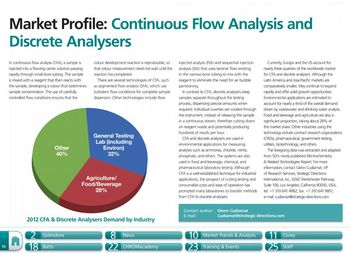
Life science research has been a driving force behind the $40 billion analytical instrument market growth over the last decade, resulting in new products, applications, markets and companies. These opportunities have revitalized revenues for many industry participants and fundamentally changed the analytical instrument business, technological advancements and a shifting of focus and reorganization of top companies.

i8_t-754290-1408609851958.jpg

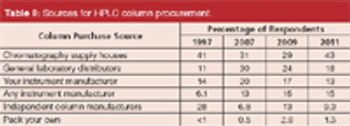
In this month's installment, we look at the results of a recent survey on high performnace liquid chromatography (HPLC) columns, examining the trends in analytical and preparative column use and purchasing patterns since the last survey. Factors investigated in this study were mode and stationary phase usage, particle sizes and column dimensions, column budgets, and the factors influencing buying decisions. Column lifetime and use of guard columns also is considered. Future column buying plans were explored.