


Informative panel discussions featuring key opinion leaders from the separation science sector discussing the latest technology trends and developments in liquid chromatography, gas chromatography, sample preparation, and data handling.
Informative panel discussions featuring key opinion leaders from the separation science sector discussing the latest technology trends and developments in liquid chromatography, gas chromatography, sample preparation, and data handling.

The American Chemical Society’s National Historic Chemical Landmarks program highlights sites and people that are important to the field of chemistry. How are analytical chemistry and separation science recognized within this program?

As data volumes and expectations for fast scientific discovery continue to increase, laboratory-based research organizations can no longer rely on a siloed approach to data management. To remain competitive, scientific organizations need to connect all their data, from discovery through manufacturing, in a unified informatics platform.

LCGC International recently asked analytical scientists in industry and academia to share how mentorship has impacted their careers.

The editors of LCGC International explore how chemists can set themselves apart in an ever-competitive job market, highlighting the latest data in salary and employment statistics.
In this edition of The LCGC Blog, André Striegel provides advice on how to prepare for your first talk or presentation at a scientific conference.
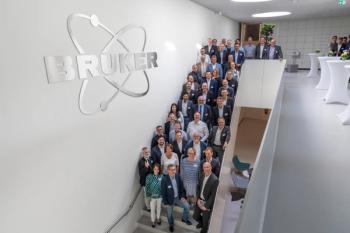
LCGC International spoke to Jeffrey Zonderman, Senior Vice President of Bruker Applied MS, about current trends in mass spectometry and moving to a “chromatography-free” world.

On July 11th, the American Chemical Society will hold a virtual networking session about career pathways for aspiring scientists.

American researchers are moving their laboratories more frequently than ever before. Here’s how that process works, according to scientists who have done it.
Analytical chemists often aren’t recognized for their contributions to the scientific community, authors of a recent article argue.

This year’s conference highlighted how analytical scientists are exchanging research to tackle some of the world’s most critical problems.

The laboratory is the birthplace of scientific innovation and its becoming even more important as scientists work to address some of the world’s most difficult problems.

A concise guide to optimizing chemical procurement.

Extraction technology is a rapidly growing sect in separation science, and ExTech remains the largest conference dedicated to discussing and sharing research done in this field.

The fallout from the Covid-19 global pandemic remains in progress in 2023. Because of the current ongoing global recession, we anticipated that many workers would be concerned about their current jobs and how to adjust to rising inflation. In this year’s LCGC Salary Survey, we sought to explore these topics.

For this year’s career issue, LCGC North America teamed up with the American Chemical Society Subdivision on Chromatography and Separations Chemistry to ask the analytical chemistry community what skills new employees in the field need to succeed. In this report, we analyze the survey results and explore how they can inform the future of analytical chemistry curriculum development.

A great deal has changed in the relationship between employers and the separation scientists who work for them. What does this change mean for both parties?

Since 2008, the Chinese American Chromatography Association (CACA) has hosted career development workshops at Pittcon, featuring over 65 well-established pharmaceutical, biotechnology, and contract research organizations, and academia professionals. This year’s workshop featured five speakers, all of whom shared valuable insights and advice for individuals at different stages of their careers, including graduate students, early-career professionals, high-level managers, and aspiring entrepreneurs.

Separation scientists could strengthen their scientific work by practicing skills commonly associated with the liberal arts.

Understanding separation principles is the key to success. Here's why.

Increasing inclusivity and equity in chemistry will require a positive instructor mindset, as well as invention, exploration, and trials.

Given that artificial intelligence (AI) seems to be on everyone’s mind, it’s worth pausing to look at how AI works, and how it can fit into analytical chemistry.

Undergraduate research and a job or jobs are not the same as an internship. Here's why.

This year's LCGC North America salary and employment survey examines the current landscape of the separation science field through the lens of workers.
Increased diversity in the workplace brings broader perspectives and innovation. Yet many chemical industries, including separation science, lack the diversity that is representative of the population. To fix this problem, we must start at the beginning of the pipeline.