

News|Videos|June 25, 2025
PFAS Lists and Libraries
Advertisement
The panelists discuss the development and application of PFAS spectral libraries and databases, emphasizing their critical role in enabling accurate compound identification. They highlight the importance of maintaining comprehensive, well-curated, and regularly updated resources to keep pace with the growing diversity of PFAS.
To watch the full series of videos from this peer exchange,
Episodes in this series




Advertisement
Related to this article
Laura Righetti explains why quantification, not instrumentation, still keeps mass spectrometry imaging (MSI) out of routine food safety testing.

Anneli Kruve reports that toxicity predictions from MS2-derived molecular fingerprints outperform spectral-similarity methods in nontarget screening of food.

Quantitative non-targeted screening with predicted response factors is not for regulation, but can rank environmental chemicals by concentration and toxicity.
In this seventh part of " Conversations with Michael Dong," a series on fundamentals of HPLC in pharmaceutical analysis, LCGC International’s "Perspectives in HPLC" column editor explains why 2.1-mm i.d. columns are less preferred for pharmaceutical quality control.
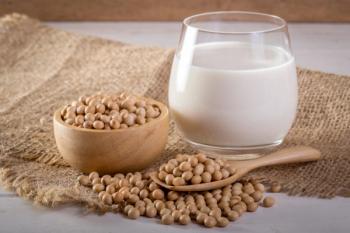
Ultrahigh-performance liquid chromatography–quadrupole time-of-flight mass spectrometry (UHPLC–QTOF-MS) shows how soaking and cooking break down soybean fats.

Liquid chromatography–tandem mass spectrometry (LC–MS/MS) links altered metabolism to lingering symptoms in Ebola survivors.

Nicolai Zederkopff explores chromatography’s role to help implement the maximum tolerable level (MTL) framework for food adulteration to translate analytical results into compliance decisions.

Franz Berthiller (BOKU University, Austria) discusses a multilaboratory study that used retention index markers to align mycotoxin liquid chromatography–mass spectrometry (LC–MS) data.
Advertisement
Advertisement
Trending on LCGC International
1
A New Era in LC Troubleshooting Tools
2
Conversations with Michael Dong: Acetonitrile and Methanol: A Comparison of Their Chromatographic Properties
3
Conversations with Michael Dong: Why 2.1-mm i.d. Columns Are Preferred for Pharmaceutical Quality Control
4
LC–MS/MS Tracks Drugs in Australian Wastewater
5