Application Notes: Environmental

i1-739827-1408616960746.jpg

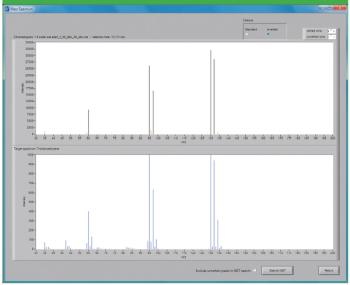
Analysis of semi-volatile organic compounds by GC–MS according to well-established methodologies requires integration of a complete system of GC–MS instrumentation and software for data interpretation, analysis, and reporting. While the overall process of analyzing these target compounds is a mature technique, there are continuous innovations that allow laboratories to meet lower detection limits and analyze new compounds to comply with changing regulations, with higher throughput and improved quality.

i4B_t-739806-1408617002639.jpg

EPA Method 8270D is used to determine a list of up to 243 semi-volatile organic compounds that are neutral, acidic, basic, and are soluble in methylene chloride. Semi-volatile water samples can contain varying amounts of suspended particulates and/or sediment due to either the source of the water, or the collection technique. By elevating the pH of semi-volatile samples, precipitates can form and result in an emulsion that can create problems for an efficient extraction with traditional techniques. These types of samples, due to their sediment content, have historically proven very challenging when using solid phase extraction (SPE).

i1-739808-1408616998895.jpg

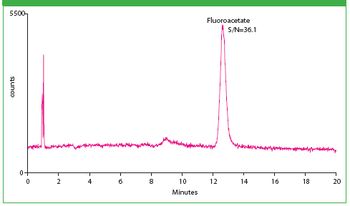
Fluoroacetate (Compound 1080) is a strong metabolic poison commonly used as a rodenticide and predacide (1). Due to the high level of toxicity when ingested (2), and no known antidotes, its use has been banned or restricted in many countries.

i1-739822-1408616971025.jpg

The update to the SANCO guidelines in 2009 recognized the power and potential of TOF mass spectrometry for pesticide screening applications. When compared with historical screening tools (such as the use of triple-quad mass spectrometry), high performance accurate mass TOF systems offer several advantages for screening applications. These advantages include better resolution, unlimited multiple target capabilities, and the possibility to perform comprehensive and/or retrospective analysis on samples in silico at will.

i4-739817-1408616979522.jpg

The use of contrast agents in noninvasive diagnostics provides a specific and high-detailed picture of organs and makes it possible to differentiate between healthy and diseased tissue. Whilst radiocontrast agents (RCA) change the X-ray absorption of the radiographed organ relative to its surrounding tissue, contrast agents for magnetic resonance imaging (MRI) are based on the use of magnetic fields caused by charged elementary particles such as protons and electrons. Compared to traditional X-ray imaging, MRI uses no ionizing radiation. MRI is based on the same principles as NMR spectroscopy and thus takes advantage of the absorption and emission of energy in the radiofrequency range.

i1-739812-1416910637672.jpg

The Wisconsin Department of Natural Resources (DNR) Modified Gasoline Range Organics (Wisconsin GRO) Method is used to determine gasoline and gasoline components in water and soil. The optimal hydrocarbon range is from C6-C10 with a boiling point range from 60 ?C–220 ?C (1). The analysis of Wisconsin GRO is vital in determining the "composition and the origin of such products including weathered fuels leaking from underground storage tanks, spills in pipe lines and run-off from surface transportation" (2).

i1_t-713152-1408622230047.gif

Aminopolycarboxylate chelating agents form stable complexes with transition metals, thereby increasing metal solubility, preventing metal-catalyzed reactions, and removing heavy metal contamination in soil remediation.

i3-689061-1416911134955.gif

N-Nitrosodimethylamine and other structurally similar nitrosamines are classified as probable carcinogens by the U.S. EPA, and their presence has been reported in California drinking water since 1998.