

The Application Notebook
ISOLUTE EPH columns have been developed to fractionate pentane or hexane based soil extracts into aliphatic and aromatic hydrocarbon fractions (C8–C40 aliphatics, C10–C22 aromatics).
The Application Notebook
ISOLUTE EPH columns have been developed to fractionate pentane or hexane based soil extracts into aliphatic and aromatic hydrocarbon fractions (C8–C40 aliphatics, C10–C22 aromatics).
The Application Notebook
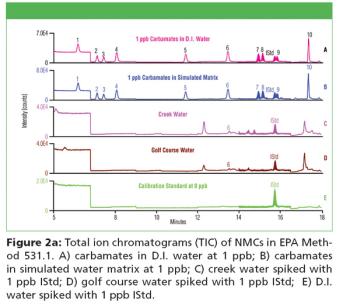
N-methyl carbamates (NMCs) are widely used as pesticides and have been reported in the environment and food.

The Application Notebook
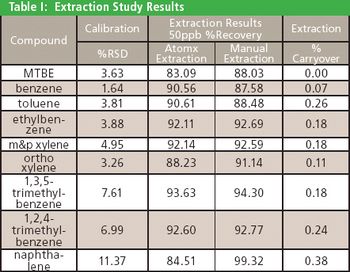
In this study, data was collected to evaluate carryover of target analytes in subsequent blanks following high concentration samples.

The Application Notebook
The GC–MS analysis of volatile organics in drinking water according to United States Environmental Protection Agency (US EPA) Method 524.2 offers a number of analytical challenges, ranging from water handling to very low target compound concentrations.

The Application Notebook
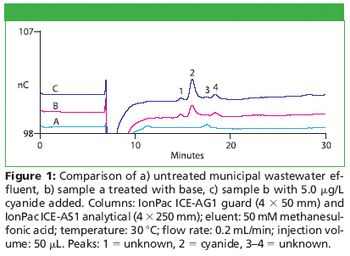
Cyanide, an environmental contaminant, can cause serious health effects including goiters, hypothyroidism and some neuromuscular diseases. Cyanide wastewater sources include the plating and mining industries, burning of coal and plastics and effluent from publicly owned treatment works (POTW).

The Application Notebook
Increase throughput of the HPLC method for triazine herbicides by employing ultra high-speed liquid chromatography at elevated temperature on a heat stable Thermo Scientific Hypercarb column.

The Application Notebook
The analysis of Bisphenol A using UCT Enviro-Clean® C18 cartridges and UCT Selectra® Phenyl columns using LC–MS-MS is discussed.
The Application Notebook
The U.S. EPA Office of Groundwater and Drinking Water released Method 524.3, "Measurement of Purgeable Organic Compounds in Water by Capillary Column Gas Chromatography/Mass Spectrometry, Version 1.0," in the Federal Register on August 3rd, 2009 (1, 2).

The Application Notebook
Smokeless tobacco can contain thousands of analytes, making it an extremely difficult matrix for identification of pesticide residues.
The Application Notebook
Cyanide, an environmental contaminant, can cause serious health effects including goiters, hypothyroidism, and some neuromuscular diseases.
The Application Notebook
EPA Method 8260 provides for the analysis of volatile organic compounds (VOC) in various solid waste matrices.

The Application Notebook
A recent poll indicated that millions of consumers were "very" concerned that their public water supplies may be contaminated with trace amounts of pharmaceuticals (1).
The Application Notebook
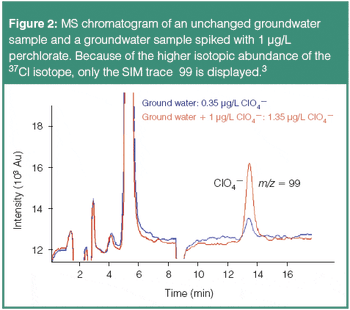
This article describes the use of combined ion chromatography-mass spectrometry (IC–MS) and ion chromatography-inductively coupled plasma mass spectrometry (IC-ICP–MS) to analyse potentially harmful compounds.
The Application Notebook
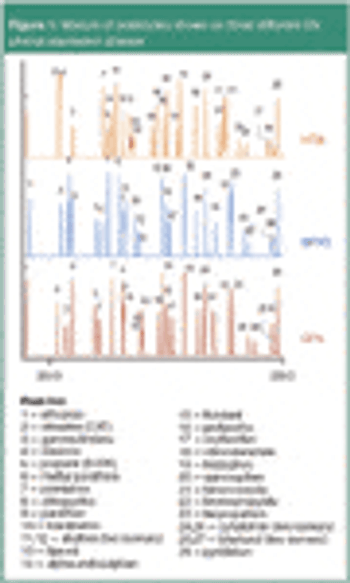
The separation of structurally diverse analytes is often complicated by chance coelutions with other analytes or with matrix related compounds. Often the column is blamed, but while such coelutions make analysis difficult they do not necessarily indicate a faulty column, poor chromatography or method design.
The Application Notebook
Polynuclear aromatic hydrocarbons (PAHs) are carcinogenic condensed ring aromatic compounds widely found as trace pollutants in waters, wastes, air particulates, soil and foods. PAHs can be routinely monitored using HPLC with a combination of UV and fluorescence detection as prescribed in EPA methods 550.1, 610 and 8310.

The Application Notebook
Polyaromatic hydrocarbons (PAH) are particularly relevant in the analysis of environmental pollution because of their ubiquity, toxicity and persistence. Consequently, the PAHs have become the most intensively studied pollutants in environmental analysis.
The Application Notebook
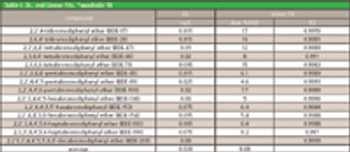
Polybrominated diphenyl ethers (PBDEs) are bioaccumulativetoxic compounds that are used as flame retardants. They have high boiling points and low thermal stability which makes analysis by GC–MS challenging. Additional bromines increase the thermal instability. A method was developed to analyze for polybrominated biphenyls using a large volume injection, short analytical column, and high mass tuning algorithm on the Thermo Scientific DSQ II with detection by EI Single Ion Monitoring (SIM).

The Application Notebook
This article describes the use of combined ion chromatography-mass spectrometry (IC–MS) and ion chromatography-inductively coupled plasma mass spectrometry (IC-ICP–MS) to analyze potentially harmful compounds.

The Application Notebook
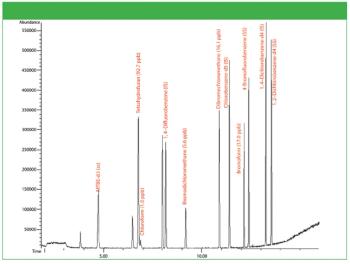
Trace-level chlorinated hydrocarbon analyses using methods such as U.S. EPA Method 551.1 are important tools for assessing organochlorine contamination in water. The wide diversity of target organochlorine compounds can prove chromatographically challenging due mainly to their high volatility and limited retention. This application note shows the benefits of using an Agilent J&W HP-1ms Ultra Inert Capillary GC column as the primary column for detection in this dual-column analysis.

The Application Notebook
Human health not only depends on providing good medical care, but also on the priority given to prevent exposure to environmental and other health risks. Persistent Organic Pollutants (POPs) are organic compounds typically of anthropogenic origin that resist degradation and accumulate in the food chain and are associated with adverse effects on human health and the environment (1). Due to their toxicity to humans, at much lower concentration than other pollutants, it is important to monitor compounds like polychlorinated dioxins/furans PCDD/Fs, DLPCBs, BDEs, and PCNs. More sophisticated requirements are needed for their analysis. In the past, extraction and clean-up of POPs present in fish and biota samples were conducted with procedures such as Soxhlet extraction, acid digestion, and liquid-liquid extraction. The clean-up of these samples was accomplished through chromatographic columns using different types of adsorption media such as silica, alumina, and carbon. These analytical methods used for analysis..
The Application Notebook
In U.S. EPA Method 5035 there are two collection options for samples containing high levels of volatile organic compounds (VOCs). The first involves collecting a bulk soil sample in the field. In the lab, the bulk soil is dispersed in a water miscible solvent. Next, an aliquot of the solution is added to 5 mL of water and finally, the sample is purged. The second option is to collect a 5 g soil sample and add it to a pre-weighed vial containing a prescribed amount of water miscible solvent. An aliquot is then purged. Both of these processes are time consuming and have the potential to introduce human error both in the field and in the laboratory.

The Application Notebook
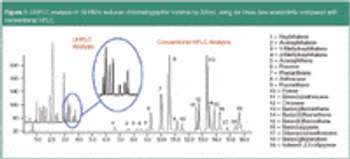
Polynuclear aromatic hydrocarbons (PAHs) are carcinogenic condensed ring aromatic compounds widely found as trace pollutants in waters, wastes, air particulates, soil, and foods. PAHs can be monitored routinely using HPLC with a combination of UV and fluorescence detection as prescribed in EPA methods 550.1, 610, and 8310. Conventional HPLC analysis of 19 PAHs typically requires 20 min and uses 25 mL of acetonitrile. However, there is a continual drive to improve productivity and reduce solvent consumption and waste in chemical analysis. Using ultra high pressure LC (UHPLC) with sub-2 μm particle-size columns, we demonstrate a 3-fold improvement in throughput and a 90% reduction of mobile phase solvent in the determination of 19 PAHs.

The Application Notebook
Most U.S. Environmental Protection Agency (U.S. EPA) methods for analysis of volatile organic compounds (VOCs) specify purging with helium for 11 min at 40 mL/min, making purge-and-trap (P&T) one of the biggest consumers of helium in a laboratory. Compared to helium, nitrogen is abundant, inert, and can be purchased at affordable prices.

The Application Notebook
Over the past 15 years, little has changed for the commercial environmental laboratory's ability to automate U.S. EPA Method 8260 for water and soil purge and trap analysis. As work loads have increased, reporting levels have decreased due to MS sensitivity improvements. However, it has become increasingly difficult for laboratories to run at high levels of productivity due to autosampler reliability, carryover, and internal standard reproducibility challenges. Each of these issues has been addressed in a new Centurion WS autosampler (see Figure 1) designed specifically for the commercial environmental laboratory.

The Application Notebook
Phenols are frequently present in water because of their widespread use in commercial products and because they are by-products of processes in petrochemical, pulp and paper, plastic, and glue manufacturing industries (1,2). The concentration of phenolic compounds in the waste discharges can be as high as 20 mg/L (2); however, phenol-containing pesticides and wood preservatives may cause significant health hazards even at mg/L levels (1). Consequently, it is important to monitor phenols and substituted phenols in environmental and biological samples. Liquid chromatography with electrochemical detection is one of the widely used methods due to its high selectivity and sensitivity for phenolic compounds. However, glassy carbon working electrodes, used in the electrochemical detection of phenols, often require polishing (3). This time-consuming and often poorly reproducible polishing can be avoided with disposable carbon electrodes, which offer comparable or better analytical performance (4).
The Application Notebook
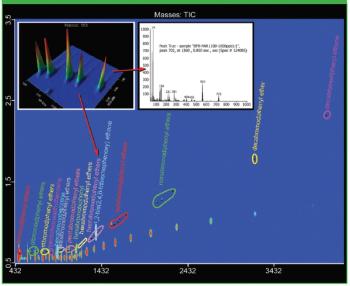
Polybrominated diphenyl ethers (PBDE) are persistent environmental contaminants that are being extensively studied by environmental researchers worldwide. Their potential for toxicological impacts on humans and wildlife has made them a focal point of regulatory agencies. Their widespread use as flame retardants in electronics, household furniture, and many other building materials has lead to a need for analysis of many different sample matrices, including very complex environmental samples.
The Application Notebook
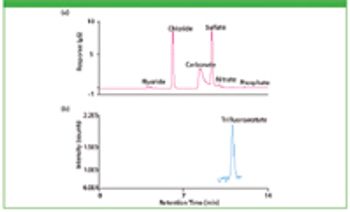
Perflourinated organic acids are ubiquitous and found at relatively low concentrations in the environment (1). Trifluoroacetic acid (TFA) is the persistent atmospheric degradation product of hydrofluorocarbons (HFCs) that are increasingly used as an alternative to banned, ozone-damaging chlorofluorocarbons (CFCs). However, debate surrounds the use of HFCs because of their potential to contribute to global warming and demonstrated toxicity to the environment (2). TFA is also widely used in pharmaceutical and biotechnology purification processes. It is crucial to monitor for TFA in environmental risk assessment and in products intended for human use. TFA can be measured by gas chromatography (GC) after sample preparation and chemical derivatization (3), ion chromatography (IC) (4), and capillary electrophoresis (5). This paper describes an IC-MS method to separate TFA from common anions based on Reagent-Freeâ„¢ IC (RFICâ„¢) technology with sensitive and selective mass spectrometric detection.

The Application Notebook
EPA Method 8260 is used to determine volatile organic compounds (VOC's) in a variety of matrices including ground and surface waters. This method is commonly used in environmental laboratories where gas chromatography (GC), mass spectrometry (MS) and purge and trap (P&T) technology are used for the analysis and subsequent detection of VOC's.
The Application Notebook
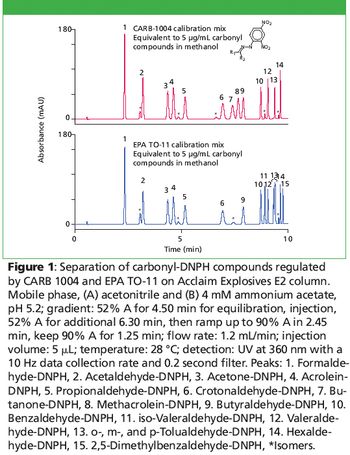
Carbonyl compounds, including low molecular weight aldehydes and ketones, have environmental and health concerns; for example, short-term exposure to aldehydes can irritate the eyes, skin, and upper respiratory tract. Motor vehicles emit reactive hydrocarbons that undergo photochemical oxidation in the atmosphere, which generates formaldehyde and other carbonyls. In addition, formaldehyde contributes to the formation of photochemical ozone. California Air Resources Board (CARB) Method 1004 (1) provides an analytical method for the automotive industry to monitor 13 carbonyl compounds in engine exhaust. US EPA Method TO-11A (2) and Method 8315 (3) monitor atmospheric formaldehyde and 14 other carbonyl compounds and are used for a variety of environmental and occupational health purposes. In these methods, carbonyl compounds are trapped as the dinitrophenylhydrazine (DNPH) derivatives before analysis by HPLC.

The Application Notebook
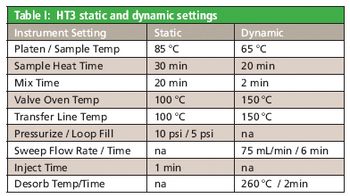
Purge and trap concentration (P&T) along with gas chromatographic analysis is a widely used method for the detection of volatile organic compounds (VOCs). This methodology was developed to achieve the high sensitivity necessary to determine VOCs in drinking water according to EPA Method 524.2. Research is now complete and the EPA currently proposes a revision to this method that may include a revised list of analytes including iodinated trihalomethanes, fuel oxygenates, and Contaminant Candidate List 3. This new method will be 524.3 and may include new parameter optimizations not previously permitted in 524.2 as well as the ability to use selective ion monitoring (SIM) analysis for troublesome compounds.