
LCGC North America
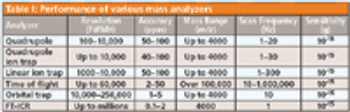
A review of the principles of these analyzers and their relative advantages and disadvantages over other mass analyzer types
LCGC North America
A review of the principles of these analyzers and their relative advantages and disadvantages over other mass analyzer types

LCGC North America
An exploration of the usefulness and relevance of the van 't Hoff equation using various examples from the literature

LCGC Emerging Leader - 2013 Nominations
Special Issues
Click the title above to open the LCGC North America December 2012 Corporate Capabilities Supplement, Vol 30 No s12, in an interactive PDF format.
LCGC North America
Click the title above to open the LCGC North America December 2012 regular issue, Vol 30 No 12, in an interactive PDF format.
LCGC Europe eNews
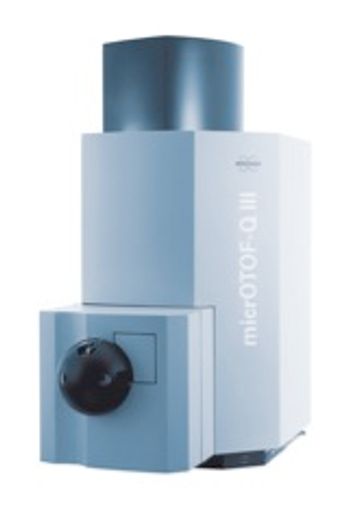
Bruker?s micrOTOF-Q range is widely acknowledged in setting standards in performance and reliability against which all other accurate mass ESI mass spectrometers are judged.
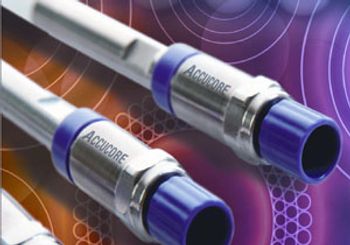
Analytical and nano scale Thermo Scientificâ„¢ Accucoreâ„¢ 150-C18 and 150-C4 columns are rugged and easy to use. The columns are designed to improve protein and peptide assay robustness by enhancing peak capacity and run times at moderate operating pressures.
LCGC Europe eNews
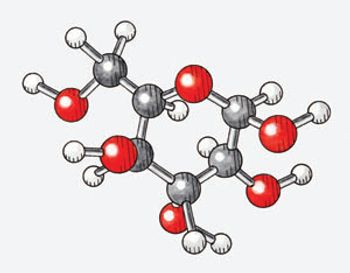
New drugs from natural origin are being explored to treat diabetes.

LCGC Asia Pacific eNews
Professor Milton Hearn has been awarded the prestigious 2012 Leighton Memorial Medal of the Royal Australian Chemical Institute (RACI). Hearn is the director of the Australian research council special research centre for green chemistry at Monash University, Clayton, Australia.
LCGC Asia Pacific eNews
PerkinElmer (Massachusetts, USA) has announced the acquisition of Haoyuan Biotech (Shanghai, China), an infectious disease diagnostics company, for the reported amount of $38 million.
LCGC Europe eNews
Waters (Massachusetts, USA) has selected the MTM research centre at Orebro University (Orebro, Sweden) as a new Centre of Innovation.

LCGC Europe eNews
Dr Shabaz Mohammed from Utrecht University, The Netherlands, spoke to LCGC Europe about his group's activities in protein analysis and the importance of shotgun proteomics.
Waters - UltraPerformance Convergence Chromatography (UPC2) for Extractables Analysis

Waters NuGenesis®® 8 is a comprehensive data management and workflow solution that combines data repository, E-lab notebook, sample management, laboratories inventories, and e-record lifecycle management to provide easily accessible data.
LCGC Europe eNews
Professor Milton Hearn has been awarded the prestigious 2012 Leighton Memorial Medal of the Royal Australian Chemical Institute (RACI).
Founded on state-of-the-art Core Enhanced Technologyâ„¢ and utilizing vast experience in phase bonding and packing, Thermo Scientificâ„¢ Accucoreâ„¢ HPLC columns provide a unique chromatography solution to enhance laboratory workflow and efficiency. Available in a wide range of stationary phase selectivities and compatible with almost any instrument, these columns provide an excellent return on investment.

The Column
The 20th International Symposium on Electro- and Liquid-Phase Separation Techniques (ITP2013) was held for the first time in Spain (Puerto de la Cruz, Tenerife, Canary Islands) on 6?9 October 2013.

The Column
Incognito believes that taking some time to step back and look at the broader picture could make your laboratory perform more efficiently and effectively.
The Column
A group of scientists in Taiwan1 has identified micro-particles within human urine that could be used for the non?invasive diagnosis of bladder cancer.

The Column
Two novel peptides have been identified within the crude extract of Asian scorpion Buthus martensi Karsch venom using two-dimensional high perfomance liquid chromatography (2D-HPLC) and tandem mass spectrometry (MS?MS).
The Column
A group of investigators in the USA2 recently published a study indicating that environmental changes have a greater impact than genetic modifications on the metabolome of crop plants.
The Column
Scientists from Kingston University1, (London, UK) have developed and optimized an assay for the simultaneous detection of eight forms of vitamin D.

The Column
The International Symposium on High Performance Liquid Phase Separations and Related Techniques - HPLC2013 Amsterdam - will take place at the Amsterdam RAI Conference Centre, Amsterdam from 16?20 June 2013.

The Column
In recent years the advent of ultra high performance liquid chromatography (UHPLC) has broadened the scope of laboratory applications, making it possible to attain extremely low detection limits.
Thermo - Configuring High-Pressure IC Systems
Thermo LCE - Eluent Generation for Carbohydrate Analysis
Thermo - Eluent Generation For Carbohydrate and Amino Acid Analysis
Thermo - Efficient Small-Particle-Size IC Columns
LCGC Europe eNews
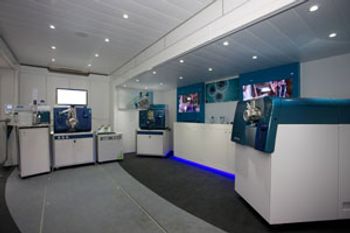
AB Sciex (Massachusetts, USA), Phenomenex (California, USA) and Peak Scientific (Massachusetts, USA) have announced the launch of a mobile laboratory tour across Europe.