

LCGC Europe eNews
Karyn M. Usher of West Chester University of Pennsylvania interviews Phyllis R. Brown, professor emerita of the University of Rhode Island, about her distinguished career in chromatography.
LCGC Europe eNews
Karyn M. Usher of West Chester University of Pennsylvania interviews Phyllis R. Brown, professor emerita of the University of Rhode Island, about her distinguished career in chromatography.
LCGC Europe eNews
PerkinElmer (Massachusetts, USA) has announced the acquisition of Haoyuan Biotech (Shanghai, China), an infectious disease diagnostics company, for the reported amount of $38 million.
Shimadzu - Fast LC-MS/MS Screening Method for Antipsychotics
LCGC Europe eNews
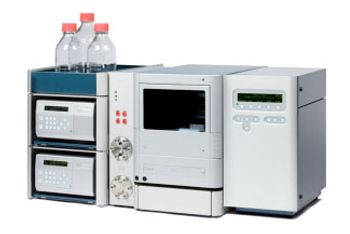
The ROXY product line of Antec is a perfect fit for on-line Electrochemistry/MS and brings Electrochemistry (EC) to the fingertips of every mass spectrometrist
Thermo - Analysis of Glycopeptides Using Porous Graphite Chromatography and LTQ Orbitrap XL ETD Hybrid MS
LCGC Europe eNews
The University of Leicester (Leicester, UK) has announced the launch of a new forensic science institute to be named after Professor Sir Alec Jeffreys, the world famous geneticist.
E-Separation Solutions
Click here to view the complete E-Separation Solutions newsletter from November 8, 2012.

LCGC Europe eNews
Microsaic Systems (Woking, UK) has announced the appointment of Colin Jump as chief executive officer.

LCGC Europe eNews
Wide pH variations or high temperatures are tough conditions for a silica based HPLC column. Kromasil Eternity, with its organic/inorganic interfacial gradient on the matrix, can longer withstand such conditions.
LCGC Europe eNews
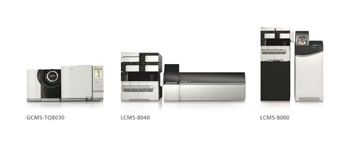
Three new triple quadrupole mass spectrometers LCMS-8040, LCMS-8080 and GCMS-TQ8030 complete Shimadzu’s UFMS series consisting of seven powerful systems. The UFMS product family provides higher sensitivity, greater excellence in data quality, increased analytical throughput and a wider range of applications.
The Column
A group of scientists in Austria 1 have developed and characterised a method for the detection of S. pneumoniae and H. influenzae in the upper respiratory tract by analysing breath samples of patients.

The Column
Fingerprint analysis has been a standard method for forensic analysis and is used to identify suspects at the scene of a crime. Recent advances in next-generation DNA sequencing technology have revolutionized the criminal justice system and has downgraded the importance of fingerprint analysis. However, the positioning of DNA material can be circumstantial in some cases and this is where recent advances in analytical chemistry instrumentation can enhance the power of fingerprint analysis.

Series: Increasing the Scope of your Analytical Toolbox with UltraPerformance Convergence Chromatography (UPC2) - Episode 3
The Column
"Dragon's Blood"(DB) has become increasingly popular in Europe and the USA this year. Marketed as an anti-ageing compound within cosmetics, DB is a deep red resin secreted from the fruit of the dragon tree species, Daemonorops draco. Scientists in China 2 believe they have identified two novel biomarkers that could be used in the QC of DB.

The Column
Jenny Button, Product Specialist at LGC Standards, UK, discusses some commonly reported errors in the use of reference materials and how they can be avoided.

The Column
John Hinshaw offers his insights into how the current helium shortage will affect gas chromatographers and answers some concerns of The Column readers selected from the CHROMacademy Forum.

The Column
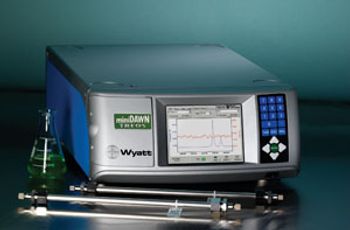
Traditionally, measuring the mobility of proteins and nanoparticles has been a challenging task. An effective measurement method traditionally used is phase analysis light scattering (PALS), a technique based on interfering laser light scattered from a sample solution. However, it has been associated with two important shortcomings. Massively Parallel Phase Analysis Light Scattering (MP-PALS) has emerged as a viable alternative to the conventional PALS method.
The Column
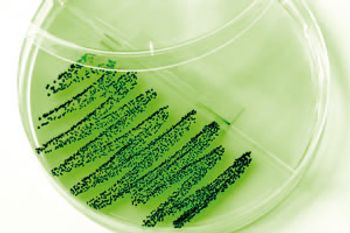
Antibiotics are used frequently and there has been a corresponding growth in antibiotic-resistant bacterial strains, such as MRSA (multi resistant strain antibiotics). This resistance is placing pressure on healthcare systems worldwide with numerous government agencies, including the World Health Organization (WHO), campaigning to reduce the use of antibiotics. There is now an emerging research focus on the development of plant-based anti-microbial agents that could be used for non-medicinal purposes; specifically of interest is the use of antimicrobials in the preservation of foodstuffs.
John Hinshaw answers more LCGC readers’ concerns sent to the CHROMacademy forum following the recent CHROMacademy webinar on the helium shortage.
Series: Increasing the Scope of your Analytical Toolbox with UltraPerformance Convergence Chromatography (UPC2) - Episode 2
Waters EU - USP Method Transfer of Donepezil Tablets
LCGC Europe eNews
Phenomenex (California, USA) has announced a partnership with the Feed my Starving Children (FMSC) (Minnesota, USA) organization to hand-pack 150,000 meals on the 16th and 17th of November for dispatch to developing countries

LCGC Asia Pacific
The solvent chosen for injection can affect the apearance of chromatographic peaks.
LCGC Europe eNews
Agilent (California, USA) has announced the formation of a partnership with PREMIER Biosoft (California, USA). The partnership aims to aid the advancement of lipidomics research, by supporting integration of their respective software platforms allowing combination of data generation and processing. It is hoped that this will allow the mapping of complex lipidomic networks, advancing knowledge of lipid metabolism and diseases associated.
LCGC Asia Pacific
The authors characterized 12 SFC achiral stationary phases with 60 compounds from four chemical classes to establish guidelines for th rational selection of the optimum stationary phase for separations.

LCGC Asia Pacific
This is an update to a 2003 article with information about new developments in SPME.

LCGC Asia Pacific
Application Note