

Perkin NA - Lead in Dairy Products by Graphite Furnace AA
Perkin NA - Lead in Dairy Products by Graphite Furnace AA
LCGC Europe eNews
Agilent Technologies (Santa Clara, California, USA) has announced the recipients of its latest Thought Leader award: Dr Jens Frisvad and the centre for microbial biotechnology in the department of systems biology at the Technical University of Denmark.
Perkin EU - Toxic, Essential, Nutritional Elements in Food by ICP-MS
Perkin NA - Furan in Food by Headspace-GC–MS
Perkin EU - Essential Metals in Spice Mixtures by Flame Atomic Absorption
LCGC Europe eNews
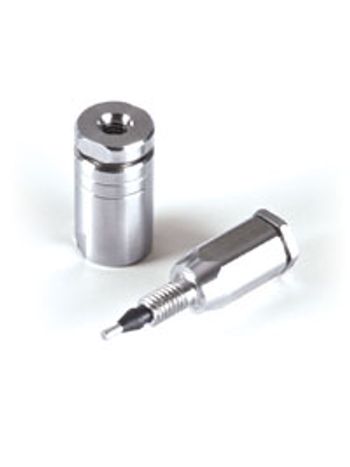
The New Upchurch Scientific® VHP-550 & VHP-555 Pre-column Filters make it easy to protect and limit the replacement of your sub-2 ?m, core-shell and other UHPLC columns.
LCGC Europe eNews
Waters (Milford, Massachusetts, USA) and the Food and Environment Research Agency (Fera) (York, UK) have announced that they will open a new laboratory-based training facility which will combine their respective regulatory, scientific and industry expertise to help solve the global food safety challenge.
Perkin NA - Toxic, Essential, Nutritional Elements in Food by ICP-MS
Perkin NA - Essential Metals in Spice Mixtures by Flame Atomic Absorption
Perkin EU - Simultaneous Analysis of Nine Food Additives by UHPLC/PDA
E-Separation Solutions
Click here to view the complete E-Separation Solutions newsletter from June 14, 2012.
E-Separation Solutions
The session chairs for this Wednesday morning session are Cornelia Walther of ACIB GmbH (Vienna, Austria) and Edward Yeung of Iowa State University (Ames, Iowa). It will be held in the Orange County Ballroom, beginning at 10:35 a.m.
E-Separation Solutions
This Tuesday morning session will be chaired by J.J. Kirkland of Advanced Materials Technology, Inc. (Wilmington, Delaware) and Daniela Stoeckel of Justus-Liebig University (Giessen, Germany). It will be held in Grand Ballroom A-E, beginning at 9:00 a.m.
E-Separation Solutions
“Imprinted Sorbants†is a Wednesday afternoon session that will get under way at 4:30 p.m. The Sessions Chairs will be Shreekant Karmarkar of Baxter Healthcare Corporation (Round Lake, Illinois), and Roberty Kennedy of the University of Michigan (Ann Arbor, Michigan).
E-Separation Solutions
The Tuesday afternoon “Omics II†session is a continuation of the morning’s “Omics I†session, and will be held in Grand Ballroom F-K, starting at 4:30 p.m. The Session Chairs will be Jonathan Bones of The Barnett Institute, Northeastern University (Boston, Massachusetts), and David Lubman of the University of Michigan (Ann Arbor, Michigan).
E-Separation Solutions
Here is a brief description of today’s session that includes an award nominee.
E-Separation Solutions
There will be two 45-minute sunrise tutorial sessions given on Tuesday morning at 8:00 a.m.
E-Separation Solutions
The Csaba Horváth award was created to honor its namesake and recognize his contributions to high performance liquid chromatography (HPLC), including his interest in fostering the careers of young scientists in separation science and engineering. The award is a cash grant and a trophy engraved with the winner's name. The winner is also invited to give an oral presentation at HPLC 2013. There are 10 nominees this year, each giving presentations throughout the duration of the conference. The Csaba Horváth award will be presented on Thursday. Here is a brief description of the four sessions today that include award nominees.
E-Separation Solutions
Frantisek Svec, of the Lawrence Berkeley National Laboratory (Berkeley, California), will moderate "What are the Great Challenges of Chromatography," a Plenary Panel Discussion that will take place Wednesday afternoon in the Grand Ballroom at 5:20 p.m.
E-Separation Solutions
Robert Stevenson of American Laboratory/Labcompare (Lafayette, California) and Ulrich Tallarek of Phillips-Universität Marburg (Marburg, Germany) will chair this Monday morning session titled “Chiral Separations†in Grand Ballroom A-E. The session will follow the morning's plenary lectures and will begin at 10:35 a.m.
E-Separation Solutions
Monday morning's plenary lectures, which will be chaired by Gerard Hopfgartner of the University of Geneva (Geneva, Switzerland) will be held in the Grand Ballroom and will begin at 8:30 a.m.
E-Separation Solutions
Here is a brief description of the five sessions today and tomorrow that include award nominees, as well as the presentation from last year’s award winner.

LCGC Europe eNews
Can databases of column characteristics be used to help with HPLC column selection ahead of method development?

The Column
Many drugs that are sold on the street have been modified or diluted by the dealer and as a consequence forensic laboratories are overwhelmed with samples, which can take a long time to process.

The Column
4th International Conference on Polyolefin Characterization
LCGC Europe eNews
The Food Standards Agency (FSA) (London, UK) has announced that it has ended the practice of using mice for the detection of paralytic shellfish poisoning (PSP) and lipophilic toxins in commercially harvested shellfish.
The Column
A team of scientists in Spain has produced a new method that detects traces of veterinary drugs in baby food.
The Column
Colorectal cancer (CRC) is one of the most commonly diagnosed cancers in the world.

The Column
Malaria is one of the biggest killers in the developing world. In order to wage war on this disease the quality of the drugs that are available must be of the highest possible.