

In this video interview, Emanuela Gionfriddo, Daniel Armstrong, and Nicholas Snow preview their talks at Pittcon, as well as give their opinions about what topics they hope to explore more at the conference.
In this video interview, Emanuela Gionfriddo, Daniel Armstrong, and Nicholas Snow preview their talks at Pittcon, as well as give their opinions about what topics they hope to explore more at the conference.

In this first part of our interview with Christopher Pohl, he discusses the 2025 LCGC Lifetime Achievement Award, and what this means to him.

Here is some of the most popular content posted on LCGC International this week.
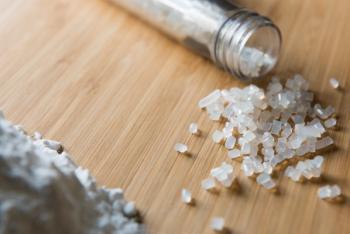
The biodegradability of poly(butylene succinate) (PBSu) in marine environments is under scrutiny. As it is well known that the biodegradability of biodegradable polymers depends on their molecular weight, researchers explored the effect of that factor of PBSu on its biodegradability through biochemical oxygen demand (BOD) testing in seawater, with samples of differing molecular weight prepared with size-exclusion chromatography (SEC).

Exploring the alterations in metabolites of wet age-related macular degeneration (wAMD), metabolomic analysis was performed on the aqueous humor of 30 patients with wAMD receiving anti-vascular endothelial growth factor (anti-VEGF) treatments and 20 controls, via ultra-high performance liquid chromatography-tandem mass spectrometry (UHPLC-MS/MS).
The Harvey W. Wiley Award is presented every year to a scientist, or group of scientists, who have made outstanding contributions to analytical method development in areas of interest to AOAC INTERNATIONAL.

In this Q&A interview, Samiksha Singh discusses her team’s latest research in microplastics research, which provided insight into how marine monitoring can improve mitigation of plastic pollution.

Researchers at Jilin University (Changchun, China) developed a highly sensitive, rapid, and accurate method for analyzing neurotransmitters (NTs) in rat spinal cord tissue. Ultra-high performance liquid chromatography-triple quadrupole tandem mass spectrometry (UHPLC-QqQ-MS/MS) in conjunction with ultra-ionic liquid dispersive liquid-liquid microextraction (UA-MIL-DLLME) were used to extract NTs for analysis.

A joint study between the Institute for Environment and Energy, Technology and Analytics (IUTA e. V., Duisburg, Germany) and Heinrich Heine University Düsseldorf (Germany) explored the combination of size exclusion chromatography (SEC) with diode array detector (DAD) and capillary-enhanced Raman spectroscopy (CERS) to directly analyze hemolyzed serum samples. We spoke to Jana Thissen, first author of the paper resulting from this study, about her team’s work.

High-speed counter current chromatography (HSCCC), an advanced liquid-liquid chromatography technique employing both a liquid stationary phase and a liquid mobile phase (effectively eliminating irreversible adsorption), was used to harvest allicin from garlic.
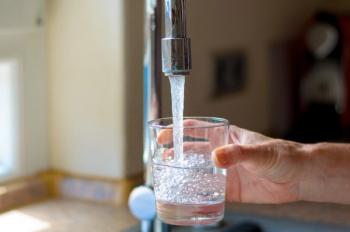
A pyrolysis gas chromatography-mass spectrometry (Py-GC/MS) methodology has been specifically developed for the identification and quantification of seven polymers commonly found in tap water. The researchers responsible for the approach state that it prioritizes both time and cost efficiency without compromising the thoroughness of marker spectrum detection and confirmation.

Christopher A. Pohl and Katelynn A. Perrault Uptmor are the winners of the 18th annual LCGC Lifetime Achievement and Emerging Leader in Chromatography Awards, respectively. The LCGC Awards honor the work of talented separation scientists at different stages in their career (See Table I, accessible through the QR code at the end of the article). The award winners will be honored during an oral symposium at the Pittcon 2025 conference held March 1-5, in Boston, Massachusetts.

In Part II of our exploration of splitless injection, we will see that it is a surprisingly complex process, and that it is difficult to understand because we cannot see what is happening during the injection process. For this discussion, we will think of the injection process as beginning with the syringe plunger being depressed and ending with the start of a temperature program in the column oven. In most splitless injections, this process requires 30 s to 1 min. There are several band broadening and focusing mechanisms that affect the peak shapes, widths, and heights resulting from splitless injection.

This article delves into advancements in green chromatography, focusing on how innovative HPLC column design can drive eco-conscious practices.

In this installment, I primarily discuss considerations to keep in mind when choosing buffering additives that will be used for LC methods involving UV absorbance detection.

LCGC International is celebrating the National Day of Women and Girls in Science by highlighting the work of women in analytical chemistry.

Click here to access the LCGC International January/February 2025 Europe PDF in an interactive format.
Click here to access the LCGC International January/February 2025 North America PDF in an interactive format.
Labomatic Instruments and Knauer recently announced a new strategic cooperative relationship to offer their instrument portfolios to each other’s customer bases.

Research conducted by The Technology Transfer Center of the Edmund Mach Foundation (San Michele all'Adige, Italy) and the University of Udine (Udine, Italy) used liquid chromatography coupled with high-resolution mass spectrometry (LC-MS) to investigate alkaloid transfer from alpine pastures to milk.
Here is some of the most popular content posted on LCGC International this week.

A study by the United Arab Emirates University aimed to develop and validate a sensitive method for the determination of six key phytohormones in aloe vera using liquid chromatography-tandem mass spectrometry (LC-MS/MS).

You're invited to publicize your 2024–2025 new product introductions in LCGC. Here's how to get your products included.

A study aiming to identify fluorescent bioactive compounds in the coelomic fluid of earthworms, as well as to investigate their structural and functional characteristics for possible use in biomedical applications, utilized a variety of chromatographic techniques.

Gel permeation chromatography, three-dimensional excitation-emission matrix fluorescence spectroscopy, and UV-visible spectroscopy was utilized to assess road runoff passed through a filter filled with sludge from drinking water treatment plants to evaluate its capacity for removing dissolved organic matter (DOM).

A recent study described develops methods for synthesizing and quantifying metal-induced glycation products, particularly in French fries, with phytic acid as a natural chelating agent (NCA). LCGC International spoke to Makan Golizeh, corresponding author of the paper inspired by this research, about the study and the team’s use of liquid chromatography-tandem mass spectrometry (LC–MS/MS) in their research.

A team from the University of Geneva and Bayer AG present their findings on the on-off retention of oligonucleotides and the feasibility of separating them using very short columns.

A recent study used a liquid chromatography-drift tube ion mobility spectrometry-high resolution mass spectrometry (LC-DTIMS-HRMS) platform to contribute to characterizations of 175 per-and polyfluoroalkyl substances (PFAS) with authentic standards in a multidimensional manner.

Per- and polyfluoroalkyl substances (PFAS) often make headlines as health agencies worldwide work to regulate their use. While most restrictions focus on PFAS in drinking water, the primary exposure pathway, scientists are increasingly investigating alternative routes, such as dermal absorption from cosmetics, sunscreens, and other everyday products.

We recently published a three-part interview with Chris Reddy. Here, we provide the full text transcript of the conversation, which includes some additional insights not presented in the video interview.