

Informative panel discussions featuring key opinion leaders from the separation science sector discussing the latest technology trends and developments in liquid chromatography, gas chromatography, sample preparation, and data handling.
Informative panel discussions featuring key opinion leaders from the separation science sector discussing the latest technology trends and developments in liquid chromatography, gas chromatography, sample preparation, and data handling.

A look at some of the highlights that separation scientists can look forward to at Analytica 2024.

A recent study compared different workflows for extracting, purifying, and analyzing bone proteins using liquid chromatography with tandem mass spectrometry (LC–MS/MS), including an in-StageTip protocol previously optimized for forensic applications, and two protocols using novel suspension-trap technology (S-Trap) and different lysis solutions. LCGC International discussed this work with Noemi Procopio of the School of Law and Policing and the Research Centre for Field Archaeology and Forensic Taphonomy at the University of Central Lancashire (UK), corresponding author of the paper that resulted from this study.

Recent advances in green chemistry have made multivariate experimental design popular in sample preparation development. This approach helps reduce the number of measurements and data for evaluation and can be useful for method development in gas chromatography.

With green chemistry becoming a hot topic in chromatography, researchers from the Institute for Instrumental Analytics and Bioanalytics at Mannheim University of Applied Sciences examined gas chromatography–ion mobility spectrometry (GC–IMS) as a greener alternative to GC–MS.

Here is some of the most popular content posted on LCGC International this week.

In this “Equipment Roundup,” the editors of LCGC International present SCIEX’s ZenoTOF 7600+ System and Fraunhofer Institute for Integrated Circuits’ nanoSPECTRAL chip.

In this article, the authors describe a simple workflow to develop a GC×GC method for a specific sample upon initial use, with the aim of decreasing the time to accomplish functional workflows for new users.

The grant will be part of a new collaborative scientific initiative to address the need for standards that define the desired performance of lateral flow immunoassay test strips to detect illicit drugs in tablets and powders.
LCGC International spoke to Phil Marriott and Humberto Bizzo about a recent paper they published identifying the incorrect use of retention indices in gas chromatography and how this problem can be rectified in practice.

LCGC International spoke to Doug Raynie about a novel gas chromatography (GC) method incorporating a consumer vape to investigate volatile organic compounds (VOCs) using GC with solid phase microextraction (SPME).

Ultra-high performance liquid chromatography, coupled with a fluorescence detector, was used in a recent study to profile 23 amino acids and glutathione in juices of four internationally relevant grape varieties grown under different soil and climatic conditions.

In this feature article, we profile three global cities (Cairo, Beijing, and Delhi) and how they are combatting the air pollution crisis to better protect the health of their residents.

A recent study analyzed the variability in plasma quinidine (QND) concentrations using population pharmacokinetics to determine an effective and safe dosage regimen for Thoroughbred horses suffering from atrial fibrillation (AF).

An investigation of the accumulation of primary and secondary metabolites, including bioactive compounds, to characterize the qualitative traits of blood oranges at the time of harvest was conducted, with liquid chromatography identifying and quantifying simple sugars, and spectrophotometric analysis identifying and quantifying organic acids, polyphenols, and flavonoids.

LCGC International recently spoke to Tomáš Rozsypal of the Nuclear, Biological and Chemical Defence Institute of the University of Defence (Vyskov, Czech Republic) about his work utilizing gas chromatography in researching the persistence of A-234 nerve agent on indoor surfaces, and the paper that resulted from it.

In a recently published study, liquid chromatography coupled with tandem mass spectrometry (LC-MS/MS) was used to analyze 100 Turkish apple samples for the presence of 225 different pesticide residues during the 2022-2023 harvest season.

Gas chromatography (GC) was used to investigate the genetic basis of olive oil quality by comparing the transcriptome of two Iranian cultivars with contrasting oil profiles.

In this “Equipment Roundup,” the editors of LCGC International present MOBILion’s novel high resolution mass spectrometry (HRMS) functionality and Agilent’s InfinityLab LC Series portfolio.

In this Equipment Roundup, the editors of LCGC International feature Refeyn Ltd.’s upgraded MassFluidix HC system, optimizing efficiency and quality of mass photometry experiments.

Linda S. Lee of Purdue University discusses her latest research investigating whether highly degraded urban soils could be restored using biosolids.

Jonathan Zweigle of the University Tübingen spoke with LCGC International about his work using non-targeted screening based on high-resolution mass spectrometry (HRMS) to detect PFAS in soil samples. HRMS allows scientists to determine the elemental and isotopic composition of a sample with high accuracy.

An illuminating session at the International Symposium on Chromatography focused on currents trends and misconceptions surrounding oligonucleotide analysis.
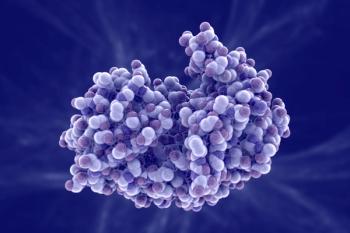
In this article, the use of comprehensive two-dimensional liquid chromatography (LC×LC) coupled to mass spectrometry (MS) for characterizing glycosylation of therapeutic enzymes is presented.

The 2024 International Symposium on Chromatography (ISC) provided attendees not only had the opportunity to learn about the latest breakthroughs in chromatography but also to engage in meaningful discussions about the future of the field.

ISC 2024 in Liverpool, U.K. included an illuminating session on contemporary omics applications.

This paper describes the content of a well-written analytical procedure for regulated high-performance liquid chromatography (HPLC) testing. A stability-indicating HPLC assay for a drug product illustrates the required components for regulatory compliance, including additional parameters to expedite a laboratory analyst’s execution.

A recent study aimed to characterize the fine-flavor cocoa in parent-hybrid combinations using widely targeted gas chromatography-mass spectrometry (GC–MS) and bean phenotype analysis.

A recent joint study between the Department of Forensic Science of the College of Criminal Justice at Sam Houston State University (Huntsville, Texas) and the Department of Criminal Justice of the School of Social Sciences at Ming Chuan University, (Taipei, Taiwan) developed artificial intelligence (AI) by transfer learning in a convolutional neural network (CNN), GoogLeNet, with the image classification AI fine-tuned to create intelligent classification systems to discriminate samples containing gasoline residues from burned substrates.

The article discusses the application of a hybrid organic/inorganic surface technology that forms a barrier between the sample and the metal surfaces of both the HPLC system and chromatographic column. Formed by a vapor deposition of an ethylene-bridged siloxane polymer on metal substrates), this technology effectively addresses common chromatographic challenges such as analyte loss, carryover, and peak tailing due to metal-analyte interactions. It improves peak symmetry and areas, as well as reproducibility, thereby not only benefiting challenging analytes but also increasing confidence in analytical results. We demonstrate the benefits of this technology through the analysis of B-group vitamins, steviol glycosides, and dextran oligosaccharides typically found in food, beverages, and dietary supplements, showcasing its critical role in improving chromatographic performance.