

Sponsored
Our panel concludes by looking ahead to the next-generation tools and techniques shaping bioconjugate characterization.
Sponsored
Our panel concludes by looking ahead to the next-generation tools and techniques shaping bioconjugate characterization.
Sponsored
The FDA’s 2026 draft guidance shifts more responsibility onto analytical characterization for product safety.
Sponsored
As bioconjugate drug manufacturing moves to scale, certain critical quality attributes (CQAs) are hardest to control.
Sponsored
Two analytical experts explain how they use orthogonal methods to characterize bioconjugates without creating workflow bottlenecks.
Sponsored
Biophysical techniques can be used to catch bioconjugate aggregation and stability issues to prevent delays in drug development.
Sponsored
Understand why a best-in-class antibody drug conjugate (ADC) depends on balancing antibody, linker, conjugation chemistry, and payload together.
Sponsored
Specific critical quality attributes (CQAs) matter most when designing an antibody drug conjugate (ADC) program for long-term success.
Sponsored
New conjugation chemistries and peptide-based linkers improve linker stability in antibody-drug conjugates (ADCs).
Sponsored
Experts trace how the bioconjugate field has transformed since 2016 and where it is headed next.
Sponsored
Bioconjugate analytical experts set up for a discussion on next-generation antibody drug conjugate (ADC) characterization.
Sponsored
Meet the moderator for this Peer Exchange on Next-Gen Bioconjugation: Designing-in Analytical Precision and Efficiency.
Sponsored
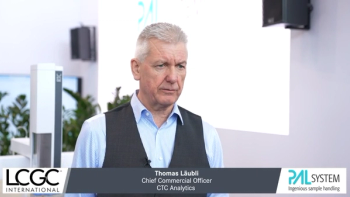
Thomas Läubli, CSO of CTC Analytics, demonstrates how automated sample preparation workflows and AI-driven software address the significant time and error rates associated with manual laboratory processes.
Sponsored
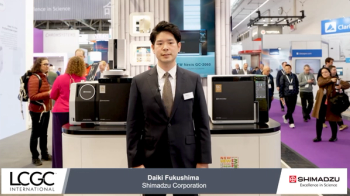
Daiki Fukushima presents the Nexis GC-2060 and discusses how the high-end, expandable system provides a versatile and flexible solution for modern laboratory analysis.
Sponsored
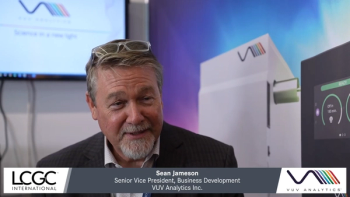
Sean Jameson, VUV Analytics Inc., discusses the company’s expanding European presence, growing adoption of fuel analysis methods, and ongoing efforts to advance standardized testing across petroleum, renewable fuels, and emerging analytical applications.
Sponsored
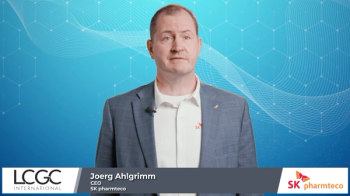
Joerg Ahlgrimm, CEO of SK pharmteco, outlines the company's strategic expansion into cell and gene therapy. He also details their commitment to global operational excellence and a culture of employee purpose.
Sponsored
Thomas Albinus, Product Manager Odour Analysis at GERSTEL, introduces the GERSTEL V-ITEX, an advanced headspace sampling technique for gas chromatography (GC) that enhances the detection of trace VOCs in complex matrices.
Sponsored
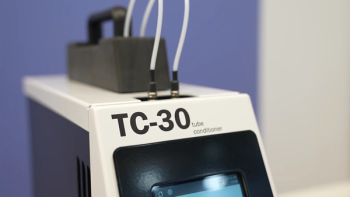
Paul Morris, Head of Product Management and Applications at Markes International, introduces the TC-30 tube conditioner, highlighting its ability to protect sample integrity and streamline laboratory workflows through automated sorbent tube cleaning.
Sponsored
Dr. Michael D'Antonio, CWC Labs, shares experience using the Infinity III UHPLC with the Pro iQ single quadrupole, controlled by OpenLab CDS, for screening and confirming food contaminants.
Sponsored
Denise Bell, VP Product Management & Marketing, and Gary Stimson, Principal Architect and Head of AI Technologies at LabVantage Solutions, explain the evolution from a traditional Laboratory Information Management System (LIMS) provider into an agentic AI–driven platform with the launch of CORTEX.
Sponsored
Why do industry leaders attend the Gulf Coast Conference (GCC)? Jean-François Borny, Global Analytical Services Senior Manager at Lummus Technology and Technical Chair of GCC, shares his perspective.
Sponsored
Dr. Joseph Lackey, Technical Manager at LGC Standards, provides an in-depth look at how calibration strategy selection in LC-MS bioanalysis influences data reliability.
Sponsored
Michael Schilling, Senior Scientist at the Getty Conservation Institute, explains how GC/MS and advanced pyrolysis techniques are used to analyze and preserve organic materials in works of art, from historic lacquers to modern plastics.
Sponsored
Zhanfei Liu, The University of Texas at Austin, highlights how pyrolysis supports precise characterization and quantification of organic matter in microplastics and nanoplastics, advancing research into their potential health effects.
Sponsored
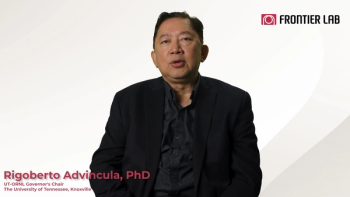
Rigoberto Advincula, PhD, of The University of Tennessee, Knoxville, explains how pyrolysis combined with GC/MS and AI-driven analysis advance polymer characterization, optimize composites, and support innovation in 3D printing and product development.
Sponsored
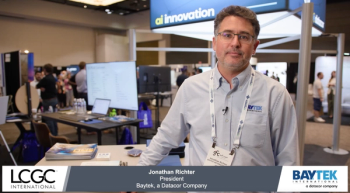
Jonathan Richter, President of Baytek, now part of Datacor, explains how these companies are working together to deliver industry-focused LIMS, instrument interfacing, and SQC solutions built specifically for the complex needs of refineries, petrochemical labs, and chemical manufacturers.
Sponsored
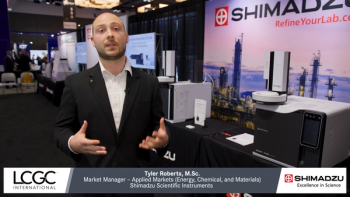
Tyler Roberts, M.Sc., from Shimadzu Scientific Instruments, details the new Nexis™ SCD-2030, ELEM-SPOT™, and Brevis™ GC-2050 innovations designed to boost sensitivity and efficiency for analysis in the sustainable fuels and energy industries.

Sponsored
Permeation tubes and systems that dynamically generate fresh, NIST-traceable gas standards offer significant benefits for calibration and R&D applications, particularly when working with trace concentrations in laboratory or industrial settings.

Sponsored
Sean Jameson, SVP of Business Development at VUV Analytics, discusses the newly released ASTM D8519 method. This method extends established VUV-based hydrocarbon analysis into the pyrolysis oil range, enabling automated, scalable characterization of complex recycled and biomass-derived feedstocks up to C64.


Sponsored
The launch of Alliance iS v2.0 Software delivers unmatched traceability, operational efficiency, and ease of use—empowering laboratories to strengthen compliance, streamline training, and continuously improve workflows.