LabVantage Solutions Inc.
Articles by LabVantage Solutions Inc.
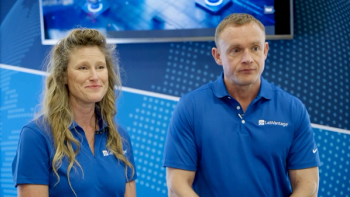
Denise Bell, VP Product Management & Marketing, and Gary Stimson, Principal Architect and Head of AI Technologies at LabVantage Solutions, explain the evolution from a traditional Laboratory Information Management System (LIMS) provider into an agentic AI–driven platform with the launch of CORTEX.
Leslie Wubbel, SaaS Product Manager at LabVantage, shares how the LabVantage cloud-based Laboratory Information Management System (LIMS) platform enables laboratories to digitally transform operations, unify workflows, and improve scalability across various industries. The discussion highlights market forces driving LIMS adoption, projected to grow by $1.6 billion, and explains how the platform utilizes Software as a Service (SaaS) and AI capabilities to accelerate R&D and go-to-market timelines. Learn more about:


Denise Bell, LabVantage Solutions Inc., describes how to utilize an integrated platform of lab informatics solutions to improve laboratory workflows.
In BioTech R&D, overcoming data fragmentation is crucial as it hinders innovation, leads to redundant efforts, and wastes resources.
Deriving antibodies from plasma involves a multi-step process, from plasma collection to antibody purification and quality control, ensuring the final product is safe and effective for therapeutic, diagnostic, or research use. Krish Gosh, PhD, MBA, President of TCG Digital, joined LCGC International to discuss how AI/GenAI applications can optimize several steps to enhance yield, profitability, and process monitoring.

Deriving antibodies from plasma products involves several steps, typically starting from the collection of plasma and ending with the purification of the desired antibodies. These are: plasma collection; plasma pooling; fractionation; antibody purification; concentration and formulation; quality control; and packaging and storage. This process results in a purified antibody product that can be used for therapeutic purposes, diagnostic tests, or research. Each step is critical to ensure the safety, efficacy, and quality of the final product. Applications of AI/GenAI in many of these steps can significantly help in the optimization of purification and yield of the desired antibodies. Some specific use-cases are: selecting and optimizing plasma units for optimized plasma pooling; GenAI solution for enterprise search on internal knowledge portal; analysing and optimizing production batch profitability, inventory, yields; monitoring production batch key performance indicators for outlier identification; monitoring production equipment to predict maintenance events; and reducing quality control laboratory testing turnaround time.
Innovation is the engine that powers a company’s growth and product development, and for enterprises with R&D laboratories, those lab environments are the greatest source of this innovation. In this white paper, learn how a platform approach to scientific data management, including semantic search, advanced analytics, and lab automation, leads to better enterprise decisions at the executive level, optimized lab performance, more discoveries, and stronger product pipelines.
As today’s labs continue to evolve, the software solutions that support them must too. Likewise, laboratory and organization leadership must be open to the advancements available to them from modern technologies. In this white paper, learn how a SaaS-based LIMS modernization program optimizes data management, fosters collaboration, and improves decision-making to stay at the forefront of scientific innovation.

Webinar Date/Time:
Thu, Oct 17, 2024 11:00 AM EDT
Webinar Date/Time: Thurs Aug 15, 2024 2pm EDT
Digital transformation is about more than moving from paper to glass. It’s about the way that enterprises use technology and data to build a business ecosystem, thereby reducing risk, accelerating innovation, and driving growth.
To help customers leverage digital transformation and prepare for the lab of the future, LabVantage Solutions has devised a five-step process for successfully implementing and profiting from AI in the lab and across the enterprise.
A subscription-based Laboratory Information Management System (LIMS), hosted in the cloud and delivered via the Internet, is a secure, scalable, and cost-effective alternative to traditional software licensing, installation, maintenance, validation, and management. Here’s what you need to know to determine if the software-as-a-service (SaaS) delivery model for a LIMS is right for your organization.
Advanced analytics in the lab can extract enormous value from an existing asset – your LIMS data. Discover how a lab-specific, LIMS-ready advanced analytics solution can solve the multi-challenges of data access, visibility, volume, and speed to yield complete data views and endless insights.
Drive growth by establishing integrated, AI-fueled lab systems and a data-driven corporate culture that’s ready and resilient, no matter what business challenges emerge tomorrow. Evolving to a Lab of the Future takes the right technologies, systems, and expert guidance.

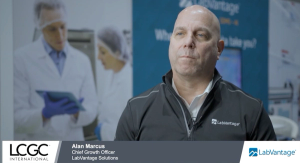
Alan Marcus (Chief Growth Officer, LabVantage Solutions) discusses how Labvantage's LIMS improves workflow for labs and scientists.
Learn how to partner with the right advisor helps for success in implementing evolving digital technologies

Webinar Date/Time: Wed, Nov 8, 2023 11:00 AM EST
Digital transformation is about more than moving from paper to glass. It’s about the way that enterprises use technology and data to build a business ecosystem, thereby reducing risk, accelerating innovation, and driving growth.
Using this advanced technology to transform LIMS data into action is already a feature of modern, fast-moving labs across all industries, and as you’ll see in the analytics opportunities described in this paper, it’s going to have an enormous impact
To help customers leverage digital transformation and prepare for the lab of the future, LabVantage Solutions has devised a five-step process for successfully implementing and profiting from AI in the lab and across the enterprise.
A subscription-based Laboratory Information Management System (LIMS), hosted in the cloud and delivered via the Internet, is a secure, scalable, and cost-effective alternative to traditional software licensing, installation, maintenance, validation, and management. Here’s what you need to know to determine if the software-as-a-service (SaaS) delivery model for a LIMS is right for your organization.
In this white paper, learn how to drive growth by establishing integrated, AI-fueled lab systems and a data-driven corporate culture that’s ready and resilient, no matter what business challenges emerge tomorrow.


Thursday, November 17, 2022 at 11am EDT | 10am CDT | 8am PDT
No one in a forensic laboratory wants to hear “non-compliance.” Learn how you can you employ a Forensic Information Management System to achieve and maintain accreditation requirements.

Dr. Robin MacDonald shares a bit about her time working in the Broward Sheriff’s Office crime lab and how it has helped her in her role as Senior Product Manager at LabVantage to assist the team in developing software to support forensic organizations in their mission to deliver effective service to the judicial process.
Wednesday and Thursday, June 29 and 30, 2022 Day 1: 8:00am – 11:15am EDT
Day 2: 8:00am – 11:15am EDT
Learn about the latest novel analytical techniques and workflows that help analysts obtain the results they are looking for in “real world” situations involving small molecules in the pharmaceutical sector and analysts analyzing small molecules in the environment.