





A new method has been created for determining N-nitrosamines (NAs) in pharmaceutical preparations using liquid chromatography with tandem mass spectrometry.
A new method has been created for determining N-nitrosamines (NAs) in pharmaceutical preparations using liquid chromatography with tandem mass spectrometry.

University of Turin scientists developed a UHPLC–PDA-MS/MS-based method for quantifying plant-specialized metabolites for determining the quality of medicinal and aromatic plants.

Ion chromatography can be utilized in various ways to analyze halogens and similar substances within inorganic matrices.

New methods have been developed to determine polar emerging contaminants with hydrophilic interaction liquid chromatography (HILIC) techniques.

Per- and polyfluoroalkyl substances (PFAS) often make headlines as health agencies worldwide work to regulate their use. While most restrictions focus on PFAS in drinking water, the primary exposure pathway, scientists are increasingly investigating alternative routes, such as dermal absorption from cosmetics, sunscreens, and other everyday products.
We recently published a three-part interview with Chris Reddy. Here, we provide the full text transcript of the conversation, which includes some additional insights not presented in the video interview.

In a continuation of our Inside the Laboratory interview with Chris Reddy, we asked him about the recent documentary, “Out of Plain Sight,” that featured him and his team’s research.

An investigation into fluoroelastomer watch bands has revealed high levels of perfluorohexanoic acid (PFHxA), a short-chain per- and polyfluoroalkyl substance (PFAS). LCGC International spoke to Professor Graham Peaslee from the University of Notre Dame about his team’s study using liquid chromatography tandem mass spectrometry (LC–MS/MS) and PFHxA's potential for dermal absorption, and the subsequent environmental and health impacts.

Scientists from Nanjing University recently developed a new solid-phase microextraction (SPME)-based system for detecting nitrated polycyclic aromatic hydrocarbons (nitro-PAHs) in aquatic environments.
In the second part of this edition of “Inside the Laboratory,” Christopher Reddy of Wood Hole Oceanographic Institution discusses why comprehensive two-dimensional gas chromatography is the optimal technique for investigating complex mixtures of organic chemicals in the environment.

“Forever chemicals” per- and polyfluoroalkyl substances (PFAS) have been found in smartwatch and fitness bands and analyzed using liquid chromatography tandem mass spectrometry (LC–MS/MS) and direct total oxidative precursor (dTOP) assay.
In this edition of “Inside the Laboratory,” Christopher Reddy of Wood Hole Oceanographic Institution discusses his laboratory’s work investigating oil spills and uncovering dichlorodiphenyltrichloroethane (DDT) deposits on the ocean floor. This interview is part one of three of our conversation with Reddy.

Here is some of the most popular content posted on LCGC International this week.

LCGC International sat down with Christopher “Chris” Reddy of Woods Hole Oceanographic Institution, whose research was the basis for a recently released documentary.
Using ultra-performance liquid chromatography-tandem mass spectrometry (UHPLC-MS/MS), China Pharmaceutical University scientists developed a new method for analyzing compounds found in wastewater.
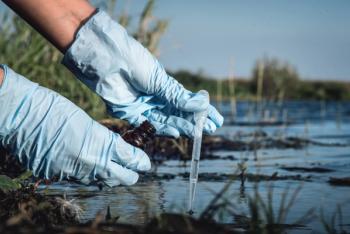
Scientists from the China University of Sciences combined magnetic solid-phase extraction (MSPE) with gas chromatography–mass spectrometry (GC–MS) to analyze perfluoro carboxylic acids (PFCAs) in different water environments.

Scientists from the Shandong Academy of Sciences recently created a new approach for performing magnetic solid-phase extraction on trace triazine herbicides.
Here is some of the most popular content posted on LCGC International this week.

A machine-learning tool to enhance the detection of small organic pollutants in water has been developed and tested.
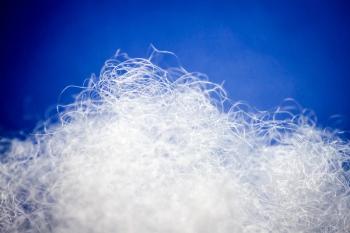
University of Valencia scientists recently developed a method using solid-phase extraction (SPE) followed by high-performance liquid chromatography coupled to high-resolution mass spectrometry (HPLC–HRMS/MS) for detecting microplastics and other harmful substances in textiles.

Spanish scientists recently tested flow injection analysis–mass spectrometry (FIA–MS) and its effectiveness in detecting fraudulent substances in Coleus forskohlii food supplements.

University of Innsbruck scientists recently used ultrahigh-performance supercritical fluid chromatography to facilitate the determination of anthraquinone derivatives in alder buckthorn.

Throughout 2024, the editors of LCGC International attended chromatography conferences across the globe. Below, you’ll find a sampling and overview of our conference coverage from the year.
This article highlights a curated selection of the most popular GC-related content, with a focus on the diverse applications of the technique, as featured in LCGC.

Waters Corporation has released its 2024 environmental, social, and governance Report detailing its continued sustainability growth.