





Environmental Analysis
Latest News
Advertisement
Latest Videos





Advertisement
More News

New QuEChERs-based methods were created to detect pesticide residues in commercial dry pet food.

Shea kernels contain bioactive secondary metabolites that can offer potential health benefits. Researchers aimed to learn more about these substances.

Here is some of the most popular content posted on LCGC International this week.

Microplastics can linger in aquatic ecosystems, and there are limited studies that evaluate those substances’ sorption kinetics. Researchers aimed to investigate the sorption behavior of cortisone on MPs.

Analyzing esters from marigold flowers can be a complicated process. Researchers created a new approach for separating these substances using ultra-high-performance low pressure supercritical chromatography (UHP/LP-SFC).

Water pollution management is an important process that faces difficulty with handling microplastics. University of Porto (Portugal) researchers aimed to optimize existing methods to help rectify this issue.
Here is some of the most popular content posted on LCGC International this week.

Diflubenzuron and similar compounds can be signs of cattle fever ticks, which can cause morbidity in cattle. LC–MS/MS was recently tested as a means of detecting these disease-carrying insects.

Dimethylamine (DMA) is the smallest organic amine, typically being found in both humans and marine ecosystems. Dimitrios Tiskas of Hannover Medical School recently analyzed the nature and significance of DMA and other amines.
Here is some of the most popular content posted on LCGC International this week.

A new tutorial article has been created focusing on the best practices in batch sorption when removing contaminants using biochar-based techniques.
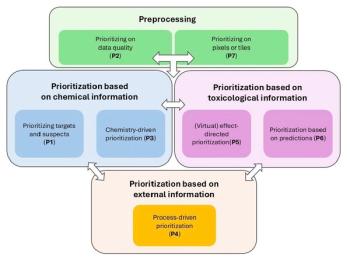
This article discusses how integrating seven prioritization strategies can enhance compound identification, support environmental risk assessment, and accelerate decision-making.
Here is some of the most popular content posted on LCGC International this week.
Here is some of the most popular content posted on LCGC International this week.

Webcasts
Webinar Date/Time: Wednesday, May 28, and Thursday, May 29, 2025 Morning Sessions: 2:00pm BST | 9:00am EST | 3:00pm CEST Lunchtime Sessions: 5:30pm BST | 12:30pm EST | 6:30pm CEST Afternoon Sessions: 6:30pm BST | 1:30pm EST | 7:30pm CEST

As the push for green chemistry continues to grow, University of Almeria researchers created a review for ways chromatographic techniques could be more environmentally friendly.

This new study presents a validated QuEChERS–LC-MS/MS method for detecting eight persistent, mobile, and toxic substances in escarole, tomatoes, and tomato leaves irrigated with contaminated water.

Haloacetic acid detection has become important when analyzing drinking and swimming pool water. University of Tasmania researchers have begun applying capillary liquid chromatography as a means of detecting these substances.
Best of the Week: Future of Green Chromatography, BASF and Mingyang Collaboration, Cannabis Analysis
Here is some of the most popular content posted on LCGC International this week.

LCGC International spoke to Adrián de la Fuente and Silvia Valverde Bastardo from the University of Valladolid, Spain, about the development of a miniaturized headspace solid-phase microextraction gas chromatography–quadrupole time-of-flight mass spectrometry (HS-SPME-GC–QTOF-MS) method for the analysis of biogenic volatile organic compounds (BVOCs) emitted by native Spanish trees.

As part of the collaboration, BASF will contribute its R&D expertise in catalytic materials and technologies, while Mingyang will focus on applying its research capabilities to Power-to-X equipment.

Novichok nerve agents are lethal substances when improperly handled. The researchers from the University of Helsinki aimed to find new ways of neutralizing Novichok A-234.
Here is some of the most popular content posted on LCGC International this week.

Root exudates—substances secreted by living plant roots—are challenging to sample, as they are typically extracted using artificial devices and can vary widely in both quantity and composition across plant species.

A team of scientists from the Paris university developed and optimized MAVERIC, a miniaturized and autonomous gas chromatography (GC) system coupled to a nano-gravimetric detector (NGD) based on a NEMS (nano-electromechanical-system) resonator.
Advertisement
Advertisement