






Environmental Analysis
Latest News
Advertisement
Latest Videos





Advertisement
More News

Scientists from the Zhejiang Institute of Quality Scientists used liquid chromatography–tandem mass spectrometry to detect 35 PFAS in paper and plastic products.

Cation exchange chromatography was tested for its effects on the elution behavior of the vesicular stomatitis virus, which is a contagious disease among livestock.

A new solid-phase microextraction-based technique has been developed for extracting triazole residues from environmental samples including water and juice.

High-performance liquid chromatography with diode-array detection (HPLC-DAD) was tested for detecting antibiotic residues in environmental samples.

Here is some of the most popular content posted on LCGC International this week.

Nadia Gadi and Allisson Barros de Souza spoke to LCGC International about their investigation into the application of electrochemical advanced oxidation processes (eAOPs) for the efficient removal of pharmaceutical residues in wastewater.

Because PFAS is a hot topic, LCGC International will be releasing a video series about it, which will feature numerous North Carolina researchers. We preview this video series here.

During Waters Corporation’s 2025 Investor Day, the company’s top executives highlighted the company’s growth and hints at future points of development.
Here is some of the most popular content posted on LCGC International this week.

LCGC International spoke to Paul-Albert Schneide and Oskar Munk Kronik about the development and application of a novel two-step workflow—mass filtering (MF) combined with multivariate curve resolution (MCR)—for extracting clean mass spectra from trace-level compounds in LC×LC–HRMS data.
Here is some of the most popular content posted on LCGC International this week.

Guangdong University of Technology researchers used a gas chromatography-based method to detect nonylphenol isomers in sewage and wastewater sludge.
Here is some of the most popular content posted on LCGC International this week.


Ardiana Kajtazi discusses her research identifying organic micropollutants in water using liquid chromatography–high-resolution mass spectrometry (LC–HRMS). She highlights the standardized filtration approach her team has developed based on intersection principles, utilizing retention indices from two reversed-phase liquid chromatography (RPLC) columns.

A two-step workflow to extract pure mass spectra from comprehensive two-dimensional liquid chromatography high-resolution mass spectrometry (LC×LC–HRMS) data has been created and tested.

Henan University scientists recently combined capillary electrophoresis (CE) and magnetic solid-phase extraction (MSPE) to isolate flavonoid compounds from Lonicera japonica Thunb leaves.

Thermal desorption and gas chromatography-tandem mass spectrometry were used to create a method for detecting airborne polycyclic aromatic hydrocarbon (PAH) samples.

In this Q&A interview, Samiksha Singh discusses her team’s latest research in microplastics research, which provided insight into how marine monitoring can improve mitigation of plastic pollution.

Webcasts
Webinar Date/Time: Tuesday, March 25th, and Wednesday, March 26th, 2025 Morning Session: 9:30 am EDT | 6:30 am PDT | 1:30 pm GMT | 2:30 pm CET Afternoon Session: 11:30 am EDT | 8:30 am PDT | 3:30 pm GMT | 4:30 pm CET

To honor the 2025 International Day of Women and Girls in Science, the editors of LCGC share highlights from our series done in collaboration with Females in Mass Spectrometry (FeMS) group.
Here is some of the most popular content posted on LCGC International this week.
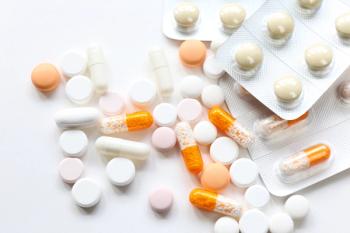
A new method has been created for determining N-nitrosamines (NAs) in pharmaceutical preparations using liquid chromatography with tandem mass spectrometry.

University of Turin scientists developed a UHPLC–PDA-MS/MS-based method for quantifying plant-specialized metabolites for determining the quality of medicinal and aromatic plants.

Ion chromatography can be utilized in various ways to analyze halogens and similar substances within inorganic matrices.
Advertisement
Advertisement