




Scientists recently developed new GC/LC-Q-TOF/MS-based method for determining pesticides in Angelica sinensis, a traditional Chinese medicine.

Scientists recently developed new GC/LC-Q-TOF/MS-based method for determining pesticides in Angelica sinensis, a traditional Chinese medicine.

LCGC International sat down with Faith Johnson of ECOLAB to discuss her career and work with the Females in Mass Spectrometry (FeMS) group.

Limited toxicokinetic and toxicologic information is available about a diverse set of per- and polyfluoroalkyl substances (PFAS), but methods based on gas chromatography–tandem mass spectrometry (GC–MS/MS) can help unravel some of the mystery.

With green chemistry becoming a hot topic in chromatography, researchers from the Institute for Instrumental Analytics and Bioanalytics at Mannheim University of Applied Sciences examined gas chromatography–ion mobility spectrometry (GC–IMS) as a greener alternative to GC–MS.

Here is some of the most popular content posted on LCGC International this week.

Everyone is talking about sustainability, and organizations are creating sustainability programs. But what does green chemistry really mean, and how does it apply to gas chromatography?

In this feature article, we profile three global cities (Cairo, Beijing, and Delhi) and how they are combatting the air pollution crisis to better protect the health of their residents.

Webcasts
Webinar Date/Time: Mon, Nov 18, 2024 11:00 AM EST

Politecnico di Milano scientists recently created a new optimization strategy for chromatographically purifying oligonucleotides.
Here is some of the most popular content posted on LCGC International this week.
Here is some of the most popular content posted on LCGC International this week.

This review aims to provide a summary of the most current analytical techniques and their applications in per- and polyfluoroalkyl substances (PFAS) research, contributing to the ongoing efforts to monitor and mitigate PFAS contamination.

Raquel Gonzalez de Vega of the University of Graz recently spoke to us about her work tracking per- and polyfluoroalkyl substances (PFAS) in ski wax products.

Linda S. Lee of Purdue University discusses her latest research investigating whether highly degraded urban soils could be restored using biosolids.
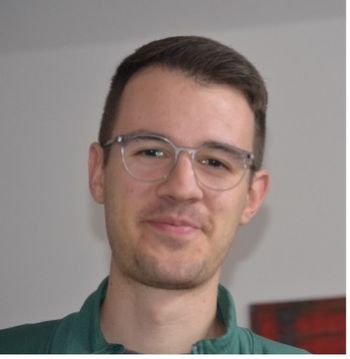
Jonathan Zweigle of the University Tübingen spoke with LCGC International about his work using non-targeted screening based on high-resolution mass spectrometry (HRMS) to detect PFAS in soil samples. HRMS allows scientists to determine the elemental and isotopic composition of a sample with high accuracy.

Northwest University and Shaanxi Institute for Food and Drug Control scientists recently tested a new means of separating bioactive compounds from herbal extracts.

In this LCGC Blog, Daipayan Roy and Muhammed Qamar Farooq of Amgen discuss the history and impact of supercritical fluid chromatography (SFC) throughout the years.
Here is some of the most popular content posted on LCGC International this week.

Scientists from Institut de Combustion, Aérothermique, Réactivité et Environnement (ICARE-CNRS) in Orléans, France and Chromatotec in Saint-Antoine, France recently created a new algorithm for detecting volatile organic compounds (VOCs) in ambient air.

As part of our ISC 2024 coverage, we recently interviewed Anneli Kruve of Stockholm University about her scientific background and her presentation about eludicating toxic chemicals' structures using LC/HRMS.

Scientists from around the world presented their groundbreaking technologies for in-field chromatography analysis during the International Symposium on Chromatography (ISC) in Liverpool, U.K.

Webcasts
Webinar Date/Time: Wed, Nov 6, 2024 2:00 PM EST

A morning session at the International Symposium on Chromatography in Liverpool presented analytical challenges and potential solutions for PFAS analysis, oil pollution, and microplastics.

The 34th International Symposium on Chromatography kicked off on October 6 in Liverpool, featuring two plenary sessions and an opening ceremony.

Universidade Federal do Rio Grande scientists recently created a vortex-assisted matrix solid-phase dispersion (VA-MSPD) method for extracting persistent organic pollutants from shrimp.