
The Application Notebook
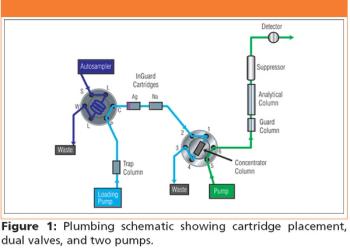
In ion chromatography, the presence of a large amount of matrix ions makes quantification of the target ions difficult.
The Application Notebook
In ion chromatography, the presence of a large amount of matrix ions makes quantification of the target ions difficult.

The Application Notebook
Biomolecules, such as proteins and peptides, represent a growing number of pharmaceutical drug entities.
The Application Notebook
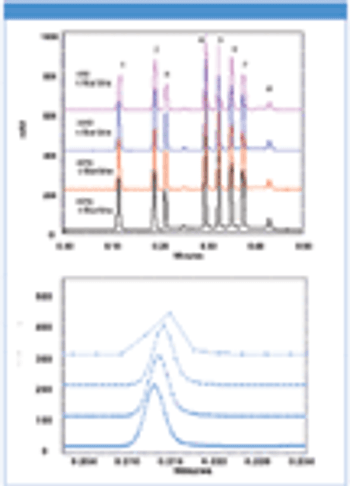
Ultra fast separations of acetaminophen, caffeine, propofol, and parabens are achieved in 30 s using the Accelaâ„¢ UHPLC system with the 80 Hz PDA detector.
The Application Notebook
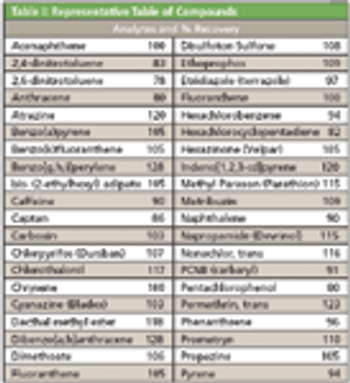
The extraction and analysis of semi-volatile organic (SVOC's) compounds can be problematic due to the wide range of analyte types and polarities.

The Application Notebook
Glyphosate (GP) is a non-selective, postemergence herbicide widely used for weed and vegetative control.

The Application Notebook
Pyrolysis GC?MS is a valuable tool for the material scientist. It is used principally for qualitative identification of polymers and their breakdown products. This application note displays how this technique can also be used for quantitative determination of polymer compositions by comparing peak area ratios of monomers and/or primary pyrolysis products.

The Application Notebook
Viruses are packets of infectious nucleic acid (either DNA or RNA) surrounded by a protective coat consisting of a large number of protein subunits.

The Application Notebook
Thermogravimetric analysis (TGA) measures the change in the weight of a sample as a function of temperature.

The Application Notebook
Capillary PLOT columns can be a simpler alternative to packed column setups for propylene analysis. Here we demonstrate a single column setup that provides fast baseline resolution of propylene impurities.

The Application Notebook
The determination of PCBs, as well as other environmental contaminants, in fish tissue requires extensive sample cleanup prior to analysis by gas chromatography with an electron capture detector (GC-ECD).

The Application Notebook
Spice and fragrance essential oil raw materials frankincense (Boswellia carterii) from India and Somalia, sandalwood (Santalum album) from India and Indonesia, and corn mint (Mentha haplocalyx) from the United States were analyzed for on-site analytical profiling and confirmation of quality and purity of therapeutic grade essential oils from raw materials.

The Application Notebook
ISOLUTE EPH columns have been developed to fractionate pentane or hexane based soil extracts into aliphatic and aromatic hydrocarbon fractions (C8–C40 aliphatics, C10–C22 aromatics).
The Application Notebook
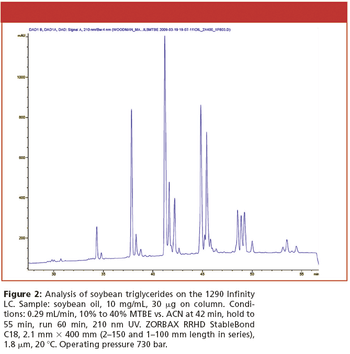
The Agilent 1290 Infinity LC has significant capabilities for a wide range of HPLC and UHPLC applications.
The Application Notebook
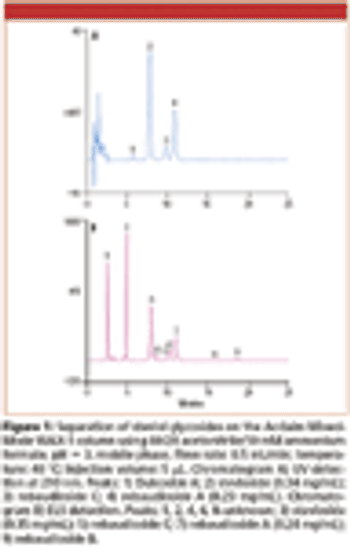
The stevia plant and its extracts have long been used as sweeteners in Asia and Latin America. Two steviol glycosides present in plant tissue, stevioside, and rebaudioside A, are largely responsible for the sweet flavor (1).

The Application Notebook
Separation of polar compounds by conventional reverse phase chromatography can be challenging due to their poor retention. Other HPLC approaches include normal phase chromatography (NPC) and its variation, hydrophilic interaction chromatography (HILIC).
The Application Notebook
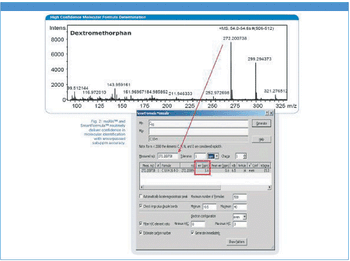
Modern analytical applications often demand definitive tandem MS results on ever more complex samples utilizing fast separation techniques.
The Application Notebook
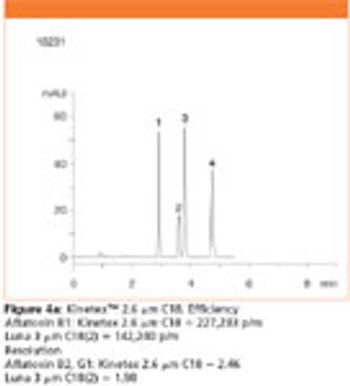
Over the past several years column manufacturers have been introducing columns packed with smaller particle sizes – sub-2 µm and 3 µm – to take advantage of the improvements that such small particle size columns offer.
The Application Notebook
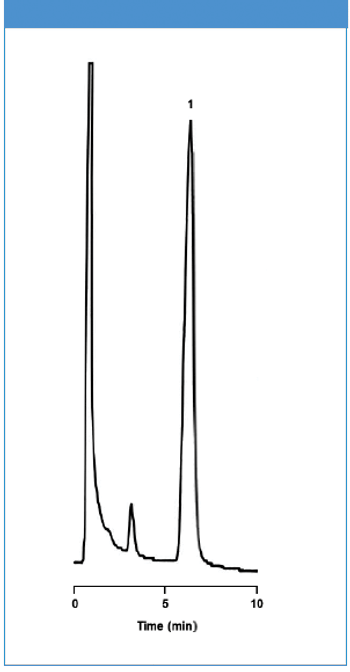
Hamilton Company is best known for manufacturing precision fluid measuring products, including syringes for HPLC and GC.
The Application Notebook
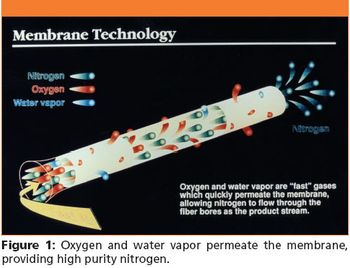
Since the gas flow required for the separation step in gas chromatography is frequently lower that that required to optimize the detection, nitrogen is used as a make-up gas to increase the gas flow for detection.
The Application Notebook
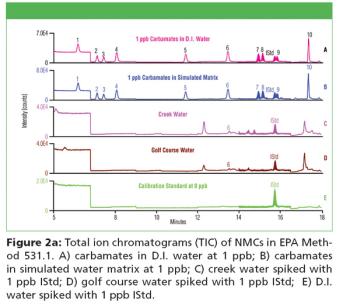
N-methyl carbamates (NMCs) are widely used as pesticides and have been reported in the environment and food.
The Application Notebook
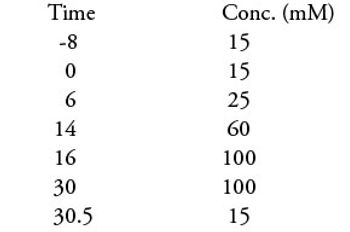
The characteristic composition of ionic liquids (an organic cation or anion and a counterion, in either organic or inorganic form) exhibits unique properties, such as extremely low vapor pressure, excellent thermal stability, electrical conductivity, high polarity, and miscibility with various types of solvents.
The Application Notebook
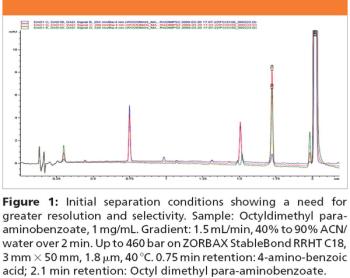
The combined benefits are demonstrated by a separation of impurities found in a sample of octyl-dimethyl-4-aminobenzoate.

The Application Notebook
Genotoxic impurities in pharmaceutical products have come under increasing regulatory scrutiny, with exposure limits <1.5 μg/day typically being reported for most products.

The Application Notebook
In this study, data was collected to evaluate carryover of target analytes in subsequent blanks following high concentration samples.

The Application Notebook
The procedure involves a rapid and efficient pretreatment with SampliQ QuEChERS kits. The homogenized liver sample was initially extracted in a buffered aqueous/1% acetic acid acetonitrile system with an extraction and partitioning step after the addition of salts.

The Application Notebook
Recent technological advances in macromolecular crystallography led to focus on the study of more and more sophisticated biological systems, such as protein-protein complexes.
The Application Notebook
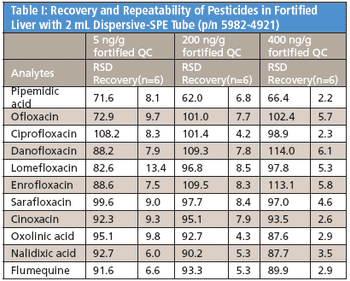
The procedure involves a rapid and efficient pretreatment by SampliQ QuEChERS kits. The homogenized liver sample was initially extracted in a buffered aqueous, 5% formic acid acetonitrile system.

The Application Notebook
Greater peak capacity and resolution can be easily obtained for gradient analysis of complex samples by using sub-2 µm particles in longer column lengths.

The Application Notebook
The GC–MS analysis of volatile organics in drinking water according to United States Environmental Protection Agency (US EPA) Method 524.2 offers a number of analytical challenges, ranging from water handling to very low target compound concentrations.

The Application Notebook
Excellent reversed-phase separations using a protein-based column, CHIRAL-AGP, with volatile LC–MS compatible buffer systems have been obtained for a range of basic solutes.