
The Application Notebook
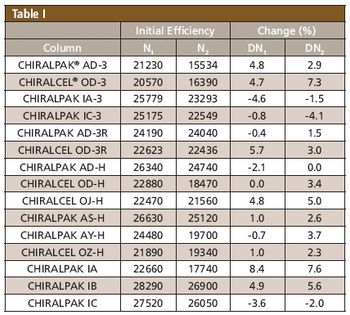
Analytical columns packed with both 3- and 5- μm polysaccharide-based wide-pore chiral stationary phases (CSP) are shown to be stable to high operating pressures over a prolonged period.
The Application Notebook
Analytical columns packed with both 3- and 5- μm polysaccharide-based wide-pore chiral stationary phases (CSP) are shown to be stable to high operating pressures over a prolonged period.
The Application Notebook
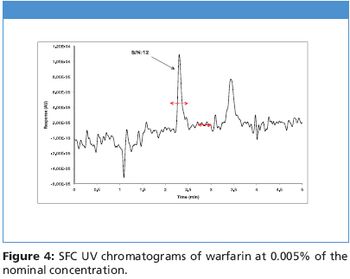
Regulatory requirements for the identification, quantification, and control of impurities in drug substances and their formulated products are increasingly being explicitly defined, particularly through the International Conference of Harmonization (ICH).

The Application Notebook
The analysis of polar, ionic metabolites is important for drug discovery and biomarker research. Often times, it is necessary to separate these metabolites from each other and biological matrixes prior to MS detection (1).

The Application Notebook
A recent poll indicated that millions of consumers were "very" concerned that their public water supplies may be contaminated with trace amounts of pharmaceuticals (1).

The Application Notebook
To guide the development of aggregate free protein formulations, there is an urgent need for formulations, there is an urgent need for complementary methods which allow a sensitive detection, characterization, and quantification of different types of protein aggregates.

The Application Notebook
The Pirkle Type Whelk-O®1 CSP was used several years ago to solve a challenging chiral separation for early phase drug development.

The Application Notebook
Oxidation of amino acid residues can alter a protein's biological activity, half-life, and immunogenicity.

The Application Notebook
Glycosylation is a post-translational modification process that can significantly affect the biological properties of therapeutic proteins.

The Application Notebook
Geosmin and 2-Methylisoborneol are organic compounds that have a distinct scent.

The Application Notebook
High-performance liquid chromatography (HPLC) methods are commonly used for the analysis of caffeine in beverages (1–3).
The Application Notebook
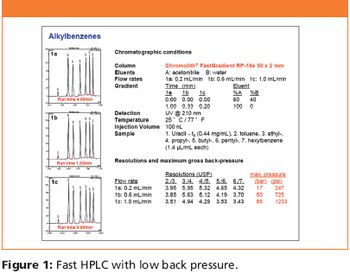
Since 2001 when they became available in North America, monolithic silica HPLC columns have become valuable analytical tools in the R&D and methods development laboratories.
The Application Notebook
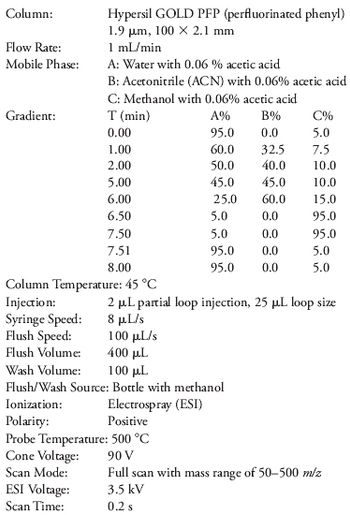
Positively identify trace amounts of cannabinoids in a complex food matrix quickly, with minimal sample preparation and no chemical derivatization.

The Application Notebook
Analysis of oral fluids has become a popular biological fluid to analyze for drugs of abuse as an alternative to blood and urine.
The Application Notebook
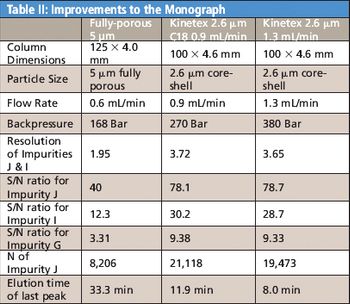
Recently a newly developed Kinetex 2.6 µm Core-Shell chromatographic particle has been commercialized that offers the performance benefits of sub-2 µm fully-porous particles but at substantially lower operating pressures.

The Application Notebook
Salt formation is a critical aspect in drug development and HPLC is an important tool for determination of pharmaceutical counterions.

The Application Notebook
Since melamine and its metabolites are extremely polar compounds, they serve as very good candidates for HILIC chromatography. Simultaneous and fast determination and confirmation of melamine and cyanuric acid along with two other compounds using a novel amino bonded phase in HILIC mode coupled with a complete solutions approach is presented.

The Application Notebook
Homeland security requirements create the need for portable mass spectrometers, with ion detectors capable of performing at elevated pressure.

The Application Notebook
Many polar compounds are difficult to retain by reversed-phase analysis without the use of ion-pair chromatography. We have overcome this disadvantage with a revolutionary phase structure called "Multi-mode ODS." This technology uses uniformly blended packing material consisting of two types of porous silica particles: 3 μm silica substituted with ODS+cation ligands and 3 μm silica substituted with ODS+anion ligands (Figure 1). This novel multi-mode ODS column, named Scherzo SM-C18, enables a multi-separation mode, consisting of: anion exchange, cation exchange, normal phase, and reversed-phase. In this article, we will validate this multi-separation mode by separating compounds which are difficult to separate on ODS column.
The Application Notebook
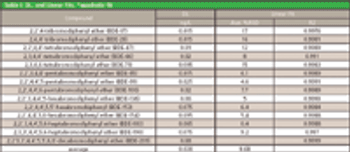
Polybrominated diphenyl ethers (PBDEs) are bioaccumulativetoxic compounds that are used as flame retardants. They have high boiling points and low thermal stability which makes analysis by GC–MS challenging. Additional bromines increase the thermal instability. A method was developed to analyze for polybrominated biphenyls using a large volume injection, short analytical column, and high mass tuning algorithm on the Thermo Scientific DSQ II with detection by EI Single Ion Monitoring (SIM).

The Application Notebook
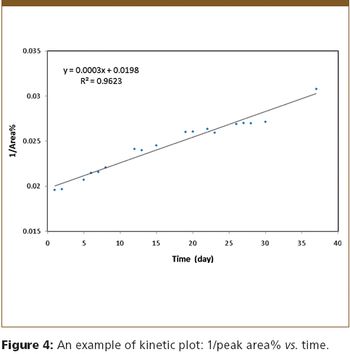
Tobacco Specific Nitrosamines (TSNA) are a group of carcinogens found only in tobacco products and are formed from nicotine and related alkaloids during the production and processing of tobacco and tobacco products (1). Due to their carcinogenic properties, efforts have been made to reduce TSNA levels in tobacco products. The project goal was to demonstrate a high throughput and sensitive method to monitor TSNA levels.
The Application Notebook
In the past few decades, single enantiomers and stereoisomers have overtaken achiral molecules in the percentage of approved drugs in the market. Because isomers can have different biological/pharmacological/toxicological properties, authorities, such as the European Pharmacopoeia and the FDA, have asserted escalated emphasis on controlling isomer content in drug compounds and require that stereoisomers, "be treated as separate drugs and developed accordingly" with rare exception. The separation and quantification of stereoisomers is therefore of great importance, especially when considering pharmaceutical compounds (1).

The Application Notebook
Viruses are packets of infectious nucleic acid (either DNA or RNA) surrounded by a protective coat consisting of a large number of protein subunits. Since viruses can cause various diseases - some life-threatening - characterizing virus particles thoroughly in terms of their size distribution, aggregation, and absolute counts-per-unit volume is of extreme importance.

The Application Notebook
This article describes the use of combined ion chromatography-mass spectrometry (IC–MS) and ion chromatography-inductively coupled plasma mass spectrometry (IC-ICP–MS) to analyze potentially harmful compounds.

The Application Notebook
Trace-level chlorinated hydrocarbon analyses using methods such as U.S. EPA Method 551.1 are important tools for assessing organochlorine contamination in water. The wide diversity of target organochlorine compounds can prove chromatographically challenging due mainly to their high volatility and limited retention. This application note shows the benefits of using an Agilent J&W HP-1ms Ultra Inert Capillary GC column as the primary column for detection in this dual-column analysis.

The Application Notebook
Biodiesel is much in the news today as an alternate fuel source that is safe and nontoxic. It is renewable, via farming and recycling, and is biodegradable. It is cleaner burning than petroleum-based gasolines, with virtually no sulfur and with no net carbon load to the atmosphere.

The Application Notebook
Human health not only depends on providing good medical care, but also on the priority given to prevent exposure to environmental and other health risks. Persistent Organic Pollutants (POPs) are organic compounds typically of anthropogenic origin that resist degradation and accumulate in the food chain and are associated with adverse effects on human health and the environment (1). Due to their toxicity to humans, at much lower concentration than other pollutants, it is important to monitor compounds like polychlorinated dioxins/furans PCDD/Fs, DLPCBs, BDEs, and PCNs. More sophisticated requirements are needed for their analysis. In the past, extraction and clean-up of POPs present in fish and biota samples were conducted with procedures such as Soxhlet extraction, acid digestion, and liquid-liquid extraction. The clean-up of these samples was accomplished through chromatographic columns using different types of adsorption media such as silica, alumina, and carbon. These analytical methods used for analysis..

The Application Notebook
Although supercritical fluid chromatography (SFC) is generally regarded as a technique to separate enantiomers, it has also been proven in many laboratories as a fast approach for the purification of impurities in achiral samples.

The Application Notebook
Rapid sample preparation using the CUSTODIONâ„¢ solid phase microextraction (SPME) syringe was applied to chemical warfare agents (CWAs), CWA simulants, by-products, and precursors. The samples were analyzed quickly and reliably with a sample-to-sample cycle time of less than 3 min using the GUARDIONâ„¢-7 portable capillary gas chromatograph toroidal ion trap mass spectrometer (GC–TMS).

The Application Notebook
Over-expression of recombinant proteins is commonly used for the production of protein reagents in industry and academia. Problems often occur relating to the stress put on the cells to deal with this huge increase in synthesis. Cellular proteins that are part of the protein synthesis machinery are often up-regulated under such conditions. Large quantities of the recombinant protein can be bound to these cellular proteins, making purification difficult.

The Application Notebook
Protein phosphorylation is one of the most prevalent intracellular protein modifications, regulating numerous cellular processes including cell differentiation, proliferation, and migration. Approximately 30% of cell proteins are phosphorylated at any given time and changes in protein phosphorylation often signal developmental or pathological disorders (1). To better understand the role of protein phosphorylation, it is important to separate the phosphorylated forms of a given protein.