

The variables that are most important for improving the separation of complex samples are quite different from those for simpler samples. Considering these differences can save time and resources.
The variables that are most important for improving the separation of complex samples are quite different from those for simpler samples. Considering these differences can save time and resources.

When can analyte retention deviate from what is expected or normal? We explain three subtle causes.

Even relatively simple mixtures are not always easy to separate. What are the options for adjusting selectivity in reversed-phase LC separations?

When considering different ways to improve an established LC method, it helps to start by reviewing some essential concepts.

Estimating expected peak widths helps us determine when a column and LC system is not performing optimally.

Knowing the tips and tricks of producing quality LC–MS data for peptide analysis can help streamline troubleshooting when problems occur.

There are various physical and chemical causes of low detection sensitivity. Here, we address some of these causes, and how to troubleshoot them.

When esterification occurs in your LC mobile phase, knowing how baseline quality, retention, and selectivity are affected will help you mitigate the effects.

Knowing the likely causes of baseline-related problems will help you solve them.

As two-dimensional liquid chromatography (2D-LC) becomes more widely used, system suitability tests (SSTs) become even more important.

We explain several of the more frequent causes of bad peak shapes in liquid chromatography and provide tips on how to remedy them.

Retention time fluctuations are challenging to deal with, especially in two-dimensional liquid chromatography (2D-LC) separations. Here, two approaches are presented that can help navigate this challenge.

Developing a short list of likely causes of retention-time problems in reversed-phase LC makes troubleshooting easier.

With kinetic plots, you can make better-informed column choices. Here’s how.

A kinetic plot is a powerful tool, but how do you construct one—from either experimental data or data from other sources? We explain.

Kinetic plots can help us understand how different combinations of parameters will perform in relation the time needed to acquire a particular column efficiency—and thus resolution.

Deviations from the expected pressure in modern LC systems (too low, too high, or fluctuating) can be diagnosed and more quickly resolved using the streamlined troubleshooting practices shown here.

What leads to an asymmetric peak shape? Physiochemical phenomena can help chromatographers identify whether the cause of asymmetry has a chemical or physical origin.

Column: LC Troubleshooting
As the field moves toward routine use of pressures well above 400 bar, the effect of pressure on retention should not be overlooked.

In a continuing series on peak shapes, we focus on potential physical causes of asymmetry, including column packing, changes in the packed particle bed, and accumulation of debris in the column.

In this first installment in a series on the causes of peak asymmetry, we discuss basic concepts in peak shape, explore poor fluidic connections as a common cause of peak tailing, and explain what to do about it.

In the final article of this series on extracolumn dispersion, we look at elution mode, post-column flow splitting, and a free calculator to use during method development.

In recent articles, we reviewed the basic concepts of extracolumn dispersion and how this phenomenon can impact the quality of an LC separation. We now specifically discuss the effects of dispersion that can occur due to tubing and detectors.

Dispersion of analyte peaks outside of chromatography columns can seriously erode the resolution provided by good columns. Here, we focus on the contribution of the sample injection step to the total level of extracolumn dispersion in an LC system.

Dispersion of analyte zones outside of the column often compromises the quality of an LC separation—particularly in smaller columns with smaller particles. We explain basic concepts in extra-column dispersion from the point of view of an entire instrument.

Liquid chromatography (LC) pumps produce mobile-phase streams with short-term variations in mobile-phase composition. We explain the impact of these waves on retention time in reversed-phase LC and what to do about it.

Liquid chromatography (LC) pumps produce mobile-phase streams with small short-term variations in mobile phase composition. We explain the origin of these variations and their effects on chromatographic performance.

Sometimes our approach to troubleshooting specific problems has to change in response to changes in high performance liquid chromatography (HPLC) technology over time. In this installment, we discuss changes in technologies for mobile-phase degassing, silica-based stationary phases, and models for reversed-phase selectivity.
Charged aerosol detection is a powerful complement to UV and MS, but successful implementation requires understanding a few key factors, including response dependencies on temperature, nebulization process, analyte volatility, and mobile-phase composition.
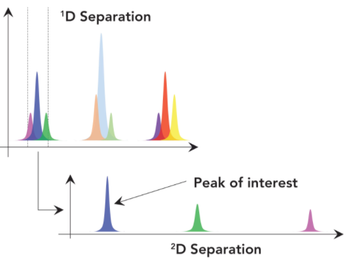
In 2D-LC, properties of the mobile phase used in first step can negatively affect the second step. We explain why this problem happens and how to avoid it.