

LCGC North America
Guest authors Luke Chimuka and Ewa Cukrowska provide an in-depth look at the verious approaches to passive sampling, weighing the merits and challenges for each type.
LCGC North America
Guest authors Luke Chimuka and Ewa Cukrowska provide an in-depth look at the verious approaches to passive sampling, weighing the merits and challenges for each type.
LCGC Europe
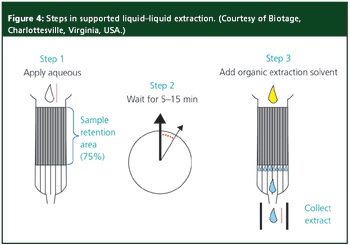
Liquid–liquid extraction (LLE) is among the most widely used sample preparation methods. In this month's instalment of "Sample Preparation Perspectives," Ron Majors discusses newer LLE approaches that offer significant advantages over classic methods. The miniaturization of LLE has resulted in solvent and time savings, improved automation possibilities and faster sample preparation. The techniques of single-drop microextraction, extraction in levitated droplets, flow injection-, membrane-based- and solid-supported extractions are reviewed. Often, these techniques use the same immiscible solvent pairs of conventional LLE.
LCGC Europe
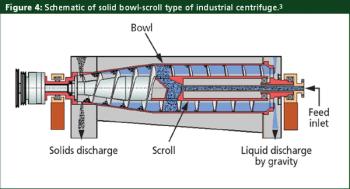
The two most popular mechanical techniques for sample preparation for large-scale protein production are concussion and liquid shear.

LCGC North America
The authors review the latest technologies in MPT sample preparation used in study of genomics, proteomics, and metabolomics.

LCGC Europe
This month's guest authors review the application of solid-phase microextraction (SPME) to the analysis of drugs in human plasma discussing important factors in the optimization of extraction efficiency. The column concludes with a discussion of method validation issues.
LCGC Europe
This month's column reviews some key considerations in the manufacture and use of microplates with particular reference to the 96-well plate.
LCGC Europe
A new sampling method for gas chromatography termed single-drop microextraction (SDME) is described. In this column, SDME is applied to residual solvent analysis, both in manual and automated modes.
LCGC North America
LCGC Europe
A novel device for coupling on-line in-tube SPME with capillary GC is presented by the guest authors and the method's application demonstrated for the analysis of contaminants in water.
LCGC Europe
Extracting analytes from biological tissues often presents serious challenges for the analytical chemist. In this column, the guest authors provide an overview of human and animal tissue sample preparation, and compare conventional extraction technologies with novel approaches to these challenges.
LCGC North America
New miniaturized liquid-membrane extraction designs are especially suited for speciation studies of metal ions in small amounts of biological fluids.
LCGC North America
Highly selective sorbents for solid-phase extraction (SPE) are desirable tools for the development of selective and sensitive methods for trace analysis. Molecular imprinting is an emerging technique that can yield analyte- or group-selective polymeric sorbents.
LCGC North America
Ron Majors describes solid-phase extraction devices that provide new levels of convenience, improved performance.
LCGC North America
This installment of "Sample Prep Perspectives" discusses microdialysis sampling and the opportunities and challenges it presents. The guest authors look at microdialysis theory and equipment and describe potential applications...
LCGC North America
Norberto Guzman and Ron Majors look at three areas in which progress has been made in improving concentration limits of detection for CE and CE microchip techniques: preconcentration methods, detector enhancements, and derivatization methods to improve separation selectivity and to enhance detection.
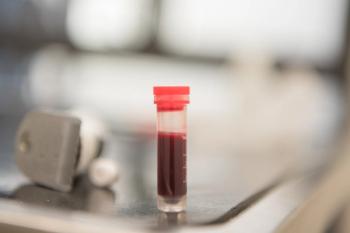
Guest author Reg Cross discusses strategies for collecting samples from large masses of material. He also describes the problems associated with acquiring truly representative samples for analysis.

Current sample preparation procedures for LC–MS as applied to samples from biological matrices.

To accommodate high-throughput analysis, analysts are using 96-well plates, as well as some unfamiliar accessory products. This column describes these products and tells readers how to use them in their laboratories.