

LCGC Europe eNews
Those wishing to submit posters to the Hyphenated Techniques in Chromatography conference (HTC-11) will need to do so before 1 December 2009. Those wishing to benefit from reduced fees will need to register before this date also.
LCGC Europe eNews
Those wishing to submit posters to the Hyphenated Techniques in Chromatography conference (HTC-11) will need to do so before 1 December 2009. Those wishing to benefit from reduced fees will need to register before this date also.

LCGC Europe
Chromatography software update; GPC/SEC software instrument control; Light Scattering webinars; Metabolomics Library

LCGC Europe
Guest "LC Troubleshooting" columnist Uwe Neue unravels the mysteries surrounding kinetic plots to make them accessible to everyone

LCGC North America
In this installment, columnist Ron Majors and guest columnist Frantisek Svec address the current status of CEC, once the hottest topic in the field.


LCGC North America
For many in the world of chromatography and separation science in general, it has been a long 12 months to say the least. With an economic recession gripping the nation and causing secondary effects such as the well-documented "Great Acetonitrile Shortage of 2009," it is easy to see why many readers will not be sorry to see the end of 2009, and why they will be all too happy to welcome in 2010.
LCGC Europe eNews
Micro GC and MEMS products supply company Concept to Volume (C2V) has been acquired by Thermo Fisher Scientific.
The quantification of candidate pharmaceuticals and/or their metabolites in biological fluids plays a key role in drug discovery.
Incognito answers Part 1's remaining questions to help you achieve optimized solid-phase extraction.
The combination of small particle size and narrow particle size distribution, coupled with the significantly shorter diffusion path provided by the Kinetex™ core-shell particle, results in a material that yields significantly increased column efficiencies and chromatographic resolution. This is a benefit for separation scientists looking to achieve better performance, especially with complex separations containing many compounds and very closely eluting compounds so that accurate identification and quantitation can be achieved.

LCGC Europe eNews
The answer to the following question was supplied by LCG Europe's "GC Connections" columnist John Hinshaw.
LCGC Europe eNews
Agilent Technologies has purchased MassCode Tag technology from Eurofins MWG Operon, a division of Eurofins. According to the company, the technology will allow them to develop new research products for pathogen identification, leveraging its strength in polymerase chain reaction (PCR) and mass spectroscopy.
E-Separation Solutions
Click here to view the November Data Handling/Software newsletter in its entirety.
E-Separation Solutions
This article discusses the business benefits of interfacing laboratory applications together to eliminate paper and streamline working practices.

E-Separation Solutions
Participants in this Technology Forum are Linda Doherty of Agilent Technologies, Tom Jupille of LC Resources, and Barry Coope of Thermo Fisher Scientific.
This article looks at a novel approach to enhance the sensitivity of radioactivity flow detection.
LCGC Europe eNews
Thermo Fisher Scientific has announced that it has entered into a strategic agreement with Markes International, that will see the distribution of Markes? thermal desorption (TD) instruments alongside Thermo Scientific?s gas chromatographs and GC–MS equipment.
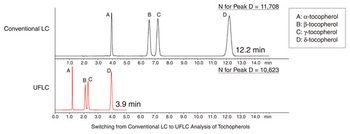
The new Shimadzu fluorescence detectors enhance the excellent performance of the prominence HPLC series. The detectors support a wide range of applications from routine to high-performance and ultra-fast analysis
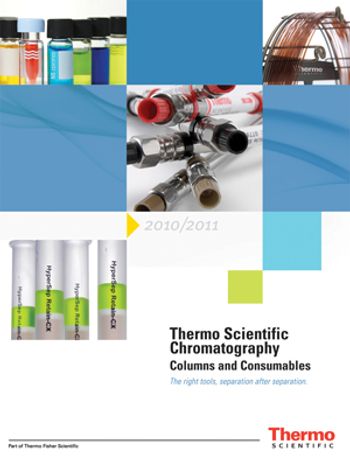
The 2010 – 2012 Thermo Scientific catalog showcases the broadest collection of chromatography columns and consumables. Over 500 new pages of high quality tools ensure unrivalled choice for all separation needs.
Agilent Technologies announced that together with the Shanghai Institute of Biological Sciences (SIBS), the company has opened the joint SIBS-Agilent Centre for Systems Biology in Shanghai, China.
The Column
Does Optimization in the Manufacturing Process of An Established CSP Make A Difference in Chiral Separations? Ted Szczerba and Andrew Geyer Meeting Review: The 14th Desty Memorial Lecture for Innovation in Separation Science Peter Myers News Fishy aftertastes, quantifying human proteins, improving F1 performance and networking topics at Pittcon are featured in this issue. Market Trends and Analysis Market Profile: CE-based DNA Sequencers Glenn Cudiamat Incognito Are You Optimizing Your Solid-Phase Extraction? (Part 3) Events and Staff

LC–MS method for analysis of vitamin D metabolites in serum.
LCGC Europe eNews
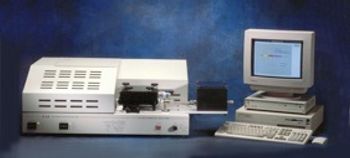
Exeter Analytical has announced that it recently installed one of the company?s elemental analysers at contract analytical service laboratory - Butterworth Laboratory, in Teddington, UK.
The Column
Temperature is shown to be an effective tool for changing selectivity in complex mixtures separated using supercritical fluid chromatography (SFC).
LCGC Europe eNews
Pittcon has announced who will be receiving ten prestigious awards during the convention between 28 February and 5 March 2010. This year?s awardees represent diverse scientific disciplines including bioanalytical science, biomedical, chromatography, electrochemistry, mass spectrometry and separations science.

The new technologies for fast LC, UHPLC and rapid resolution LC provide the researcher with unrivalled resolution and peak definition along with potentially much shorter chromatography run times.