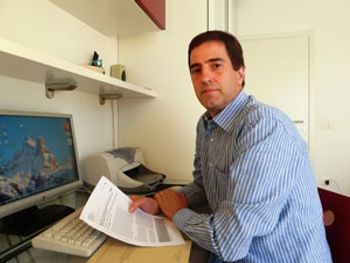

Joining us for this technology forum on the current state of environmental analysis are Dr Markus Läubli of Metrohm and Sky Countryman of Phenomenex.

Joining us for this technology forum on the current state of environmental analysis are Dr Markus Läubli of Metrohm and Sky Countryman of Phenomenex.

Discussing the latest developments in sample preparation techniques that reduce environmental impact.

The European Union has published new regulations regarding the approved testing methods for detecting marine biotoxins in bivalve molluscs, including oysters and mussels.

Thermo Fisher Scientific?s Global Food Safety Response Centre in Dreieich, Germany has announced that it is monitoring the dioxin crisis in Germany where animal feed additives may have been tainted with industrial fats containing the toxic chemical.

A novel and sensitive approach for analysing high-molecular-weight phthalates is described.

A method based on SPME and GC–MS was developed to analyse chlorophenols and their metabolites in aqueous samples.

A simple and rapid test for cobalt in leguminous plants has been developed that Spanish and Venezuelan chemists claim could provide an alternative to more expensive methods.

Following the accident at Chernobyl Nuclear Power Plant in 1986, the surrounding area remains substantially contaminated with radioactive isotopes. A study into the adaptations of the surrounding plant life has suggested that the plant proteomes remain largely unchanged by the radio contamination.

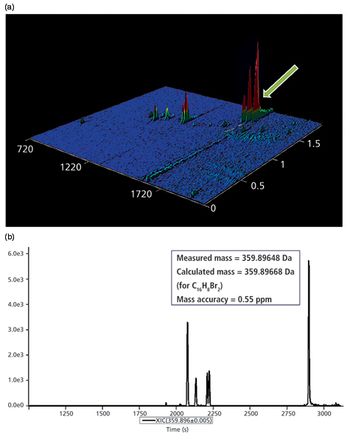
The development of a microfabricated comprehensive GC that can be used as a portable measurement device.

The Column spoke to Linde AG about how emissions are controlled and monitored to reduce the potentially harmful risks to the environment.

This article considers the key challenges faced within this changing arena and how environmental testing laboratories can strive to meet them.

Thermo Fisher Scientific has announced that its global Food Safety Response Centre in Dreieich, Germany, has developed two new analytical screening methods in response to the oil spill in the Gulf of Mexico.

Peas, beans and some other plant seeds contain proteins, called globulins, which have been shown to act as a defence against insects and other herbivores. Coffee beans contain large amounts of globulins, so scientists in Brazil studied the beans to assess their potential for warding off insects.

Selected modes of operations are presented and a few recent environmental applications of modular PLE are reviewed.

Selected modes of operations are presented and a few recent environmental applications of modular PLE are reviewed.

Pat Sandra and his team will discuss how green chromatography works in practice

This article will discuss current European environmental quality standards and review traditional methods for analysing organotins and their limitations.

Liquid chromatography coupled to mass spectrometry (LC–MS) using electrospray ionization (ESI) is a powerful analytical tool for the analysis of a wide molecular weight range of polar, semivolatile, and thermally labile compounds.

Determining pesticide residues by GC-MS

A fast clean and simple method to determine three organotin compounds in environmental samples is described

How to determine PFCs in water by SPE-LC–MS.

Envirolab, UK soil and chemical testing company, will be expanding its analytical remit with the addition of a £1 million inorganics laboratory. The company will now be capable of analysis on all common inorganic contaminants, virtually eliminating subcontracted services and saving around £500,000 per year.

This article describes the use of combined ion chromatography-mass spectrometry (IC–MS) and ion chromatography-inductively coupled plasma mass spectrometry (IC-ICP–MS) to analyse potentially harmful compounds.

The authors evaluate a new approach to sample preparation for the analysis of pesticides in raw agricultural commodities.

An overview of contemporary techniques in environmental analysis.