



The 27th International Symposium on Separation Sciences (ISSS 2023) will be held 24–27 September 2023 in Cluj-Napoca, Romania. Here’s a sneak preview of what attendees can look forwards to.
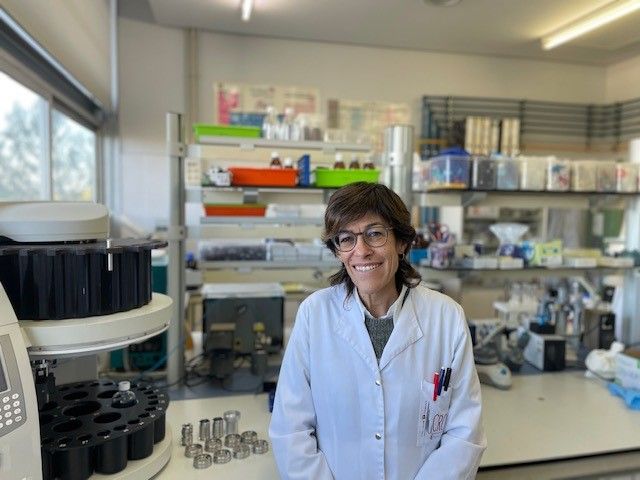
The 27th International Symposium on Separation Sciences (ISSS 2023) will be held 24–27 September 2023 in Cluj-Napoca, Romania. Here’s a sneak preview of what attendees can look forwards to.

Matrix interferences can impact routine analysis with triple quadrupole methods for monitoring and quantifying PFAS in food.

There are many benefits of using high-resolution mass spectrometry (HRMS) in analyzing PFAS accumulating in living organisms. This article shows how HRMS, when combined with exposure-relevant mixtures, can help elucidate more about PFAS toxicity and exposure.

Accelerated solvent extraction (ASE) is widely viewed as a better alternative to GC–MS when analyzing persistent organic pollutants (POPs). The authors explain why new technological developments offer many benefits and accelerate POP sample preparation processes.

The investigation of airborne PFAS transmission is important in preserving the outdoor urban environment. The authors explain why GC–MS/MS and LC–MS/MS are the best techniques for analyzing airborne PFAS.

The presence of PFAS in the environment requires governmental agencies to establish regulatory limits for PFAS in human essentials, such as drinking water. LC–MS/MS can be used to analyze a wide range of sample types containing PFAS, but avoiding PFAS contamination is critical for this technique to work effectively.

LCGC spoke with Leon Barron from the Imperial College London about his work measuring contaminants of emerging concern in water.

The authors introduce a new high-throughput approach for analyzing environmental micropollutants.

A recent study highlighted a cost-effective, time-efficient method that can extract polycyclic aromatic hydrocarbons (PAHs) from water and fish samples over traditional SPE methods.

ExTech is the largest conference dedicated to extraction technology, a field within separation chemistry that has seen remarkable growth over the past three decades.
LCGC’s Senior Technical Editor Jerome Workman, Jr examines the history of chemicals classified as POP, or persistent organic pollutants, and PFAS, or per- and polyfluoroalkyl substances, then reviews their place in today's environment and assesses risks for the future.

Webcasts
Webinar Date/Time: Wed, Aug 23, 2023 11:00 AM EDT

In this LCGC blog, we reflect on the movement to make analytical chemistry more environmentally friendly.

A recent study reveals that pesticide residues in herbs have a low transfer rate to herbal infusions, ensuring safer consumption of these products. The validated analytical method used in the study provides valuable insights into the levels of pesticide residues in herbs and their limited presence in the resulting infusions.

A new method has been developed for detecting and quantifying polycyclic aromatic hydrocarbons (PAHs) in intermediates used in plastics production. The method, based on liquid chromatography column switching, allows for the analysis of 18 PAHs and addresses the lack of regulatory oversight for PAH concentrations in plastic intermediates.

A research team has developed a fast and sensitive method using UHPLC–MS/MS to simultaneously detect the nematicide fluensulfone (FSF) and its two major metabolites in different agricultural soils, providing valuable insights into the environmental behavior of FSF in soil systems.
New method enables comprehensive analysis of secondary formation markers in ambient organic aerosols, providing valuable insights into atmospheric pollutants using HPLC–ESI-TOF-MS.

The development of a newly-designed Girard's reagent, HBP, as charged isobaric mass tags has enabled selective capture and sensitive detection of aldehyde metabolites. The LC–dNLS-MS/MS screening approach using this reagent has successfully facilitated the discovery of natural aldehydes and their profiling in complex samples.

Webcasts
Webinar Date/Time: Tue, Jun 27, 2023 11:00 AM EDT

A temperature-controlled cryogenic distillation and gas chromatography, atom trap measurement system is used for precise analysis of atmospheric 85Kr abundance. This advanced technology enables online monitoring with high sensitivity and reduced sample size requirements.

How physical and chemical characteristics are related to dirt in the GC system.

Researchers have developed polyacrylamide hydrophilic stationary phases with adjustable performance. The innovative approach allows for customized separation capabilities, enhancing the efficiency and versatility of chromatographic techniques. The findings open up new possibilities for natural product chemistry and pharmaceutical research.

Scientists achieve a breakthrough in separation techniques with the development of alizarin-modified iron oxide magnetic nanoparticles, enabling highly efficient and selective separation of anthraquinones from complex plant extracts.

Today from 2:30–4:30 pm, an oral session on non-targeted analysis and emerging environmental contaminants will take place. We preview this session here.

An analytical team has successfully developed a novel strategy for the separation of sanshools from Zanthoxylum bungeanum oleoresin using countercurrent chromatography, providing valuable insights for the separation of compounds with similar chemical properties.