Sample Preparation

Latest News


Proper sample preparation is vital. We look at formal and informal training opportunities to educate chemists in the fundamentals of sample preparation skills.

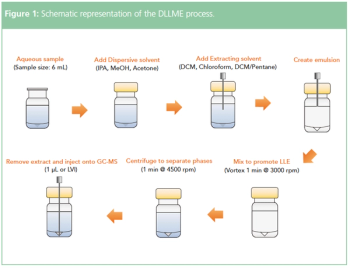
figure 1 L.png

Traditional sample preparation method development can often be laborious and costly. Understanding the underlying concepts of the technique can help food and environmental laboratories develop methods in notoriously complex matrices, faster, more efficiently, and provide better chromatography. With the presence of many unique matrices and analytes, methods such as QuEChERS, supported liquid extraction (SLE), or solid-phase extraction (SPE) provide the necessary adaptability for many types of extractions. With customizable methods to work with unique matrices and with the addition of automation, extractions can be improved to save time and provide consistent recoveries.

JackCochran-1.jpg

A snapshot of key trends and developments in the chromatography sector according to selected panellists from companies who exhibited at Analytica 2018.

Ron-Majors_web.jpg

LCGC, the leading resource for separation scientists, is proud to announce that Ronald E. Majors and Zachary S. Breitbach are the winners of the 11th annual LCGC Lifetime Achievement and Emerging Leader in Chromatography Awards, respectively. Majors and Breitbach will be honored in a symposium as part of the technical program at the Pittcon 2018 conference in Orlando, Florida, on February 26, 2018.

Addink-figures-1_web.jpg

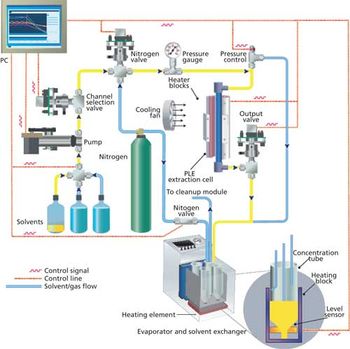
The persistent nature and toxicity of persistent organic pollutants (POPs) lead to high demands for quick and accurate sample analysis. This article describes the use of automated sample processing techniques such as pressurized liquid extraction and automated column chromatography cleanup that are suitable for environmental sample analysis.

Traditional extraction methods for food samples, such as liquid-liquid extraction and Soxhlet extraction, are often time-consuming and require large amounts of organic solvents. Therefore, one of the objectives of analytical food safety studies currently has been the development of new extraction techniques that can improve the accuracy and precision of analytical results and simplify the analytical procedure.

Blood is perhaps the most widely used sample fluid in bioanalysis. Dried blood spots (DBS) have been used with clinical samples for over 50 years but are recently seeing a resurgence of interest. DBS hold several advantages associated with the use of small sample sizes obtained via finger pricks, reduction biohazard, and more. In the previous installment, we gave an overview of microsampling in bioanalysis. This month, we will dig deeper into bioanalysis using DBS.

The results obtained from a new survey on sample preparation techniques were compared with the results of previous surveys from 1991 to March 2013. The survey investigated trends in technologies currently being used, sample loads, sample sizes, automation, the use of solid-phase extraction (SPE) devices (cartridges, disks, plates, tips), SPE chemistries, selection criteria, and problems encountered. Respondents were also asked about sample preparation technologies on the horizon.

Fig-2_web.jpg

This first installment of the “Sample Prep Perspectives” column presents an overview of the primary manual and automated sample preparation techniques-methods that are much the same as those in use today.

Figure-3_web.jpg

A survey of LCGC readers on sample preparation techniques and methodology investigated trends in technologies being used, sample loads, sample sizes, automation, the use of SPE devices (cartridges, disks, plates, tips), SPE chemistries, selection criteria, and problems encountered.

If sample preparation is the most time and labor intense step in the analytical process, and uses the largest amounts of solvents, it stands to reason that sample preparation may present the most significant safety risks in the analytical lab. While most laboratory workers receive significant safety training, we may become numb to the prospect of accidents or get into the mindset that accidents only happen to other people. Given some recent, significant safety incidents, this month we step back and take a quick refresher on safety concerns appropriate during our sample preparation activities.

GettyImages-545861921_Thumb.jpg

Researchers at the University of Waterloo in Canada are collaborating with clinicians at Toronto General Hospital to develop preclinical and clinical applications of solid-phase microextraction (SPME). Bethany Degg of The Column spoke to Barbara Bojko from the team to find out more.