

LCGC North America
The second part of a two-part series examining new column introductions at Pittcon 2004.
LCGC North America
The second part of a two-part series examining new column introductions at Pittcon 2004.
LCGC Europe
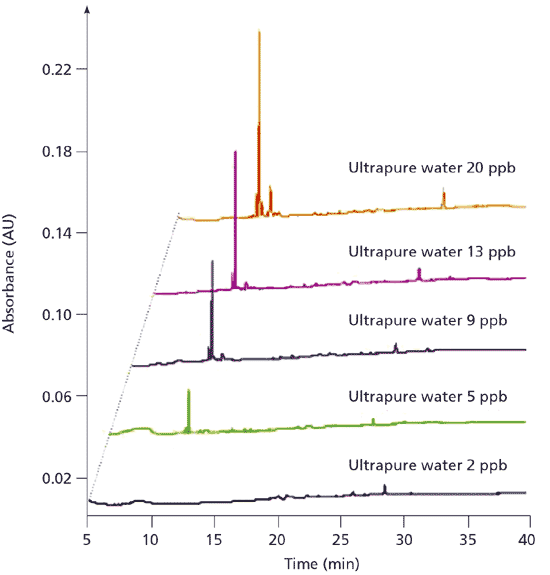
A novel device for coupling on-line in-tube SPME with capillary GC is presented by the guest authors and the method's application demonstrated for the analysis of contaminants in water.
LCGC North America
This month'ss "Column Watch" is the first of a two-part series that examines new column introductions at Pittcon 2004.
LCGC North America
The authors propose the use of supersaturated experimental designs for composite sampling and demonstrate their efficiency and economy in the environmental screening of pesticide residues.
LCGC Europe
Extracting analytes from biological tissues often presents serious challenges for the analytical chemist. In this column, the guest authors provide an overview of human and animal tissue sample preparation, and compare conventional extraction technologies with novel approaches to these challenges.
LCGC North America
New miniaturized liquid-membrane extraction designs are especially suited for speciation studies of metal ions in small amounts of biological fluids.
LCGC Europe
In the welcome return of this column, Bob McDowall revisits the evolving topic of 21 CFR 11 compliance, as it applies to chromatographers. He examines the FDA's activities in 2003 and outlines the current status of its regulations over, and guidance for, electronic records issues.
LCGC North America
The author investigates solute partitioning between the mobile and stationary phases to determine the driving force of reversed-phase liquid chromatography separations.
LCGC North America
The authors introduce hydrophilic interaction capillary electrochromatography as a capillary column technique for the separation of polar compounds.
LCGC North America
Highly selective sorbents for solid-phase extraction (SPE) are desirable tools for the development of selective and sensitive methods for trace analysis. Molecular imprinting is an emerging technique that can yield analyte- or group-selective polymeric sorbents.
LCGC North America
This installment of "Sample Prep Perspectives" discusses microdialysis sampling and the opportunities and challenges it presents. The guest authors look at microdialysis theory and equipment and describe potential applications...
LCGC North America
Autosamplers can be great time-savers, but they have their own set of problems...
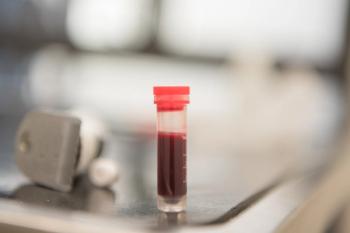
Guest author Reg Cross discusses strategies for collecting samples from large masses of material. He also describes the problems associated with acquiring truly representative samples for analysis.

Current sample preparation procedures for LC–MS as applied to samples from biological matrices.

To accommodate high-throughput analysis, analysts are using 96-well plates, as well as some unfamiliar accessory products. This column describes these products and tells readers how to use them in their laboratories.