




QuEChERS has been updated to suit modern instrumentation. Now also “efficient and robust,” QuEChERSER is a “mega-method” that covers a wider polarity range.
QuEChERS has been updated to suit modern instrumentation. Now also “efficient and robust,” QuEChERSER is a “mega-method” that covers a wider polarity range.

We examine the rapid growth of green microextraction techniques, such as molecular imprinted polymer solid-phase extraction (MISPE), in the field of food quality and safety, and how this technique is used for bisphenol A (BPA) analysis.

New approaches to sample preparation are being developed for microbial metabolomics to address the inherent complexity of this type of analysis.

Analytical scientists are following a number of trends in method development to make sample preparation both simpler and more sustainable.

Reducing matrix effects during LC–MS/MS bioanalysis is paramount. Improving sample preparation techniques is the best way to combat this issue.

Microextraction techniques have evolved since their appearance three decades ago, moving toward the use of greener and sustainable materials and solvents.

Recent developments in microextraction automation has resulted in more straightforward workflows.

Multiple-cumulative trapping headspace extraction coupled with high-concentration-capacity tools, such as SPME, enhances sensitivity of volatiles, as illustrated here in food analysis.

Ionic liquids (IL) are a very versatile tool for natural product and food analysis. When combined with moieties with different functional groups, ILs can be tuned to obtain extraction media with different properties and selectivity.

We explore the aspects of sampling that are of highest importance in an analytical scheme. Devices and processes for obtaining appropriate samples outside of the laboratory are presented.

Fundamentals
Understanding the fundamentals of extraction methodologies is critical, and can enable chromatographers to find smart solutions to tackle the complex composition of different types of samples.

We look at five modern treatments of chromatographic sample extraction, explaining their initial conception and development to shed light on their current roles as analytical tools.

These seven case studies capture and expand on lessons presented at ChromTalks.

Incognito explores the overwhelming array of sample preparation techniques (and acronyms).

Separation science is an intriguing and challenging (yes, let’s admit it) interdisciplinary field. Many of our daily rituals depend on effective chemical separations.

This yearly report on new products introduced in the preceding year, since March 2020, covers sample preparation instrumentation, supplies, and accessories.

We assess the landscape of new sample preparation instrumentation, supplies, and accessories introduced over the past 12 months.

A review of cutting-edge analytical extractions using metal-organic frameworks (MOFs), including a description of what MOFs are, their preparation, principles of use, advantages, and application areas.

The application of temperature is frequently employed to enhance analytical extractions, especially with solid samples or volatile analytes. This article explores the role of temperature in analytical extractions.

Sorbent-based extractions using metal-organic frameworks (MOFs) have several advantages, notably selectivity. How do these extractions work, and where are they most useful? We look into the current state of the art.

Temperature impacts solubility, diffusion, surface tension, and more. It can potentially lead to solute decomposition. This month we will explore the role of temperature in analytical extractions.
Temperature is frequently employed to enhance analytical extractions, especially with solid samples or volatile analytes. Using temperature to enhance analytical extractions continues today with more recently developed techniques, which we explore.

A panel discussion on the latest advances and future developments in sample preparation.

Which key efficiency techniques can maximize your analytical goals? This instalment of the LCGC Blog begins by describing the principles and optimization of liquid-liquid extraction (LLE).
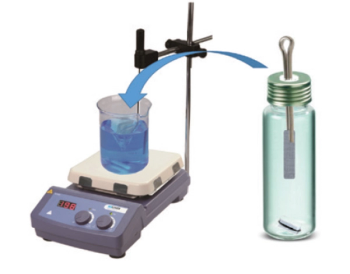
It is important to develop analytical methods to detect crude MCHM components in environmental water samples. This article describes two microextractive methods based on solid-phase microextraction (SPME) in fibre format and thin film microextraction (TFME) that were developed and validated for 4-MCHM and other constituents of crude MCHM.