



Sample Preparation
Latest News
Advertisement
Shorts
Advertisement
Stop Guessing and Start Analyzing: An End to End Strategy for High Sensitivity, High Speed HPLC Analysis of Small Molecules
ByAvantor
Webcasts
Webinar Date/Time: Tue, Apr 7, 2026 11:00 AM EDT

A review of some of the content highlights from LCGC International in 2025.

Webcasts
Webinar Date/Time: Thursday, December 11, 2025 8am PST | 11am EST | 4pm GMT | 5pm CET

Webcasts
Webinar Date/Time: Tue, Nov 18, 2025 11:00 AM EST

Webcasts
Webinar Date/Time: Wednesday, October 29, 2025 Morning Session: 2:00pm GMT | 3:00pm CET | 9:00am EST Afternoon Session: 5:00 pm GMT | 6:00 pm CET | 12:00 pm EST

Webcasts
Webinar Date/Time: Thu, Oct 23, 2025 10:00 AM EDT

A concise summary and celebration of the role of sample preparation for quantitative analysis in bioanalytical applications.

Webcasts
Webinar Date/Time: Wed, Oct 15, 2025 11:00 AM EDT

Webcasts
Webinar Date/Time: Tue, Oct 7, 2025 11:30 AM EDT
Webcasts
Webinar Date/Time: Wed, Oct 8, 2025 11:00 AM EDT

Webcasts
Webinar Date/Time: Tuesday, September 30, 2025 8am PDT | 11am EDT | 4pm BST | 5pm CEST

In recent years, analytical chemists have increasingly adopted a sustainability viewpoint. Yet, at the same time, they still use traditional organic solvents for extractions and other procedures. In this installment of Sample Preparation Perspectives, we will look at solvent selection from green considerations. Trends on solvent use are presented, followed by a discussion on what makes a green solvent. Finally, the CHEM21 Solvent Selection Guide is examined as representative of tools for selecting green solvents for use in analytical methods and other chemical processes.
Webcasts
Webinar Date/Time: Thursday, July 17, 2025 8am PDT | 11am EDT | 4pm BST | 5pm CEST

A new dried spot-based technique involving untargeted liquid chromatography coupled with high-resolution mass spectrometry was testing for characterizing foodstuffs.
Webcasts
Webinar Date/Time: Tuesday, July 1, 2025 8am PDT | 11am EDT | 4pm BST | 5pm CEST

Webcasts
Webinar Date/Time: Thu, Jun 26, 2025 11:00 AM EDT

This article reports on new products introduced at Pittcon this year and in the preceding year related to sample preparation instruments, supplies, and accessories.
Webcasts
Webinar Date/Time: Mon, Jun 9, 2025 11:00 AM EDT

Analyzing trace compounds from complex samples often requires purification and pre-concentration, and online coupling of solid-phase extraction (SPE) with liquid chromatography (LC) helps minimize analysis time and solvent/sample use. Monoliths with large macropores are ideal for this coupling due to their low back pressure and versatility in various formats.
Michael Dong recently discussed sample preparation (SP) techniques for small-molecule drug substances and solid dosage forms.
Webcasts
Webinar Date/Time: Thursday, May 15, 2025 8am PDT | 11am EDT | 4pm BST | 5pm CEST

Webcasts
Webinar Date/Time: Tue, Jun 3, 2025 2:00 PM EDT

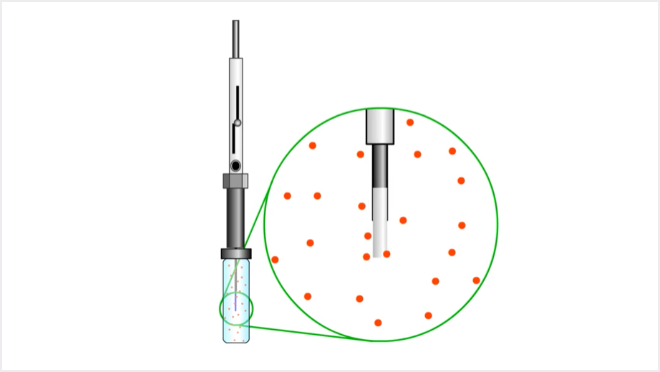
LCGC International spoke to Adrián de la Fuente and Silvia Valverde Bastardo from the University of Valladolid, Spain, about the development of a miniaturized headspace solid-phase microextraction gas chromatography–quadrupole time-of-flight mass spectrometry (HS-SPME-GC–QTOF-MS) method for the analysis of biogenic volatile organic compounds (BVOCs) emitted by native Spanish trees.

A new study, published by a researcher from Chemical Characterization Solutions in Minnesota, explored a new approach for sample preparation for the chemical characterization of medical devices.
Advertisement
Advertisement
Trending on LCGC International
1
Industry Roundup: Shimadzu Debuts GCMS-TQ RX Series, Tackling Helium Shortage and Laboratory Throughput Pressures
2
HPLC-FLD Confirms Aflatoxins in Peanuts, Pistachios
3
GC-MS Profiles Nano Garlic and Lemon Oils
4
Data Reliability and Regulatory Readiness
5