March 2026

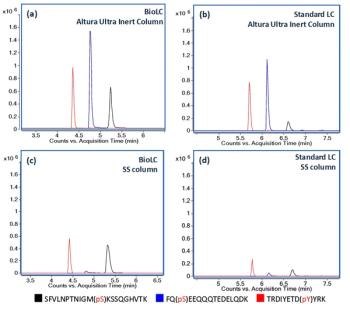
Advances in liquid chromatography (LC) address the growing need to analyze complex analytes with higher sensitivity and efficiency. Application-specific column chemistries, optimized system configurations, and improved consumables help mitigate PFAS contamination, metal-sensitive analytes, and solvent-related artifacts. Emerging injection strategies and smart instrumentation aim to enhance data quality and laboratory productivity, demonstrating that optimizing LC methods goes beyond column selection alone.

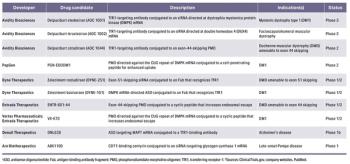
Antibody–oligonucleotide conjugates (AOCs) represent a promising new biotherapeutic modality that combines the cell‑targeting specificity of antibodies with the gene‑modulating power of oligonucleotides. Designed to overcome long‑standing delivery barriers in nucleic acid therapeutics, AOCs enable targeted delivery beyond the liver to tissues such as skeletal muscle, heart, and the central nervous system. Their unique dual therapeutic behavior and large oligonucleotide payload introduce analytical challenges distinct from antibody‑drug conjugates (ADCs), requiring approaches such as size-exclusion chromatography–mass spectrometry (SEC–MS) and ion‑exchange methods. As analytical science advances, AOCs are poised to expand therapeutic possibilities and drive innovation in precision and personalized medicine.

Dynamic particle waves flowing through a cyber grid, neon hologram effects with deep purples and blues for a futuristic technology vibe  | Image Credit: © afrah - stock.adobe.com.

Field-flow fractionation (FFF), and, in particular, asymmetrical flow field-flow fractionation (AF4), is transitioning from a specialized separation technique into an application-driven analytical platform. From the perspective of the Young Scientists of FFF, we describe how advances in inline detection, data analysis, and validation are expanding AF4’s capacity to deliver size-resolved structural and compositional insights into complex systems. We highlight how this evolution enables more reliable characterization of heterogeneous and dynamically assembled materials across disciplines. We argue that realizing this potential will require deliberate choices (by the community, instrument developers, and end users) to move AF4 from niche expert knowledge to broadly trusted analytical practice.

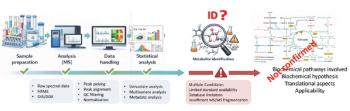
Μetabolomics enables the comprehensive profiling of small molecules in medicine, plant science, and systems biology. Its true value depends not on the number of detected features but on the reliability of metabolite identification and pathway analysis. Despite well-established guidelines, annotation and definitive identification are often conflated in practice. Simple matches in mass databases are frequently reported as identities, without comparison to standards or chromatographic evidence. This overstatement of confidence compromises validity and risks propagating errors into databases, pathway analyses, and AI-driven workflows. Mass spectrometry (MS) alone is rarely sufficient for identification and orthogonal evidence is essential. Chromatographic retention time is an underused but powerful descriptor reflecting molecular properties. When combined with MS it can provide plausibility checks and form the basis of Level 1 identification. Regulatory frameworks already require such combined criteria in targeted analysis. Systematic use of retention order, retention indices, and prediction models can filter implausible candidates and strengthen identification.


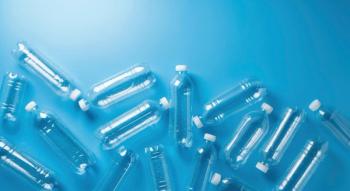
With the global surge in plastic consumption, sustainable recycling has emerged as a cornerstone of environmental stewardship. Polyethylene terephthalate (PET) is a leading player in the recycling revolution, yet ensuring the quality and authenticity of recycled PET (rPET) remains a critical challenge. This article presents a rapid, robust, and quantitative high performance liquid chromatography (HPLC) method for analyzing cyclic oligomers in rPET. This approach aligns with the Japanese Ministry of the Environment guidelines, enabling precise evaluation of rPET quality. The method leverages gradient elution and a practical calibration approach to deliver high throughput and accuracy, supporting the circular economy and the future of sustainable materials.

Gas chromatography-mass spectrometry (GC-MS) analysis of blubber and skin samples from bottlenose dolphins in the Saint Peter Saint Paul archipelago revealed diverse organohalogen compounds including polychlorinated biphenyls (PCBs), organochlorine pesticides (OCPs), brominated flame retardants (BFRs), and naturally produced methoxylated organobromines (MeO-BDEs), demonstrating long-range pollutant transport and establishing these marine mammals as effective sentinels for oceanic contamination monitoring.

Headspace solid-phase microextraction coupled with gas chromatography–mass spectrometry (SPME) GC–MS was used by researchers to analyze concrete samples from a Michigan City basement after a 2022 confession to a 2017 murder in which the body was never recovered. The analysis detected multiple volatile organic compounds (VOCs) associated with human decomposition, indicating a body had decomposed in the room for an extended period. This study marked the first successful legal use of VOC evidence from concrete in Indiana and helped support the suspect’s conviction.