

LCGC Europe
The 9th SCM symposia (SCM-9) will take place from 30 January to 1 February 2019, in Amsterdam, The Netherlands.
LCGC Europe
The 9th SCM symposia (SCM-9) will take place from 30 January to 1 February 2019, in Amsterdam, The Netherlands.

The Column
Researchers from the University of Verona, in Verona, Italy, have investigated the diagnosis of diabetes mellitus in endurance athletes using HPLC.

Special Issues
An introduction from the guest editors of this special supplement from LCGC Europe focusing on recent trends in pharmaceutical analysis.

Special Issues
This study demonstrates a new LEAN approach and method, where 25 solvents can be simultaneously determined based on predetermined relative response factors (RRFs) against an internal standard (decane) with only one injection of sample solution.
The Column
Waters and Restek have entered into a co-marketing agreement aimed at food safety laboratories and promoting the use of Waters gas chromatography–mass spectrometry instruments with Restek GC consumables.

The Column
Toxicological surveillance of illicit prescription and illegal drug abuse has been carried out using post-mortem data from Clark Country, Nevada, USA, with GC–MS, headspace GC–MS, GC×GC–MS, LC–MS, and ELISA.

The Column
Analysis of red lacquerwares from the Japanese Jõmon Period (approximately 14,000 to 500 BC) by Py-GC–MS has revealed the materials and fabrication techniques used in their production.
The Column
Shimadzu has been awarded the 2018 NRW.Invest Award by the North Rhine‑Westphalia (NRW) region of Germany.
The Column
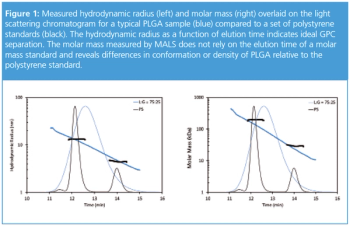
The functional properties of polymers, such as poly(lactic-co-glycolic acid) (PLGA), relevant to drug delivery and biomedical devices, are governed by the molecular properties of molar mass, composition, conformation, and branching. This article demonstrates how such polymers are fully characterized, quickly and absolutely, using gel permeation chromatography (GPC) with multi-angle light scattering (MALS) and online viscometry.

The Column
Approximately 40% of recombinant proteins that are purified use a histidine tag for easy capture. This article covers how to automate the purification of histidine-tagged proteins and how purification conditions can be optimized to an automated four-step purification scheme that uses affinity-, ion exchange-, and size-exclusion columns. Using a multistep purification scheme removes the manual steps that cause loss of precious proteins and take more time, like dialysis, collection, and reinjecting samples. The final purification scheme reduces a 3–4-day process to 11.5 h from start to finish, all while improving reproducibility, yield, and comparable purity.
The Column
Click the title above to open The Column September 2018 North American issue, Volume 14, Number 9, in an interactive PDF format.
The Column
Click the title above to open The Column September 2018 Europe & Asia issue, Volume 14, Number 9, in an interactive PDF format.
The Column
Click the title above to open The Column September 12, 2017 Europe & Asia issue, Volume 13, Number 13, in an interactive PDF format.

Let’s first properly define carry-over in the context that I’d like to discuss here. An injection is made and a chromatogram obtained. On injecting a “blank” as the next injection, one or more of the components of the previous injection appear in the “blank” chromatogram.

I just finished a 10-month stint as Interim Associate Dean for Research and Development in the College of Science at The University of Texas Arlington. I was afforded that opportunity when some restructuring in another college left a temporary vacancy, which I was asked to fill. I certainly considered it an honor to be asked to serve in that role, but the temporary nature of that role also piqued my interest. For me, it seemed like a chance to do an internship in administration, to see if I liked it or not. I worked with great people, I did not really like the role.

The Application Notebook
The Application Notebook
The Application Notebook

The Application Notebook

The Application Notebook
LCGC Asia Pacific
Click the title above to open the LCGC Asia Pacific September 2018 regular issue in an interactive PDF format.
LCGC Europe
Click the title above to open the LCGC Europe September 2018 regular issue in an interactive PDF format.

LCGC North America
The recent relocation of a laboratory yielded a number of insights as to how to ensure a quality environment to deliver quality gas separation and detection within a safe working atmosphere.

LCGC North America
Various strategies to improve LC-MS sensitivity in order to enhance signal-to-noise ratio, and help you realize the hidden potential of this method are discussed.
LCGC North America
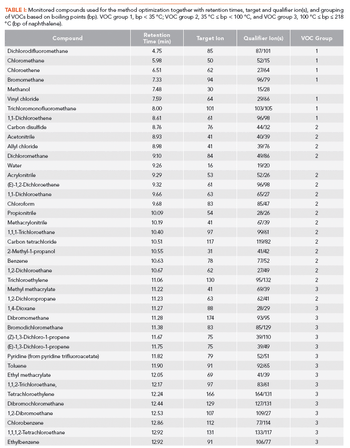
This article describes and tests a dynamic DHS−TD−GC−MS method for the fingerprinting analysis of mobile volatile organic compounds in soil.
LCGC North America
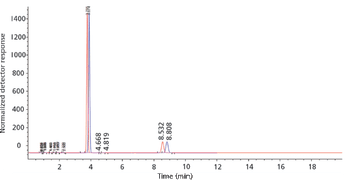
In the first of a three part series, we discuss challenges associated with successful transfer of chromatographic methods and how to best circumvent and remove ambiguities and contradictions
LCGC North America
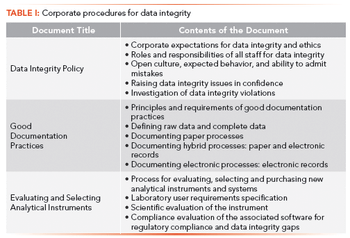
The final part of the series discusses the importance of an open culture, training, and monitoring metrics in the establishment and support of a regulated laboratory.

LCGC Europe
Column-based liquid phase separation techniques, such as liquid chromatography (LC) in reversed phase separation mode and capillary electromigration techniques, using continuous electrolyte systems, are widely used for the identification and quantification of phenolic compounds in plants and food matrices of plant origin. This paper is the first of a two-part review article discussing fundamental and practical aspects of both LC and capillary electromigration techniques used for the analysis of phenolic compounds occurring in plant-derived food and in edible and medicinal plants. The chemical structure and distribution of the major phenolic compounds occurring in the plant kingdom, as well as the main methods used for their extraction and sample preparation, are also discussed. Part 1 will focus on liquid chromatography.