

LCGC Europe
Several new materials and columns have been introduced in recent years for size-exclusion separations of proteins. How do I know which one to choose, and which separation conditions will be the best for my protein separation?
LCGC Europe
Several new materials and columns have been introduced in recent years for size-exclusion separations of proteins. How do I know which one to choose, and which separation conditions will be the best for my protein separation?

LCGC North America
Click the title above to open the LCGC North America September 2018 regular issue in an interactive PDF format.
LCGC Europe
The quality of a gas chromatogram depends heavily on the quality of the separation and detection gases, among many other factors. In this month’s instalment, “GC Connections” discusses ways in which chromatographers can ensure a safe working environment while delivering gases that are up to the requirements of the separations at hand, in the context of moving a laboratory to a new location.

LCGC Europe
This is the second of three articles looking at the impact of the new United States Pharmacopeia (USP) on analytical instrument qualification (AIQ) on data integrity in a regulated chromatography laboratory. This part focuses on how the laboratory should supervise the execution of operational qualification (OQ) protocols by a third-party service provider. The principles described also apply to in-house metrology departments.

LCGC Europe
Liquid chromatography–mass spectrometry (LC–MS) has become the preferred analytical technique for many challenging assays based on its selectivity, sensitivity, and broad applicability to compounds of varying polarity. Despite its advantages, the complexity of LC–MS systems often leaves analysts struggling to meet method detection limits. In this instalment of “Column Watch”, several strategies will be discussed to improve method sensitivity through the reduction of contaminants, the careful selection of LC method conditions, and the optimization of MS interface settings. By understanding the relationship between these parameters and ionization efficiency, analysts can enhance their signal-to-noise ratio and realize the hidden potential of their LC–MS.

LCGC Europe
The 38th International Symposium on the Purification of Proteins, Peptides and Polynucleotides (ISPPP 2018) will be held on November 4–7 2018 in Berlin, Germany.

LCGC Asia Pacific
Column-based liquid phase separation techniques, such as liquid chromatography (LC) in reversed phase separation mode and capillary electromigration techniques, using continuous electrolyte systems, are widely used for the identification and quantification of phenolic compounds in plants and food matrices of plant origin. This paper is the first of a two-part review article discussing fundamental and practical aspects of both LC and capillary electromigration techniques used for the analysis of phenolic compounds occurring in plant-derived food and in edible and medicinal plants. The chemical structure and distribution of the major phenolic compounds occurring in the plant kingdom, as well as the main methods used for their extraction and sample preparation, are also discussed. Part 1 will focus on liquid chromatography.

LCGC Asia Pacific
While capillary gas chromatography has been undergoing a renaissance, with new columns, detectors, data systems, and multidimensional separations, the classical inlets have remained the same: We are still injecting liquid samples with syringes into split and splitless inlets, as we have for nearly 50 years. Split and splitless injections present several well-known and some not-so-well known challenges, mostly arising from heating of the inlet, that make sample injection and inlets a major hurdle for gas chromatographers. These challenges and some ideas for mitigating them are discussed and a case is made for renewed exploration of the cool inlets and injection techniques: cool on-column and programmed temperature vaporization.
LCGC Asia Pacific
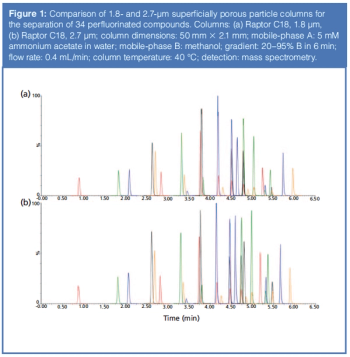
The use of superficially porous particles (SPPs) for modern high performance liquid chromatography (HPLC) is now very common. Initially, SPPs rose as an alternative to sub-2-µm fully porous particles (FPPs). In recent years, many column manufacturers have developed 2-µm and smaller SPP-based products. This article investigates the practical utility of these smaller SPP designs.

LCGC Asia Pacific
Several new materials and columns have been introduced in recent years for reversed-phase separations of proteins. How do I know which one to choose, and which separation conditions will be best for my protein separation?
LCGC (LCGC North America, LCGC Europe, and LCGC Asia Pacific) seeks to uphold the highest standards of editorial ethics.
The Chinese American Chromatography Association (CACA) invites nominations for the 2019 CACA Young Investigator Award.
The Chinese American Chromatography Association (CACA) invites nominations for two awards.

The Column
Incognito looks to a paradigm shift.

The Column
Researchers from ESPCI Paris and the Institut de Recherche Criminelle de la Gendarmerie Nationale have developed and optimized a comprehensive two-dimensional GC–MS method for the forensic profiling of human hand odour.
The Column
Agilent Technologies and the University of Duisburg-Essen will collaborate to combine the company’s analytical technologies with the university’s researchers.
The Column
Sciex has donated $17,500 to the World Cancer Research Fund (WCRF) to help fund urgently‑needed research investigating the relationships between food, nutrition, and physical activity with cancer prognosis and outcome in cancer survivors.
The Column
Researchers from the College of the Holy Cross have developed an ultrafast gas chromatography (UFGC) and chemometric method for the analysis of biodiesel blends.
The Column
Click the title above to open The Column August 2018 North American issue, Volume 14, Number 8, in an interactive PDF format.
The Column
Click the title above to open The Column August 2018 Europe & Asia issue, Volume 14, Number 8, in an interactive PDF format.

Chromatographic methods often require that the analyte response is calibrated (and validated) over a wide concentration range when the analyte concentration in the sample is either unknown or is expected to vary widely. Bioanalysis, environmental, and clinical applications are just a few examples of where this may be the case.
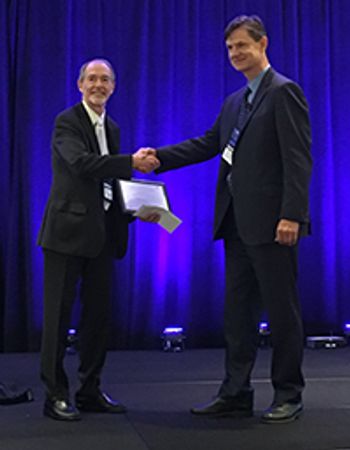
The 2018 Uwe D. Neue Award in Separation Science was presented to Christopher Pohl of Thermo Fisher Scientific (Sunnyvale, California) during the opening plenary session on Sunday, July 29, at HPLC 2018 in Washington, D.C.

For several years, our group has been working on a concept that we have termed multipath liquid chromatography (LC). The main idea is to target multiple classes of compounds following a single injection of a sample, the components of which are segregated on-line and directed to separate appropriate paths for simultaneous separation; the streams are then recombined for detection. I believe that this approach would be powerful for biomarker quantitation, where it would be more informative to track both metabolite and protein biomarkers to better define a disease state, or in the case of antibody–drug conjugate (ADC) development, where the metabolism of the ADC might involve understanding both the levels of the released drug and the remaining protein.
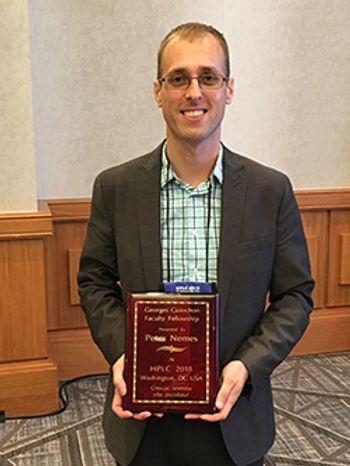
Peter Nemes of the University of Maryland, College Park (Maryland), was awarded the Georges Guiochon Faculty Fellowship at HPLC 2018 during the opening plenary session on Sunday, July 29, in Washington, D.C.