

LCGC Europe
Is a mixer needed between the injector and column in high performance liquid chromatography (HPLC)?
LCGC Europe
Is a mixer needed between the injector and column in high performance liquid chromatography (HPLC)?

LCGC Europe
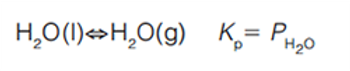
Supercritical fluid chromatography (SFC) and hydrophilic interaction liquid chromatography (HILIC) are suitable for screening very polar trace organic compounds in environmental water samples. The polarity range of separable compounds in SFC is as broad as the polarity range of the serial coupling of reversed‑phase liquid chromatography and HILIC (reversed-phase LC–HILIC). In this article the orthogonality of SFC and reversed-phase LC–HILIC is assessed. It is shown that both techniques are highly orthogonal and complementary. The parallel use of the two techniques offers additional benefits for the compound monitoring of, for example, pharmaceuticals in surface waters, or the identification of unknown compounds in complex samples.
LCGC Europe
“The column is the heart of the separation.” Perhaps more accurately, the column is where the chemistry that generates a separation happens. For chemists and non-chemists alike, the chemistry that drives the utility of a column to solve a separation problem can be complex and confusing. Selectivity describes the ability of a column to effect a separation. This instalment of “GC Connections” focuses on selectivity, its definition, and its importance for generating separations and resolution. We will also see how selectivity is the concept that underlies the idea of column polarity. We begin by asking two simple questions about common observations, then extend these observations into a capillary gas chromatography (GC) column, and conclude with an introduction to methods for evaluating the quality, selectivity, and polarity of a stationary phase or column.

LCGC Europe
As this is the final “Sample Prep Perspectives” column of the year, it is fitting to assess the state of the field by taking a look back and a look forward.

LCGC Europe
The 47th International Symposium on High Performance Liquid Phase Separations and Related Techniques (HPLC 2018), chaired by Norman Dovichi, was held from 29 July to 2 August in Washington, D.C., USA. This instalment of “Column Watch” covers some of the highlights observed at the symposium. In addition, trends and perspectives on future developments in HPLC noted from the conference are presented.

LCGC Europe
The 43rd International Symposium on Capillary Chromatography (ISCC) and the 16th GC×GC Symposium will return to Fort Worth, Texas, USA,-the “Gateway to the West”-in 2019.

LCGC Europe
Tips on how to extend high performance liquid chromatography (HPLC) column lifetimes.
LCGC North America
Click the title above to open the LCGC North America November 2018 issue in an interactive PDF format.
Special Issues
Click the title above to open the LCGC North America November 2018 Special Issue, Advances in Food and Beverage Analysis, in an interactive PDF format.
LCGC North America
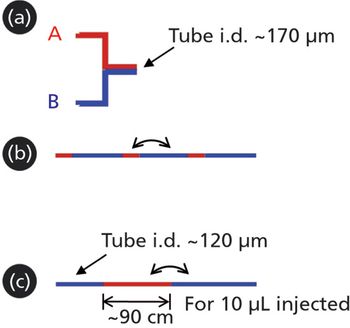
What happens when we inject a sample into the mobile-phase stream? Many LC practitioners are surprised to learn just how serious the effect of the injected sample solvent can be.

LCGC North America
Here, we focus on selectivity: its definition, its importance for generating separations and resolution; and its role in column polarity.

LCGC North America
We assess the state of the field, first looking back at developments presented at conferences this year, reader questions, and the passing of a pioneer in solid-phase extraction. Then, we look to the future of sample preparation.
LCGC North America

LCGC North America
Scientists executing a method transfer often do not have access to the originating system. Thus, alternative approaches to matching chromatographic results must be considered.

LCGC North America
The number of theoretical plates forms the basis of chromatographic theory, and is a key parameter used in all modes of chromatography for measuring column efficiency. Fortunately, it’s easy to measure.

Special Issues
Application of multivariate statistical analysis to a combined data set demonstrated that SIFT-MS discriminates premium quality beef from eight sensory defects, and, therefore, could be applied as an instrumental grading tool, obviating sensory panel grading.
Special Issues
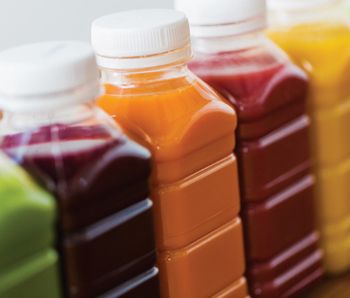
This study assesses whether two commonly used plastic packaging materials are safe for use. Their potential migrants are analyzed using data-independent acquisition and liquid chromatography coupled with high-resolution, accurate-mass mass spectrometry.
Special Issues
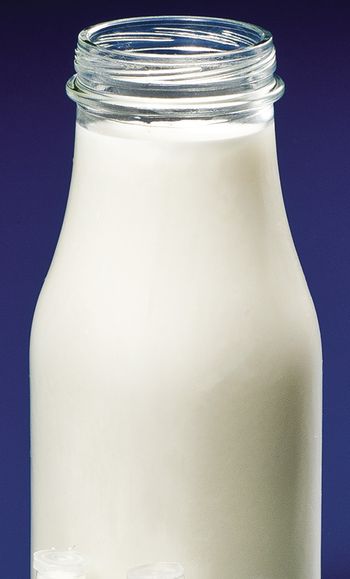
The method described here is a simple method for detection of a wide spectrum of metals and for quantitative analysis over a wide dynamic range of elements, including both toxic metals and those metals essential for health and well-being.

Special Issues
A discussion of challenges in mycotoxin analysis, a new multi-analyte method that does not require sample cleanup, and how analytical chemistry can help reduce contamination by these toxins along the food chain.
Special Issues
Using highly specific immunoaffinity solid-phase extraction to selectively extract and enrich aflatoxins prior to HPLC-FLD analysis, without derivatization, low LOQ values-far below the European regulations-can be achieved even in highly complex and fatty matrices.

Special Issues
A new method enables quantification of pyrrolizidine alkaloids in a range of food matrices.

Unconventional oil and gas (UOG) extraction is a multistep process that involves horizontal drilling, hydraulic fracturing, and massive infrastructure to handle fossil fuel resource recovery and associated wastewater generation.

The Column
Click the title above to open The Column October 2018 North America issue in an interactive PDF format.
The Column
Click the title above to open The Column October 2018 European/Asia issue in an interactive PDF format.

The Column
Molar mass distributions, molar mass averages, and polydispersity can be determined by gel permeation chromatography (GPC), size-exclusion chromatography (SEC), and gel filtration chromatography (GFC). This makes this technique indispensable for all scientists in quality control (QC) and R&D who have to work with large molecules. However, the technical terms used can be quite confusing for beginners. This instalment of Tips & Tricks explains more.
The Column
Process chromatography, in particular process gas chromatography (GC), is a well‑established technique within the oil and gas, refining, and petrochemical industry. The technique is generally used in process plants to determine product quality and yield.
The Column
Waters Corporation has opened a new International Food and Water Research Centre (IFWRC) in Singapore to address the growing challenges of food and water security and safety.

The Column
Shimadzu has celebrated 50 years of Shimadzu in Europe with 300 guests attending an event in Duisburg, Germany, to commemorate the anniversary.