The 2017 LCGC Award winners: Pat Sandra and Deirdre Cabooter


A short treatment of what to consider when choosing the appropriate sample solvent so you can be better informed when developing, optimizing, transferring, or troubleshooting your GC methods.

PALME almost eliminates consumption of hazardous solvents.

A decade of LCGC awards has seen some of chromatography’s modern icons and rising stars honoured. In this 10th year of the award, we are pleased to honour two superb separation scientists: Pat Sandra, the winner of the 2017 Lifetime Achievement in Chromatography Award, and Deirdre Cabooter, the 2017 Emerging Leader in Chromatography. For the third consecutive year, the LCGC awards will be presented at an oral symposium held at Pittcon 2017. This year’s session, which were held on Monday 6 March, featured talks by both award winners and Milos Novotny of Indiana University, Jim Jorgenson of the University of North Carolina at Chapel Hill, and Gert Desmet of the Free University of Brussels (Vrije Universiteit Brussel).

When considering column efficiency, more is not always better. We look at some ways to quickly estimate the effects of changes in column length and particle diameter rather than trying the experiments in the laboratory.

Gas chromatographers can control several variables that affect their separations: carrier-gas flow, column temperature, column dimensions, and stationary-phase chemistry. When faced with less than optimum resolution or separation speed, a strategy of changing just one variable at a time can be more productive than trying to hit the goal in one attempt. This month’s “GC Connections” examines how to use such a plan to obtain better gas chromatography results.

The second meeting of the “Emerging Separations Technologies” series, organized by The Chromatographic Society and the Royal Society of Chemistry Separation Science Group, will be held on Thursday 30 March at RSC Burlington House, Piccadilly, London.

This application note outlines a simple, fast, and cost‑effective QuEChERS-based method for the determination of limonin in citrus juice. Limonin is extracted from a variety of juice samples using acetonitrile and citrate-buffered salts. The sample extract undergoes cleanup by dispersive-SPE (dSPE) using primary‑secondary amine (PSA), C18, and graphitized carbon black (GCB) to remove unwanted matrix components, including sugars, acids, and pigments, and to yield a clear sample extract. Analysis is performed by liquid chromatography coupled to tandem mass spectrometry (LC–MS/MS) using a Selectra® C18 HPLC column (although high performance liquid chromatography [HPLC]–UV can also be used).

Quality and consistency in reagents is critical to successful drug discovery and development. When targeting a particular protein of interest, in vitro experiments should be performed with proteins of biological properties similar to those for in vivo tests. It is important that molecularity, purity, shape, and degree of heterogeneity remain the same when any alterations are made to the model protein or the formulation buffer. Multi-angle light scattering (MALS) combined with size-exclusion chromatography (SEC-MALS) is a very useful technique to monitor the solution properties of the protein as changes to reagents are made.

In this application note, an antibody–drug conjugate (ADC) was analyzed using a TSKgel® Butyl-NPR column, the least hydrophobic of the TSKgel HIC columns. Both unconjugated and drug conjugated Trastuzumab samples were successfully separated with baseline resolution. The baseline resolution enabled an easy integration and quantification of different drug pay loads in ADC characterization.

Projects in drug discovery and safety constantly aim at development of novel and safer drugs, therapeutics, and diagnostics. During active pharmaceutical ingredient (API) development, drug stereoisomerism is recognized as an issue having clinical and regulatory implications. Enantiomers have essentially identical physical and chemical properties, while potentially showing large differences in toxicity.

Chromatographic techniques with mass spectrometric detection are important enablers in modern drug discovery. With the development of robust instrumentation and implementation of user-friendly software (or software packages), non-expert users can now walk up to easily accessible advanced chromatographic systems and perform experiments at their own convenience. Although remarkable improvements in robustness and ease-of-use have happened since the introduction of the first high performance liquid chromatography–mass spectrometry (HPLC–MS) systems, the instrument performance still needs to be qualified and monitored to ensure consistent high-quality results. This article will demonstrate how a simple test mixture of carefully selected compounds can facilitate both the development of generic ultrahigh-pressure liquid chromatography–mass spectrometry (UHPLC–MS) methods and automated performance monitoring of multiple instruments located in separate laboratories and buildings.

Interest in chromatography using hydrophilic interaction liquid chromatography (HILIC) has continued to build in recent years. Adoption of the technique has been slowed by experiences of poor reproducibility. In particular, reequilibration times in HILIC have been reported as being exceptionally long as compared to reversed-phase chromatography. In this study, reequilibration times in HILIC for both aqueous–organic gradients and buffer gradients are systematically explored. The results not only promise to improve method development practices, but also provide insight into HILIC retention mechanisms across mechanistically differing polar stationary phases.

A brief preview of this year’s ASMS conference, taking place June 4–8, 2017, in Indianapolis, Indiana.


Click the title above to open the LCGC Asia Pacific March 2017 regular issue, Vol 20, No 1, in an interactive PDF format.

Click the title above to open the LCGC Europe March 2017 regular issue, Vol 30, No 3, in an interactive PDF format.

Click the title above to open the LCGC North America March 2017 regular issue, Vol 35 No 3, in an interactive PDF format.

Click the title above to open the March 2017 issue of Current Trends in Mass Spectrometry, Volume 15, Number 1, in an interactive PDF format.

The 2017 Chromatography Forum of the Delaware Valley Dal Nogare Award will be presented Monday morning at Pittcon 2017 to Professor Andras Guttman from the Csaba Horváth Laboratory of Bioseparation Sciences at the University of Debrecen in Hungary.

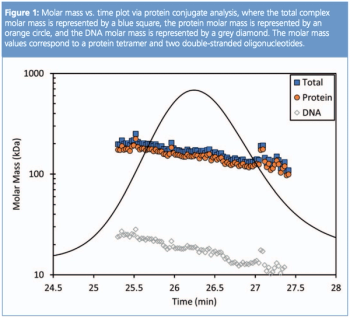
Wyatt TechnologyReversed-phase chromatography represents one of the most popular applications of high performance liquid chromatography (HPLC), with particular importance for protein characterization. Because elution depends on the hydrophobicity of the sample, it is generally impossible to identify the separated products on the basis of their elution time (volume). Frequently, each eluted fraction must be isolated further and analyzed with other techniques to gain some understanding of the molecular behaviour of the protein.

Students who have an internship on their resume, and are seeking jobs in a particular sector, are doing so with an informed opinion. While an internship comes in many forms, that real-world experience has provided a clear touchstone of understanding of what it would be like to work in a given sector.

The Satinder Ahuja Award for Young Investigator in Separation Sciences has been presented to Omar K. Farha, a research professor of chemistry at Northwestern University, Distinguished Adjunct Professor at King Abdulaziz University, and president of NuMat Technologies.

The 2017 Chromatography Forum of the Delaware Valley Dal Nogare Award has been presented to András Guttman, head of the Horváth Csaba Laboratory of Bioseparation Sciences at the University of Debrecen in Hungary, at Pittcon 2017, held this year in Chicago, Illinois, USA.

The 2017 Pittsburgh Analytical Chemistry Award has been presented to Janusz Pawliszyn of the University of Waterloo, Canada.

Few fruits are as notorious as the Durian fruit. Native to Southeast Asia but fast becoming available around the globe, these fruits hold the unsavoury title of “the world’s smelliest fruit”. The compounds responsible for such a complex and at times difficult to stomach aroma have intrigued scientists for decades, but until recently the data relating to those chemicals was inconsistent.

The implementation of the FSMA (Food Safety Modernization Act) and the continued globalization of the food supply have increased the need for improved analytical methods for quality and safety testing. Food safety and quality requirements are increasingly stringent, as are consumer expectations. In addition to new methods, the industry continues to look for improvements in laboratory productivity and new ways to reduce costs. These trends extend to dietary supplements and natural products. This article discusses the current state of efforts to modernize US Pharmacopeia (USP) compendial methods to take advantage of new chromatography technology, including the use of “allowable adjustments”.

A preview of RAFA 2017, which will be held 7–10 November 2017 in Prague, Czech Republic.