


Seven research teams from universities across the United States and Canada have been honored for their collaborative efforts that integrate automation and artificial intelligence (AI) to tackle fundamental scientific challenges.
Seven research teams from universities across the United States and Canada have been honored for their collaborative efforts that integrate automation and artificial intelligence (AI) to tackle fundamental scientific challenges.

Here is some of the most-read content posted on LCGC International this week.
Molecular simulations, while useful in chromatographic biomolecule analysis, can be complex to set up and run. Researchers aimed to simplify these processes using two workflow management systems.

Hydrophobic interaction chromatography (HIC) is useful, albeit costly, for purifying proteins. Researchers aimed to reformulate HIC isotherms using salt-dependent water activity to optimize the process.

This review highlights the high performance liquid chromatography (HPLC), mass spectrometry (MS), chromatography data systems (CDS), and related products that were introduced from 2024 to 2025, summarizing the technical specifications of each product and highlighting significant user benefits.
Here is some of the most popular content posted on LCGC International this week.
Here is some of the most popular content posted on LCGC International this week.
Here is some of the most popular content posted on LCGC International this week.

A new paper presents the design of a needle-plate dielectric barrier discharge DBD ion source based on 3D printing for high field asymmetric-waveform ion-mobility spectrometry (FAIMS).

AI-powered tools are enhancing precision, efficiency, and decision-making in biopharmaceutical development. Recently, Jared Auclair and Anurag Rathore explored AI's evolving role in biopharmaceuticals in detail.
Here is some of the most popular content posted on LCGC International this week.
Here is some of the most popular content posted on LCGC International this week.
Here is some of the most popular content posted on LCGC International this week.

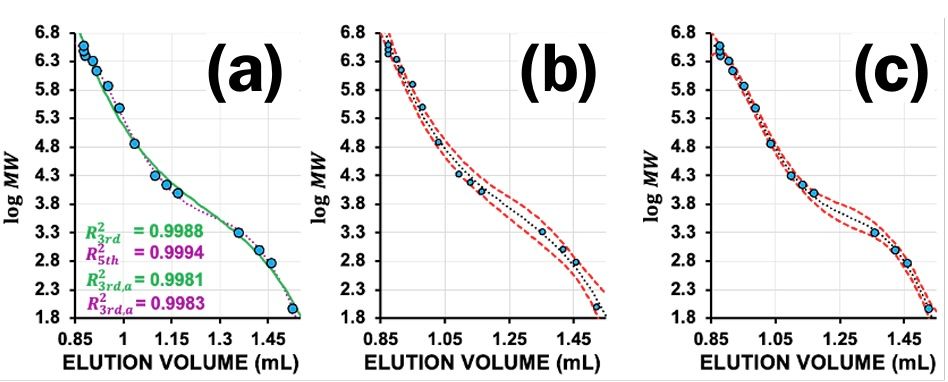
In chromatographic analysis, the number of repeated measurements is often limited due to time, cost, and sample availability constraints. It is therefore not uncommon for chromatographers to do a single measurement.

In this installment, we will review the fundamental terminology and data analysis principles in benchtop GC–MS. We will compare the three modes of analysis—full scan, extracted ion chromatograms, and selected ion monitoring—and see how each is used for quantitative and quantitative analysis.
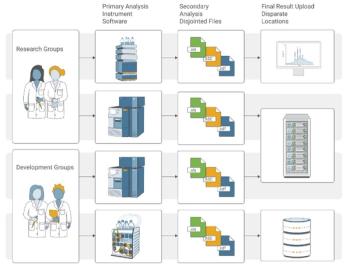
Interest in applying artificial intelligence (AI) and machine learning (ML) to chromatography is greater than ever. In this article, we discuss data-related barriers to accomplishing this goal and how rethinking chromatography data systems can overcome them.

A two-step workflow to extract pure mass spectra from comprehensive two-dimensional liquid chromatography high-resolution mass spectrometry (LC×LC–HRMS) data has been created and tested.

Reinforcement learning was tested as a means of improving liquid chromatography method development.
Reinforcement learning was tested as a means of improving liquid chromatography method development.

A research group has developed an improved workflow for constructing machine learning (ML) models in oligonucleotide separation.

Physics-informed neural networks were tested for their capabilities in predicting concentration profiles in gradient liquid chromatography.

The company reported $1.68 billion in revenue at a 25.1% operating margin across its businesses in America, Europe, and Asia.

During Waters Corporation’s 2025 Investor Day, the company’s top executives highlighted the company’s growth and hints at future points of development.

Ardiana Kajtazi discusses her research identifying organic micropollutants in water using liquid chromatography–high-resolution mass spectrometry (LC–HRMS). She highlights the standardized filtration approach her team has developed based on intersection principles, utilizing retention indices from two reversed-phase liquid chromatography (RPLC) columns.
A two-step workflow to extract pure mass spectra from comprehensive two-dimensional liquid chromatography high-resolution mass spectrometry (LC×LC–HRMS) data has been created and tested.