In the most general sense, validation refers to a process that consists of at least four distinct components or steps: software, instruments, methods or procedures, and system suitability.

In the most general sense, validation refers to a process that consists of at least four distinct components or steps: software, instruments, methods or procedures, and system suitability.

The two questions to ask when considering the validation of computerized laboratory systems are "Do I need to validate the system?" and,if so,"How much work do I need to do?" This article provides a simple framework to answer these questions at the system level.

Validation is one of the most critical issues facing today?s chromatographers and spectroscopists. With developments in this area moving for-ward at a staggering pace, it is more critical than ever that scientists have the most up-to-date information possible on validation.

Gas chromatography-mass spectrometry using a single-quadrupole instrument is the workhorse technique of the environmental lab. It normally falls short for applications that require high mass accuracy. It is shown here that with proper calibration techniques, this technique can indeed readily obtain high mass accuracies to within a few millidaltons and become a powerful tool for unknown compound identification.

This article describes the current situation in FDA-regulated areas, as well as characterization of these products. Finally,the author discusses the various stages of early- and late-phase product developments.

In the second of a two-part series, Marlin K.L. Bicking continues to explain his work concerning integration errors in peaks with approximately equal sizes (small peak ratios).

The Stephen Dal Nogare award is one of the oldest and most prestigious awards given in chromatography. Little has been written about Stephen Dal Nogare "the man" or his contributions to scientific knowledge, including his unique contributions to separations science. This article describes his scientific career and how it has influenced the practice of chromatography.

Globally, 2005 sales of pharmaceuticals have been estimated at approximately $550 billion. A significant fraction of this amount was due to the top pharmaceutical companies in the world. The top five companies alone were responsible for total revenues of $168 billion, or 30% of the entire market.

In his annual installment, John Hinshaw takes a look at the new gas chromatography instruments and accessories that were on display at Pittcon this year.

Guest columnist Walter Jennings reflects on the early days of capillary gas chromatography (GC) and how chromatographers become experts in the technology by constructing their own columns, thereby achieving a more thorough understanding of the chromatographic process.

This article looks at current practices in bioanalytical chemistry by examining and critically assessing the various parameters that can be altered to achieve high-speed results with high resolution in LC–MS applications. The decision to opt for gradient or isocratic elution is also discussed.

Overall FID sensitivity depends upon the combustion gas flow-rates, the carrier-gas flow-rate, the flame jet exit diameter, the relative positions of jet and collector and, to a lesser degree, the detector temperature.

This month's installment of "Column Watch" is the conclusion of a two part series in which Ron Majors examines the trends in columns and sample preparation at Pittcon 2006.

In part I of a two-part series, the author introduces several methods to reduce error in your chromatographic analyses.

Exciting new uses for gas chromatography and its hyphenated forms show that there is an uncharted territory of applications and that there are limitations that still need to be overcome. The Tuesday afternoon oral session at Pittcon 2006, "GC-MS: Developments and Applications," gave the audience an idea of advances in GC and some new areas for the technique's application. John Chalmers of VS Consulting (Stokesley, United Kingdom) presided over the session.

At a session entitled "Atomic Emission Detection for Gas Chromatography," several speakers discussed applications of coupling gas chromatography and atomic emission detection (GC-AED).

This month's installment of "Column Watch" is the first of a two-part series in which Ron Majors examines the trends and highlights in columns and consumables at Pittcon 2006.

Capillary gas chromatography (GC) is a well-established separation technique. Rick Parmely reviews some of the capillary column basics by investigating a standard test mixture and observing some of the chromatographic effects that can affect peak response, peak shape and column bleed. He provides guidelines for obtaining the best performance from a capillary column. He discusses peak tailing, column overload, ghost peaks and column bleed and speculates on "when to give up." He concludes with a set of fundamental steps to be used in achieving better GC analyses.

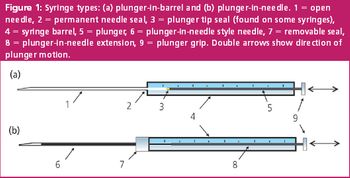
In this month's edition, John Hinshaw takes a look at how choosing a suitable syringe for a specific application can be difficult, especially if the inlet system has special requirements; choosing the wrong syringe ca cause significant problems.

Part 2 of the column explores using the right balance for the right job in the right way.

It would help to have a restricted set of chromatographic systems (CS) that together serve as potential starting points in method development.

A method for the identification of key volatile organic compound (VOC) markers associated with infection by Neisseria meningitidis bacteria by gas chromatography–mass spectrometry (GC–MS) was developed. Headspace samples of bacterial VOCs were trapped on triple-sorbent bed tubes and then thermally desorbed into a laboratory GC–MS system for separation. Identification was carried out by comparison of GC retention time and electron ionization mass spectra to the National Institute of Standards and Technology (NIST) database. Further confirmation was obtained by GC–MS of known standard chemicals. A total of 75 VOCs were detected, five of which can be considered key VOC markers for Neisseria meningitidis. These peaks were identified as 1,2-dimethylcyclopropane, 2-methylpropanal, methacrolein, N-2-dimethyl-1-propanamine, and 3-methylbutanal by the NIST database.

There are three basic types of silica glass that have been used for capillary columns: sodium, borosilicate and fused silica.

Direct coupling of SFE with GC has advantages over the off-line alternative.

Flame ionization detection (FID) is the most commonly used gas chromatography (GC) detection method. Flame ionization detectors respond to a wide assortment of hydrocarbons, have a large dynamic range, are...