To obtain a better understanding of the challenges faced during method development and validation, the authors - in cooperation with LCGC - conducted a survey earlier this year. This column summarizes the results.

To obtain a better understanding of the challenges faced during method development and validation, the authors - in cooperation with LCGC - conducted a survey earlier this year. This column summarizes the results.

Scientists Jorn Chi Chung Yu, Garrett Lee Burleson, and colleagues in the Department of Forensic Science at Sam Houston State University in Texas have developed a new method for identifying gunshot residue without the presence of lead.

PerkinElmer (Waltham, Massachusetts) announced the "Ettre Award" to honor a young scientist in the field of gas chromatography.

Thar Instruments (Pittsburgh, Pennsylvania) has expanded their European team by four new members since the company's acquisition of Berger SFC in 2007.

Inlet discrimination is a problem encountered by gas chromatography (GC) analysts when making a split injection. It is characterized by peak response that is smallerthan expected for less-volatile compounds, and that gradually gets worse as retention time increases. The cause of this problem stems from both the sample and the injection technique. Upon injection of a sample with multiple analytes into a heated inlet, different compounds enter the gas phase at different rates. This means that a disproportionate amount of sample will be purged from the split vent.

This month, "GC Connections" presents a few of the best and worse laboratory habits.

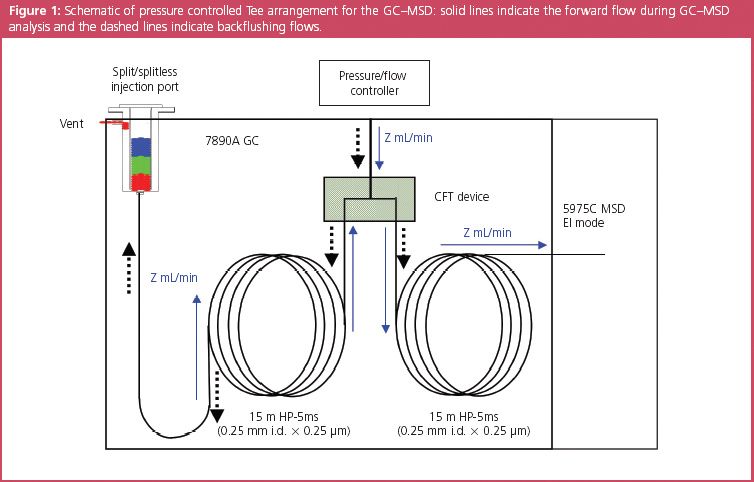
Computerized pneumatic control adds a very capable multipurpose tool to the chromatographer's tool belt.

This month Chromatography Online's Technology Forum looks at the topic of GC and the trends and issues surrounding it. Joining us for this discussion is Sky Countryman of Phenomenex, Nicholas H. Snow of Seton Hall University, John Hinshaw of Severon Corp., and Meredith Conoley, Jason Cole, Eric Phillips, Joergen Olsson, and Flavio Bedini of Thermo Fisher Scientific, Inc.

This Tuesday afternoon session, titled "Current Status and Trends in the Application of Liquid Chromatography (LC and UHPLC) Hyphenated with Tandem Mass Spectrometry for Pharmaceutical Analysis" was presided over by Arindam Roy of Covidien.

"A bitter pill to swallow" may be an old adage, but it actually has meaning to today's pharmaceutical industry and to chemists using modern chromatographic techniques.

Being here in New Orleans, which is one of the busiest port cities in the U.S., the topic of Homeland Security seems particularly relevant. So I attended Session 1490, "Homeland Security and Forensic Analysis." It proved to be very interesting.

Pittcon has seen a lot of new products launched this year, all of which innovative in design and concept. A few new products were highlighted in Tuesday morning's session 1173: "New Product Forum: Chromatography Columns," presided over by Robert W. Baudoux from RWB Convention Management.

It seems as though Pittcon 2008 has gone by in the blink of an eye as we reach this, our final day of coverage from New Orleans. And although the long lineup of press conferences may be winding down at this point, the roster of technical sessions continues onward and will even continue into the end of the week.

A professor from the University of Pittsburgh received one of the most distinguished awards at the Pittsburgh Conference on the third day of Pittcon 2008 from New Orleans.

Well, it's Pittcon Day 2, and I followed the suggestion of LCGC Columnist John Hinshaw and attended session 410, "Food Science: UV-Vis, NIR, AA, LC, GC, and Electric Nose."

Monday's "General Interest: LC/GC" session delved into a wide array of new techniques and discoveries in the scientific and academic LC/GC communities.

The 2008 Chromatography Forum of Delaware Valley Dal Nogare Award was presented Monday morning to John G. Dorsey, the Katherine Blood Hoffman Professor of Chemistry at Florida State University, by Mike Koenigbauer, President of the Chromatography Forum of Delaware Valley.

Four years ago, problems were slightly different for HPLC users. However, one main problem remains the same and will continue to remain the same.

Good Morning and welcome to Day 2 of LCGC's coverage of Pittcon 2008 from New Orleans, Louisiana. We have already seen many informative and innovative press conferences and technical sessions, as the rate of technical development in the field of analytical chemistry continues to advance at a staggering pace.

The city of New Orleans has a rich history of merging French and American art, from the iconic fleur-de-lis to the works of Edgar Degas. Unfortunately, sometimes art, whether it's a painting, book, or some other medium, gets damaged due to unforeseen disasters. It is the job of the scientist to pursue the restoration of such precious objet d'art. These types of art recovery efforts were described in the session "Science for Art" at Pittcon 2008.

Phthalates are added to plastics to increase flexibility. Recently, concerns have been raised over the effect of phthalate exposure from plastic materials on human health.


I attended session 220, "Sample Preparation: General," on Sunday afternoon. As Frank Dorman of Restek Corporation, who presided over the session noted, the weather here is much nicer than it was last year in Chicago, and he was happy to see a good crowd gathered for this session.

Given the historic and crucial relationship between New Orleans and the sea, it was appropriate to kick off the Pittcon week with a nautical-based session.

A proud student filling in for his esteemed teacher highlighted the first day of technical sessions as Pittcon returned to the Crescent City.