

LCGC North America
In this month's "GC Connections," John Hinshaw examines the anatomy of chromatographic peaks with attention to features that help determine the suitability of individual chormatographs for a specific analysis task.
LCGC North America
In this month's "GC Connections," John Hinshaw examines the anatomy of chromatographic peaks with attention to features that help determine the suitability of individual chormatographs for a specific analysis task.
LCGC Europe
The latest newcomer to the collection of GC techniques, GCXGC, is examined in this instalment. Although this technique is capable of delivering more GC information in a shorter time than other methods, its technical complexity has slowed down widespread acceptance. John Hinshaw explains...
LCGC North America
This review discusses the operating principles of and current applications for two-dimensional gas chromatography with heartcutting.
LCGC Europe
In the welcome return of this column, Bob McDowall revisits the evolving topic of 21 CFR 11 compliance, as it applies to chromatographers. He examines the FDA's activities in 2003 and outlines the current status of its regulations over, and guidance for, electronic records issues.
LCGC Europe
This month's "GC Connections" column provides advice on how to select the right gases and thus alleviate the problems associated with their use. It offers points to check with regard to gas grades, purities and impurities and how to ensure gas quality.
The Application Notebook
Phytosterols and stanols (hydrogenated phytosterols) are naturally occurring substances?
The Application Notebook
The current concern over acrylamide levels in food has unexpectedly brought amino acid analysis to the forefront . . .
LCGC North America
In this month's installment, John Hinshaw reports about the 24th International Symposium on Capillary Chromatography and Electrophoresis held in May.
LCGC North America
John Hinshaw examines the operating environment, setup, and operating conditions necessary to ensure high detector performance.
LCGC North America
This month in GC Connections, John Hinshaw presents his report of new gas chromatography instruments and accessories exhibited at the 52nd Pittsburgh Conference...

By calculating optimal stationary-phase composition and physical parameters, column developers can construct columns that provide the exact separation requirements desired by analysis or current methods.

Thermal desorption sampling often provides a means for bringing otherwise intractable samples to a gas chromatography (GC) column for separation and detection.

Routine analysis of volatiles from fruit juices can be sampled and concentrated using a static headspace method and rapidly analyzed by high-speed GC.

In this month's "GC Connections," John Hinshaw examines optimization strategies for gas chromatography columns in the second installment of a multipart series. He starts with a question from a reader and then discusses broader column issues.

John Hinshaw reviews the new gas chromatography instrumentation and accessories introduced at Pittcon this year.

This month's column reviews some basic GC measurements and calculations that can be applied to questions of column quality. By understanding the analytical process, chromatographers can improve the quality of their results.

This report describes five small and very useful accessories developed 40 years ago to adapt gas chromatographs for special tasks.

This month's "GC Connections" begins a multipart series about gas chromatograph performance optimization. In this first part, John Hinshaw addresses questions of instrument capabilities and chromatographers' expectations, as well as manual–hardware optimization strategies and software-separation strategies.

In the first of two "GC Connections" columns, Hinshaw responds to reader questions about the signal-to-noise ratio and what it means in practical terms.

A second installment of "GC Connections" answers a reader's question about dual-column gas chromatography systems and their proper maintenance.
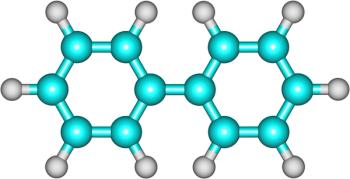
The authors describe a method of reductive chlorination that enables the determination of total PCB content by gas chromatography with flame ionization detection.

The authors compare their results in analyzing styrene–butadiene block copolymers by gel permeation chromatography with other methods, such as Fourier transform infrared spectroscopy and pyrolysis gas chromatography.

In part I, Hinshaw described a simple experiment with coins to explain the statistical nature of separations and to impart a better understanding of the physical processes inside the column. In part II, he compares this coin-toss simulation with chromatographic columns and describes differences between the analogy and real-world situations.

The guest authors summarize the history of this Japanese scientific instrument company and events in the development of its products.

Analysts can optimize their separations by using combinations of two columns connected in series. This type of coupled column system produces peak separations that are a combination of separations obtained on each column.