

LCGC North America
LCGC North America

E-Separation Solutions
For a young scientist, being recognized for your hard work at such an early stage in your career is a tremendous honor.

E-Separation Solutions
A topic on everyone's minds these days, especially those of us who traveled by air to get to Pittcon, is Homeland Security.

E-Separation Solutions
The Ancient Greeks ate sheep testicles before competitions. Contemporary athletes have designer steroids. What techniques can we use to test our athletes for banned substances?
E-Separation Solutions
The 2007 Pittsburgh Analytical Chemistry Award was presented Tuesday morning to Jonathan V. Sweedler, Lycan Professor of Chemistry at the University of Illinois at Urbana/Champaign.

E-Separation Solutions
Well-known LCGC Columnists John Dolan and John Hinshaw provide their list of recommended sessions.

E-Separation Solutions
Good morning and welcome to LCGC's third and final day of conference coverage from Pittcon 2007.
E-Separation Solutions
Well-known LCGC Columnists John Dolan and John Hinshaw provide their list of recommended sessions.
E-Separation Solutions
Good morning, fellow Pittcon conferees, and welcome to Day 2 of LCGC North America's ongoing coverage from Pittcon 2007.
E-Separation Solutions
Chromatography Forum of Delaware Valley Dal Nogare Award Dr. John W. Dolan was the proud recipient of the Dal Nogare Award at Pittcon 2007, adding another bright note to his illustrious career.
E-Separation Solutions
The 2007 Ralph N. Adams Award in Bioanalytical Chemistry was presented to Norman J. Dovichi, Professor of Chemistry at the University of Washington, on Monday afternoon at Pittcon 2007.

E-Separation Solutions
Attendees continue to trickle in, as snowstorms around the country continue to disrupt air travel. For those like me who thought, "Chicago in February? Hooray!"

E-Separation Solutions
Yesterday, Andrew Tiplerwas going nowhere fast because of airport delays. Today, he was discussing how to accelerate your gas chromatography runs.
E-Separation Solutions
Shana Kelley received the Pittsburgh Conference Achievement Award in a ceremony on Monday morning of Pittcon 2007.

E-Separation Solutions
Eight presentations on a variety of LC-MS applications were given in Session 170 on this first afternoon at Pittcon. One of the most interesting was session 170-6, "Techniques of LC-MS in Forensics Analysis." The speaker, Michael C. Zumwalt, discussed the variety of LC-MS instrumentation available to meet both qualitative and quantitative needs. Among the interesting applications he discussed were those for detecting drugs of abuse and explosives. Workplace drug testing and forensic toxicology are examples of these applications. LC-MS continues to be a rapidly growing technique, and the ways in which it can be used in forensic analysis are quite varied. Serial measurement systems are used for quantitation, while parallel systems are best for qualitative applications. Serial systems such as single quadrupole and triple quadrupole mass spectrometers are very useful for detecting drugs of abuse in oral fluids. A particular advantage noted by the speaker is the ease of sample collection, which can even be done in the field, for example, by a police officer.
E-Separation Solutions
Well-known LCGC Columnists John Dolan and John Hinshaw provide their list of recommended sessions.
E-Separation Solutions
Most arrived at Pittcon 2007 wet, cold, and frustrated. But a the blizzard whooping around Chicago couldn't bring David Schwartz down today when he was presented with the 2007 Pittcon Heritage Award.

E-Separation Solutions
As most of us traveled by air to Chicago this weekend, we all passed through airport security and the various drills like taking off our shoes, removing metal objects and taking the all-important laptop out of its case.

E-Separation Solutions
Sunday afternoon's plenary lecture at Pittcon 2007 was given by Charles M. Lieber and was titled "Nanowire Nanoelectric Devices for Detection of and Interfacing to Biological Systems."

E-Separation Solutions
Pittcon 2007 opened with a bang here in Chicago, albeit a snowy bang. All the liquid falling outside, whether in rain, snow, or ice form, was nothing compared to the liquid chromatography sessions.
E-Separation Solutions
Good morning, and welcome to the opening day of LCGC's "Meeting Report" from Pittcon 2007 in Chicago, Illinois.
E-Separation Solutions
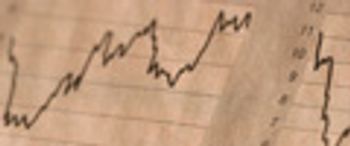
Separation instrument techniques are among the most widely used technologies in the analytical instrumentation market. It spans the entire industrial and regional marketplace. The lab separations market includes chromatographic techniques like analytical and preparative HPLC, GC, IC, TLC, flash, and low pressure LC.

E-Separation Solutions
Each month in our Technology Forum we will feature a discussion between industry experts on various trends and issues in the chromatography field. This month's Technology Forum looks at the topic of Pittcon 2007 and the trends and issues surrounding it. Joining us for this discussion are Tom Ricci with Ricci Communications and LCGC Columnists John Dolan and John Hinshaw.

E-Separation Solutions
According to "Column Watch" Editor Ron Majors, Type C silica is a term introduced by Dr. Joseph Pesek of San Jose State University (California).
LCGC North America
This article presents the findings from an analysis conducted on sensitivity in GC on the basis of the complex group of polycyclic aromatic hydrocarbons and PAH derivatives.