





Gas Chromatography (GC)
Latest News
Advertisement
Latest Videos


Shorts


Advertisement
More News

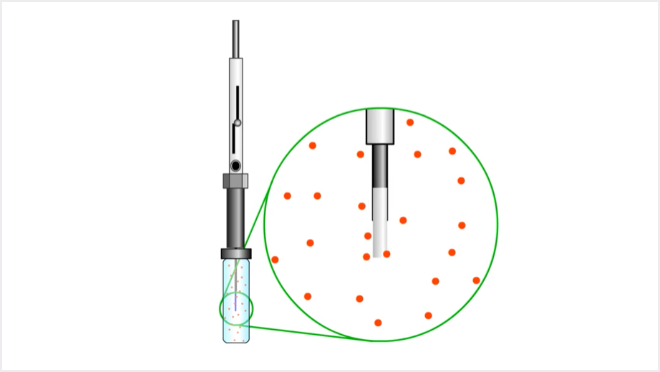
Practical GC in gas chromatography: learn how PEG column bleed affects MS sensitivity, and when polar analytes still quantify reliably.
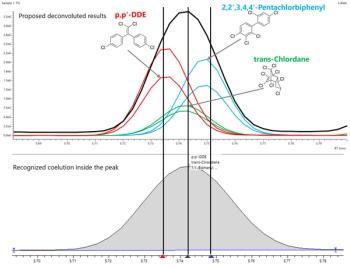
GC–MS deconvolution untangles coeluting pesticides in fast low‑pressure runs, rebuilding clean spectra for accurate library matches and more confident screening.
"GC Connections" column editor Nicholas Snow offers a basic GC maintenance tools and supplies overview.

Top articles include a new “GC Connections” article on maintenance practices for modern capillary gas chromatography (GC) systems, an interview on rapid per- and polyfluoralkyl substances (PFAS) analysis, and a preview of an upcoming session at Analytica 2026 in Munich, Germany.
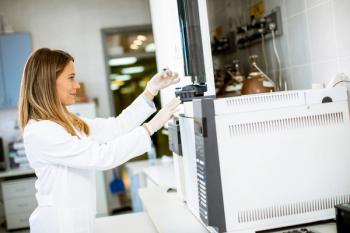
Modern capillary gas chromatographs offer excellent resolution and sensitivity with quick training time, but, like any complex scientific instrument, require regular maintenance. Nick Snow's latest "GC Connections" column covers essential maintenance practices, including carrier gas management, inlet upkeep, column care, and detector maintenance.
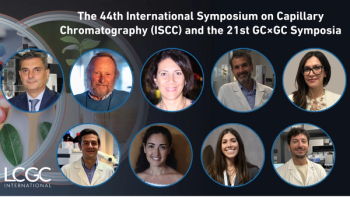
Luigi Mondello and leading lights from the organizing team spoke with LCGC International about the return of the 44th International Symposium on Capillary Chromatography (ISCC) and the 21st GC×GC Symposium, to be held May 17–22, 2026, at the Conference Centre in Riva del Garda, Italy, and why this is an essential event for the global separation science community.

Restek Corporation has launched its next-generation RMX gas chromatography (GC) columns incorporating a new TriMax deactivation technology onto the market.

Gas analyzers are evolving to meet modern demands, enhancing legacy systems with real-time insights and connectivity for improved operational efficiency and compliance.

A review of some of the content highlights from LCGC International in 2025.

In its 2025 industry survey, LCGC International looked beyond the numbers to uncover the challenges, priorities, and outlook shaping the chromatography community, and what lies ahead in 2026.
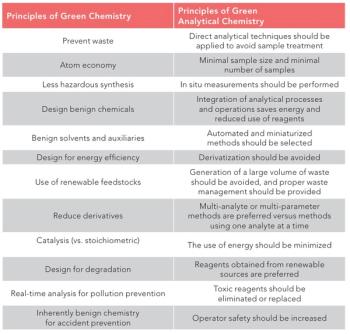
With the increasing interest in green chemistry and sustainability, analytical chemists are developing new methods and reexamining existing methods with a new emphasis on sustainability and environmental impact. Since the publication of the principles of green chemistry in the 1990s and the principles of green analytical chemistry in the 2000s, several scoring systems for evaluating the greenness or sustainability of analytical methods have been developed. In this column, we will examine three widely used scoring methods: Red, green blue (RGB), the analytical greenness metric (AGREE), and the analytical method greenness score (AMGS) with comments on how they all apply to gas chromatography (GC). We will see that classical GC, which has roots in the origins of the environmental movement, has been and remains among the greenest of analytical techniques.

This article explores the diverse career paths where analytical sciences PhDs create impact in fundamentally different ways than traditional research roles, and provides practical guidance on how to pursue them.

Discover the 2026 HTC Innovation Award, recognizing groundbreaking contributions in separation science and hyphenated techniques by emerging scientists.

Chemist Katelynn Perrault Uptmor discussed her work using comprehensive two-dimensional gas chromatography (GC×GC) to improve complex chemical analysis, forensic investigations, and laboratory accessibility at the 2025 Eastern Analytical Symposium
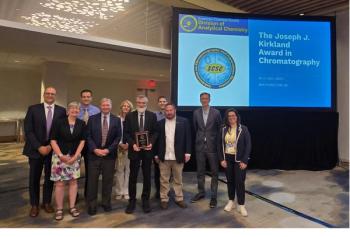
This LCGC blog highlights the ACS SCSC’s initiatives, events, and awards that connect and support the global separation science community across academia, industry, and government.
This past week, LCGC International published a variety of articles on hot topics in separation science.

The role of gas chromatography (GC) in forensic analysis is spotlighted.

How to take ownership of your next career steps
Webcasts
Webinar Date/Time: Wednesday, October 29, 2025 Morning Session: 2:00pm GMT | 3:00pm CET | 9:00am EST Afternoon Session: 5:00 pm GMT | 6:00 pm CET | 12:00 pm EST

Webcasts
Webinar Date/Time: Thu, Oct 23, 2025 10:00 AM EDT

Webcasts
Webinar Date/Time: Wed, Oct 22, 2025 11:00 AM EDT

Webcasts
Webinar Date/Time: Thursday, October 16, 2025 8am PDT | 11am EDT | 4pm BST | 5pm CEST

Trap focusing offers a powerful solution to common challenges in headspace (HS) and solid-phase microextraction–gas chromatography (SPME–GC) analysis of foodstuffs, including poor peak shape, limited sensitivity, and restricted dynamic range. This article explores how automated cryogen-free focusing, combined with multi-step enrichment and re-collection capabilities, can improve the detection and quantitation of both aroma-active compounds and trace-level contaminants. Using real-world examples, including flavor profiling of cola and garlic, and quantitation of ethylene oxide and epichlorohydrin in spices, enhanced chromatographic performance, greater confidence in compound identification, and lower detection limits than traditional workflows such as direct SPME or QuEChERS (Quick, Easy, Cheap, Effective, Rugged, and Safe) are demonstrated.

Gas chromatography (GC) liners are offered in dozens of different configurations and internal diameters. The liner is designed with baffles or glass wool to best vaporize and mix the sample prior to transferring it to the head of the analytical column. Split liners have considerably more flow and are designed to handle high split ratios. For example, some liners have a glass dimple at the bottom to allow for higher flow rates (low pressure drop). Some split liners have an outer diameter of 6.3 mm while splitless liners have an outer diameter of 6.5 mm. It has been reported that these liners have been used interchangeably, which begs the question: Does the outer diameter matter?
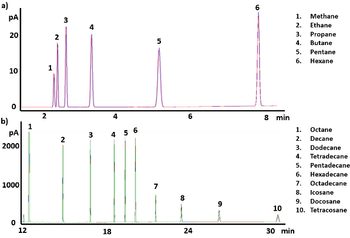
Discover how a novel alicyclic polydimethylsiloxane stationary phase enhances gas chromatography for precise carbon number grouping and hydrocarbon analysis.
Advertisement
Advertisement
Trending on LCGC International
1
HPLC-FLD Confirms Aflatoxins in Peanuts, Pistachios
2
Industry Roundup: Shimadzu Debuts GCMS-TQ RX Series, Tackling Helium Shortage and Laboratory Throughput Pressures
3
GC×GC–TOF-MS Detects Persistent Organic Pollutants in Sediment
4
GC-MS Profiles Nano Garlic and Lemon Oils
5