



The basic operating principles of ion mobility spectrometers (IMS), their resulting strengths and weaknesses, and why both perfectly align with the capabilities and requirements of gas chromatographs are discussed.
The basic operating principles of ion mobility spectrometers (IMS), their resulting strengths and weaknesses, and why both perfectly align with the capabilities and requirements of gas chromatographs are discussed.

LCGC’s Senior Technical Editor uses artificial intelligence (AI) platform ChatGPT to answer questions about the role of AI in separation science. Do you agree with ChatGPT?

During the 18th International Symposium on Hyphenated Techniques in Chromatography and Separation Technology, experts presented a workshop on emerging industrial applications in MS.

Webcasts
Webinar Date/Time: Wed, Jun 19, 2024 11:00 AM EDT

Here are the top five articles that the editors of LCGC International published this week.

In this installment, we examine trends in the use of sample preparation techniques through the lens of instrumental analysis by gas chromatography (GC) and GC–mass spectrometry (GC–MS).

Webcasts
Webinar Date/Time: Tuesday, May 28, 2024 Airing 1: 11am EDT | 8am PDT | 10am CET | 4pm SGT Airing 2: 2pm EDT | 11am PDT | 1pm CET | 7pm SGT

Scientists from the Chinese Academy of Inspection and Quarantine recently published a review on how green solvents can further the evolution of microextraction techniques.

In this edition of “Inside the Laboratory,” Paola Tiedemann, PhD, an assistant professor of chemistry at Texas Tech University, discusses her laboratory group’s work using headspace sampling techniques like solid phase microextraction coupled to gas chromatography-mass spectrometry (SPME-GC–MS) to chemically characterize odor volatiles from a range of forensic specimens.

At issue in this study was the certified value of decabromodiphenyl ether (BDE 209) in a polystyrene matrix CRM relative to its regulated value in the EU Restriction of Hazardous Substances Directive.

Webcasts
Webinar Date/Time: Wed, May 15, 2024 2:00 PM EDT

In this interview to commemorate Earth Day, Ana Torres-Agullo and Silvia Lacorte share the results of using Pyr-GC-Orbitrap-MS to simultaneously determine the presence of 10 polymers in the air.
Chromatographic and spectroscopic techniques alike were reviewed for their current effectiveness and future potential in this lecture session at Analytica 2024.
Here are the top five articles that the editors of LCGC International published this week.

Adopted 35 years ago, the Montreal Protocol is an international treaty designed to protect the ozone layer. It addresses ozone depletion caused by industrial chemicals and remains a landmark environmental agreement in the phasing out and ban of the production and consumption of ozone-depleting substances (ODSs).

A study has used gas chromatography coupled to a time-of-flight mass spectrometer to build an electron ionization mass spectra database of more than 250 chemicals classified as either volatile or semi-volatile compounds. An additional, confirmatory layer of liquid chromatography–mass spectrometry analysis was subsequently performed.
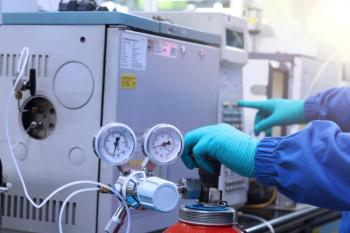
Element Materials Technology introduced its Rapid Response Pharmaceutical Testing Service, providing expedited testing and focusing on various requirements including active ingredients and final drug products, extractables and leachables, degradation production, and elemental impurities.

A study has proposed targeted methods, developed using gas chromatography coupled to tandem mass spectrometry, to measure human plasma protein binding and hepatocyte clearance in 73 per- and polyfluoroalkyl substances, or PFAS.

The company’s new service will provide expedited testing to customer around the world.

This week, LCGC International published a variety of articles on the hottest topics in chromatography and beyond. Below, we’ve highlighted some of the most popular articles, according to our readers. Happy reading!

In this edition of “Inside the Laboratory,” Kevin Schug, PhD, a full professor of chemistry at the University of Texas at Arlington, discusses his laboratory’s group work in environmental monitoring around water and soil quality near oil and gas extraction, using techniques such as liquid chromatography (LC), gas chromatography (GC), supercritical fluid chromatography (SFC), and coupling these techniques with mass spectrometry (MS).

Scientists investigated using this method to measure volatile organic compounds in the breath of patients with chronic kidney disease.

Webcasts
Webinar Date/Time: Wed, Apr 10, 2024 10:00 AM EDT

Researchers from Austria, Greece, and Italy conducted a study to analyze volatile organic compounds (VOCs) present in Irish and Scotch whiskys using solid-phase microextraction (SPME) Arrow with comprehensive two-dimensional gas chromatography coupled to mass spectrometry (GC×GC–MS) to examine the organoleptic characteristics that influence the taste of spirits.

A recent study from the Cantonal Laboratory Zürich examined using micro solid-phase extraction for pesticide analysis.