



A broad range of trace-level volatile organic compounds was detected in drinking water using headspace–trap sampling.
A broad range of trace-level volatile organic compounds was detected in drinking water using headspace–trap sampling.

It is a fact that most of us will be experiencing rising helium costs, and in some cases, caps on supply, or an inability to initiate new supply contracts from providers. Based on my own experiences, and those of colleagues and contacts, I’ve prepared what I hope is a succinct and focused guide on the factors one needs to evaluate to properly inform the decision to switch, and what to expect on the implementation journey.

In this study, the experimental nontargeted screening approach and corresponding data analysis workflows—simultaneously using molecular ion information and structural information—are presented for the molecular identification and authenticity verification process from a brand perfume using GC–ecTOF-MS.
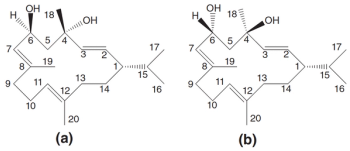
The study of the thermal behaviour and pyrolysis products of these terpenoids could possibly suggest flavour precursors that could be used to provide specific flavours to tobacco.


A GC–MS method, coupled with magnetic SPE with multi-walled carbon-nanotube (MWCNT)-coated iron oxide as the adsorbent, was developed for analyzing organophosphate esters in environmental water samples.

The study of the thermal behavior and pyrolysis products of these terpenoids could possibly suggest flavor precursors that could be used to provide specific flavors.

This study demonstrates the analysis of live chemical warfare agents and simulants at trace and higher levels.

Understanding the design and operation of a quadrupole mass analyzer can help you plan, optimize, and troubleshoot analytical methods.

Analysis of polyaromatic hydrocarbons (PAHs) in air demonstrates that a TD–GC–MS system can operate with hydrogen carrier gas as well as it does with helium.

QuEChERS has been updated to suit modern instrumentation. Now also “efficient and robust,” QuEChERSER is a “mega-method” that covers a wider polarity range.

This novel gas chromatography (GC)–MS approach enables analysis of the suspected mutagens bis(pinacolato)diboron (BPD) and tetrahydroxydiboron (BBA) found at low-levels in certain intermediates and active pharmaceutical ingredients (APIs), even in the presence of boron from other sources.

In this month’s blog, we provide information about the Subdivision on Chromatography and Separations Chemistry (SCSC) of the Analytical Division of the American Chemical Society (ACS), sharing our main goals and introducing our newly appointed executive board members.

Columns: Column Watch
This study illustrates the importance of column selection during GC method development.

In 2015, the American Chemical Society’s Committee on Professional Training added a requirement to the ACS degree certification program that undergraduates learn about macromolecules, supramolecular aggregates, and nanomaterials (MSN). This requirement can be met by a specialized course in these topics, but many programs are also choosing the distribute these topics across the curriculum.

HS-SPME-GC–MS was combined with OPLS-DA data analysis to tentatively identify eight chemical markers to differentiate the geographical origins of cigar leaf samples.

Decomposing animal tissue releases volatile organic compounds (VOCs), of interest in forensic science. We describe the use of GC×GC–qMS/FID retrofitted with a reverse fill/flush (RFF) flow modulator for analyzing these VOCs in a tropical climate.

Pyrolysis–gas chromatography–mass spectrometry has advantages for the analysis of environmental microplastic samples compared to other leading analytical methods, including spectroscopic techniques.

This article looks at the benefits of combining dynamic headspace sampling (DHS) with capillary GC–TOF-MS as a tool for untargeted analysis of aroma compounds in food and beverages. Applications for the analysis of strawberry yoghurt, chocolate, and red wine are described.

“GC Connections” presents the column’s annual review of new developments in the field of gas chromatography seen at Pittcon and other venues in the past 12 months.

A novel analysis technique has been developed for the determination of microplastics (MPs) in complex environmental samples using thermal extraction desorption gas chromatography–mass spectrometry (TED-GC–MS).
Mass spectrometry (MS) is the most powerful detector available for gas chromatography (GC). This article reviews the fundamentals of MS/MS and how they relate to MS as a detector for GC, then examines scenarios where use of GC–MS/MS can solve complex problems.
By moving from GC–MS to GC–MS/MS, you can have both universal and selective detection along with low detection limits. Here’s how it works.

Laura McGregor, Stefan Koschinski, and Elinor Hughes, SepSolve Analytical Assessing aroma profiles with high-capacity sorptive extraction combined with GC×GC–TOF-MS and powerful data mining software.

The Column spoke to Martin Giera of Leiden University Medical Center about his innovative research using GC–MS in bioanalysis applications.