


An introduction to this special issue by our guest editor.
An introduction to this special issue by our guest editor.

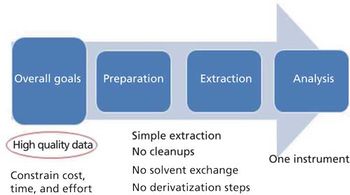
A comprehensive monitoring protocol has been developed using GC–MS/ECD in selective ion monitoring (SIM) mode, with injection performed by solid-phase microextraction (SPME) and headspace (HS). This single system has been configured to analyze for all taste and odor (T&O) compounds in Standard Method 2170, with minimal changing of columns, injectors, or SPME fibers between methods.

A panel discussion on the latest advances and future developments in gas chromatography mass spectrometry (GC–MS).

In the present research, similar chromatography fingerprints were obtained using finely-tuned cryogenic-modulation (CM) and flow-modulation (FM) comprehensive two-dimensional gas chromatography–mass spectrometry (GC×GC–MS) experimental conditions.
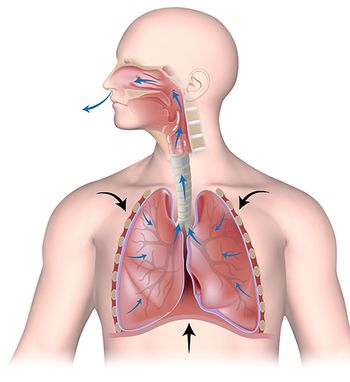
Biomarker studies using exhaled breath are rapidly emerging as a technique for early disease detection and precision medicine. By offering a completely non-invasive experience for patients as an alternative to painful biopsy procedures. A new approach has the potential to enhance patient compliance, while making clinical workflows simpler. Exhaled breath analysis, however, requires a highly sensitive analytical technique capable of accurately measuring the broad range of volatiles present in breath. In this article, we present a proof-of-concept study to demonstrate a reliable and sensitive method to detect analytes in breath samples. Using high‑resolution accurate mass (HRAM) mass spectrometry (MS), the method validates how low- and high-abundance biomarkers can be quantified from exhaled breath.
In gas chromatography, heating the sample in the inlet can lead to sample losses and loss of quantitative reproducibility, but these problems can be avoided using cold sample introduction. This article describes various types of cold injection and how they can benefit the analyst.

The Column
PCDDs, PCDFs, and PCBs are toxic compounds categorized as POPs and are ubiquitous throughout the world. Detecting trace levels of PCDD and PCDF is important to monitor food supplies and to ensure industrial emissions meet regulatory standards. In line with the ongoing innovation in dioxin analysis technology, the US EPA is currently evaluating a new method-APGC–MS/MS-for PCDD and PCDF confirmatory analysis. Joe Romano and Douglas Stevens from Waters Corporation discuss the benefits of this new method.

The Column
The Column spoke to Nelson Roberto Antoniosi Filho, a professor at the Chemistry Institute of the Federal University of Goiás (UFG), in Goiânia, Brazil, about his development of a gas chromatography–mass spectrometry (GC–MS) method for cancer diagnosis using cerumen.
LCGC Europe
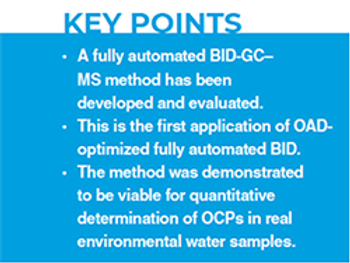
In this study, the intentional incorporation of an air bubble into a solvent droplet is proposed for fully automated bubble-in-drop microextraction–gas chromatography–mass spectrometric (BID-GC–MS) analysis of selected organochlorine pesticides as model analytes.

LCGC Asia Pacific
In this study, chemicals extracted from a food packaging plastic film with a series of organic solvents were tentatively identified with comprehensive two-dimensional gas chromatography coupled to time-of-flight mass spectrometry (GC×GC–TOF–MS). A total of 91 compounds were tentatively identified in the film extracts, based on high mass spectral matching with the US National Institute of Standards and Technology (NIST) mass spectral (MS) library.

LCGC Europe
Chemical fingerprinting can provide evidence for quality differences resulting from botanical and geographical origins of primary food ingredients, post-harvest practices, production processes (such as traditional versus industrial processes), and the shelf-life evolution of finished products. This article discusses the strategic role and potential of comprehensive two-dimensional gas chromatography (GC×GC) combined with time-of-flight mass spectrometry (TOF-MS) and pattern recognition using template matching for data processing to unravel the quality traits of high-quality food products. Practical examples dealing with high-quality cocoa and extra-virgin olive oil are described.
LCGC Asia Pacific
Chemical fingerprinting can provide evidence for quality differences resulting from botanical and geographical origins of primary food ingredients, post-harvest practices, production processes (such as traditional versus industrial processes), and the shelf-life evolution of finished products. This article discusses the strategic role and potential of comprehensive two-dimensional gas chromatography (GC×GC) combined with time-of-flight mass spectrometry (TOF-MS) and pattern recognition using template matching for data processing to unravel the quality traits of high-quality food products. Practical examples dealing with high-quality cocoa and extra-virgin olive oil are described.
Special Issues
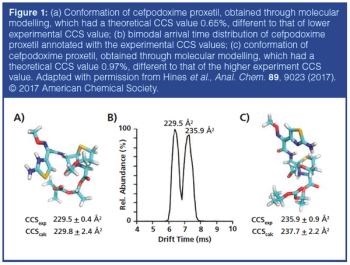
This article reviews the changing role of mass spectrometry (MS) hyphenated to reversed-phase liquid chromatography (LC) and alternative separation techniques in late-stage pharmaceutical development. The impact of the changing portfolios within the pharmaceutical industry is discussed as the industry moves from a traditional small-molecule model to a more diverse portfolio. A new generation of high‑resolution mass spectrometers and ion mobility mass spectrometers operating as orthogonal separation techniques has greatly increased the ability to resolve impurities and increase the level of knowledge gained from a single experiment. The continued impact and innovation of gas chromatographyÐmass spectrometry (GCÐMS) in late-stage development is also discussed.

The Column
Analyzing drugs of abuse (DoA) in human bodily fluids is crucial for clinical research and forensic toxicology. In these routine analyses, a large number of samples must be investigated, with a potentially high laboratory cost for each sample. As such, a reliable and affordable method is required for analysis. In this article, a fast, robust, and reliable method is presented for routine, high-throughput drug screening of urine samples.

LCGC Europe
The chemical analysis of organic compounds in environmental samples is often targeted on predetermined analytes. A major shortcoming of this approach is that it invariably excludes a vast number of compounds of unknown relevance. Nontargeted chemical fingerprinting analysis addresses this problem by including all compounds that generate a relevant signal from a specific analytical platform and so more information about the samples can be obtained. A DHS−TD−GC−MS method for the fingerprinting analysis of mobile VOCs in soil is described and tested in this article. The analysis parameters, sorbent tube, purge volume, trapping temperature, drying of sorbent tube, and oven temperature were optimized through qualitative and semiquantitative analysis. The DHS−TD–GC−MS fingerprints of soil samples from three sites with spruce, oak, or beech were investigated by pixel-based analysis, a nontargeted data analysis method.

The Column
The Column spoke to Ricardo Lopez from the University of Zaragoza, in Spain, about his work characterizing the composition of the vapours from wine during consumption using an automated gas chromatography–mass spectrometry (GC–MS) technique.
The Column
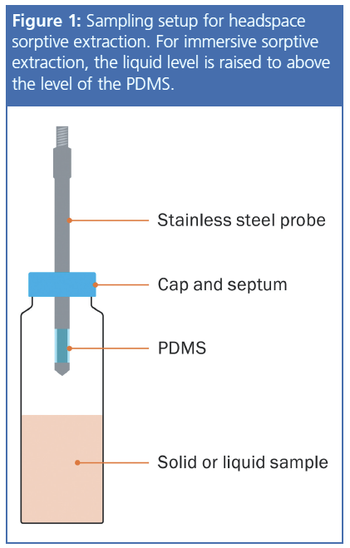
This study describes the analysis of fragranced washing detergent and washing powder using probe-based headspace and immersive sorptive extraction, in conjunction with analysis by thermal desorption–gas chromatography–mass spectrometry (TD–GC–MS). As well as discussing the differences between the two samples, the analyte ranges covered by headspace and immersive sampling are compared.

The chemical messages that animals use to communicate can trigger a range of responses in members of the same species. The Column spoke to Jorge Saiz from the Centre of Metabolomics and Bioanalysis (CEMBIO) at the University San Pablo CEU, Spain, about his research into the chemical secretions of lizards and the role of gas chromatography–tandem mass spectrometry (GC–MS/MS) in his work.
LCGC North America
These five tips could improve your for gas chromatography methods.
Special Issues
The antimicrobial triclosan is present in myriad personal care products, many of which are disposed of down household drains and travel to wastewater treatment plants. This article describes a simple and rapid method for the preparation and extraction of triclosan and methyl triclosan from the complex matrix of biosolids and paper mulch samples followed by analysis using GC–MS/MS.

LCGC Europe
In this study, an empirical assessment of summation integration (using the lowest baseline point in user-defined tR windows) was conducted involving 490 low-pressure GC–MS/MS analyses of 70 pesticides in 10 common fruits and vegetables over the course of 10 days.

LCGC North America
With a simple liquid extraction approach and a short, 13-min GC method, dried blood spots can be analyzed effectively and rapidly. This method demonstrates that dried blood spot cards are an effective technique for toxicological studies.

LCGC North America
We present an empirical assessment of summation integration involving 490 low-pressure GC–MS/MS analyses of 70 pesticides in 10 common fruits and vegetables over the course of 10 days.

Special Issues
As the legalization of medicinal cannabis continues to sweep across the United States, an urgent need has developed for fast, accurate and efficient analytical testing. In addition to testing for contaminants and potency, there is also interest in the determination of terpene identity and concentration levels present in different strains of cannabis. Terpenes have been shown to have therapeutic uses for treatment of different medical conditions ranging from cancer and inflammation, to anxiety and sleeplessness. It is believed that the combination of terpenes and cannabinoids in cannabis produce a synergistic effect with regards to medical benefits. The traditional testing method for terpenes in plant materials involves a solvent-based extraction followed by GC analysis. In this work, headspace solid phase microextraction (HS-SPME) was used to identify and quantify terpene content in cannabis. The HS-SPME method provided several advantages over solvent extraction in that it provided a cleaner analysis, free of interferences from co-extracted matrix, and was non-destructive to the sample. A cannabis sample of unknown origin was first analyzed qualitatively by HS-SPME and GC-MS. Spectral library matching and retention indices were used to identify 42 different terpenes. Quantitative analysis was then performed for several selected terpenes using spiked samples. Method accuracy was >90%, with reproducibility of

Special Issues
In this study, a simple method was used for extraction and concentration of trace organic compounds in water, followed by injection using a coiled wire filament and GC–MS analysis. Common semivolatile organic compound contaminants at low parts-per-billion levels were detected in less than 10 min.