




HILIC
Latest News
Advertisement
Latest Videos
Shorts
0:40
Addressing Persistent, Mobile, and Toxic Compounds
7 months ago
by
Kate Jones
Advertisement
More News

Researchers from Waters and Biospring studied the contribution of nucleotide type and modifications on the retention and resolution of 22–24 nt long oligonucleotides in different chromatographic methods.

Here is some of the most popular content posted on LCGC International this week.
LCGC International spoke with Daniel Meston and Dwight Stoll from Gustavus Adolphus College in St. Peter, Minnesota, USA, about a project they worked on with Todd Maloney from Eli Lilly in Indianapolis, Indiana, USA, to investigate the optimal performance conditions of antisense oligonucleotides (ASOs) when using hydrophilic interaction liquid chromatography (HILIC).
A new review article provides an overview of the use of two-dimensional liquid chromatography (2D-LC) for the quantitative analysis of natural products.
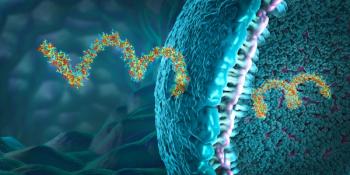
Hydrophilic interaction liquid chromatography (HILIC) has emerged as a promising alternative to traditional ion-pair reversed phase liquid chromatography (IP-RPLC) methods for separating oligonucleotides (ON). This work investigates the application of HILIC to the separation of ON sequence and length variants, duplexes, and single-stranded components.

Paris-Saclay University scientists used hydrophilic interaction liquid chromatography (HILIC) coupled to electrospray ionization mass spectrometry (ESI-MS) and inductively coupled plasma mass spectrometry (ICP-MS) to assess thorium’s interaction with peptides.

New methods have been developed to determine polar emerging contaminants with hydrophilic interaction liquid chromatography (HILIC) techniques.
Here is some of the most popular content posted on LCGC International this week.

Scientists recently studied how different factors affect antisense oligonucleotides (ASOs) under hydrophilic interaction liquid chromatography (HILIC) conditions.

Manitoba Centre for Proteomics and Systems Biology scientists produced a new means of predicting peptide retention times for hydrophilic interaction liquid chromatography (HILIC) at acidic pH in formic-acid based eluents.
Here is some of the most popular content posted on LCGC International this week.
Michael G. Bartlett of the University of Georgia looked at how hydrophilic interaction liquid chromatography (HILIC) has evolved for oligonucleotide analysis in a new article.
Hydrophilic interaction chromatography–mass spectrometry (HILIC-MS) offers a flexible and efficient alternative to ion-pairing reversed-phase liquid chromatography (IP-RPLC) for oligonucleotide analysis, with column selectivity and mobile phase pH being key factors in optimizing retention and detection.
Here is some of the most popular content posted on LCGC International this week.

Soochow University scientists recently reviewed how HILIC breakthroughs have helped with handling glycopeptides and glycans.

Karlstad University scientists modeled pH-dependent retention and competitive adsorption of solutes using mixed-mode and reversed-phase liquid chromatography.
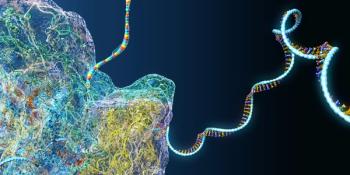
Waters Corporation scientists recently examined how different mobile and stationary phases affect small interfering RNA (siRNA) duplex stability in liquid chromatography.
Here are the top five articles that the editors of LCGC International published this week.
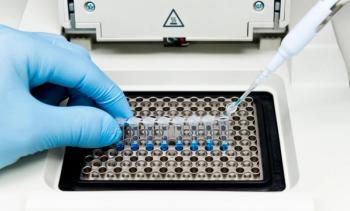
Scientists from the University of Geneva in Geneva, Switzerland and AstraZeneca in Mölndal analyzed how HILIC is related to the connections between oligonucleotide structures and diastereomer separation.

University of Tübingen scientists recently tested a new approach to hydrophilic-interaction chromatography (HILIC) to address retention time repeatability issues.

In the world of liquid chromatography, innovative strides in column technology continue to take place. We are also reminded that there is always more to learn about “well-known” methodologies, and our craft is continuously influenced by important social concerns.
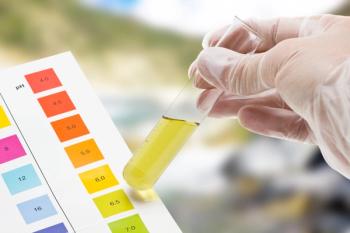
This work focuses on the effects of the mobile phase pH and the counterion concentration in buffer solution on retention in hydrophilic interaction liquid chromatography (HILIC) mode.

LCGC’s Senior Technical Editor uses artificial intelligence (AI) platform ChatGPT to answer questions about the role of AI in separation science. Do you agree with ChatGPT?
Here are the top five articles that the editors of LCGC International published this week.

This article covers liquid chromatography columns and accessories commercially released after Pittcon 2023 through the 2024 conference.
Advertisement
Advertisement
Trending on LCGC International
1
What Determines a Best-in-Class Antibody Drug Conjugate
2
HILIC vs Reversed-Phase LC for Central Carbon Metabolism Profiling
3
Framing the Evolving Bioconjugate Landscape
4
Industry Roundup: AnalytiChem Launches Complete CONOSTAN Standards Range for ASTM D3606 Benzene/Toluene Testing
5