






Ion Chromatography
Latest News
Advertisement
Latest Videos




Advertisement
More News

A new approach for purifying immunoglobulin-based therapies was created by Pfizer researchers.

Ink authentication is often complicated by tampering, aging, and chemical variability. Now, forensic scientists are turning to advanced gas chromatography (GC) techniques to enhance the accuracy and efficiency of ink analysis.

Universitat de Barcelona researchers have developed a new method for characterizing solute-solvent interactions in electrokinetic systems.

The components of explosive devices can be difficult to characterize, whether pre- or post-blast. To rectify this, two-dimensional liquid chromatography was tested as a means of analyzing these compounds.

Countercurrent chromatography systems were tested and combined to optimize their capacity for handling non-polar and polar substances.

To create a technique suited for analyzing proanthocyanidins and their properties, scientists combined high-speed countercurrent chromatography (HSCCC) and electrospray ionization–tandem mass spectrometry (ESI–MS/MS).

Recently, we spoke with Esther Olonimoyo from the University of Maryland, who recently published a study using high-performance liquid chromatography to analyze short chain fatty acids.
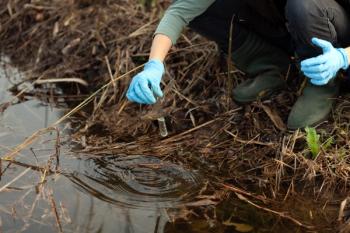
In a new study, researchers explored a new approach for detecting pesticide residues in water samples, based around ionic liquid-based dispersive liquid–liquid microextraction (IL-DLLME).

Environmental polycyclic aromatic hydrocarbons can prove dangerous if metabolites enter human systems. A new gas chromatography-based approach was developed to analyze the hydroxy derivatives in wastewater samples.
Discover a novel GC-based method for accurately analyzing organic carbonates in lithium-ion batteries without the need for complex calibrations.

A new separation platform based on chromatographic techniques was used to characterize algae hydrocolloids.

Researchers from Waters and Biospring studied the contribution of nucleotide type and modifications on the retention and resolution of 22–24 nt long oligonucleotides in different chromatographic methods.

Shea kernels contain bioactive secondary metabolites that can offer potential health benefits. Researchers aimed to learn more about these substances.

This review highlights the high performance liquid chromatography (HPLC), mass spectrometry (MS), chromatography data systems (CDS), and related products that were introduced from 2024 to 2025, summarizing the technical specifications of each product and highlighting significant user benefits.
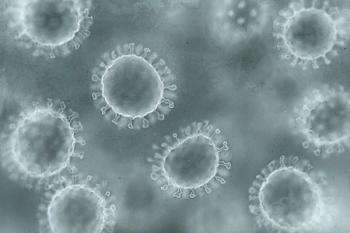
HIV-based virus-like particles can be difficult to characterize in samples. Recently, researchers from institutions in Germany enhanced anion-exchange chromatography procedures to better detect and treat these substances.

Here is some of the most popular content posted on LCGC International this week.

A new paper presents the design of a needle-plate dielectric barrier discharge DBD ion source based on 3D printing for high field asymmetric-waveform ion-mobility spectrometry (FAIMS).
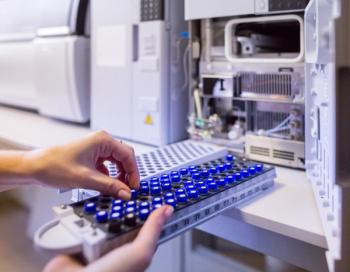
In this month's edition of LC Troubleshooting, Dwight Stoll and his fellow researchers discuss both the benefits (improved peak shape/loading) and challenges (excessive interaction) associated with charge-doped reversed-phase (RP) columns for both analytical and preparative separations.

Mass spectrometry (MS) can be effective in identifying unknown compounds, though this can be complicated if spectra is outside of known databases. Researchers aimed to test MS databases using electron–ionization (EI)–MS.
Here is some of the most popular content posted on LCGC International this week.

Ion mobility spectrometers can detect trace compounds quickly, though they can face various issues with detecting certain peaks. University of Hannover scientists created a new system for resolving hyper-fast gas chromatography (GC) peaks.

Bacteriophages are vital for addressing antibiotic-resistant bacteria, though phage therapies are currently rare. University of Lisbon researchers recently created a new purification workflow to address these concerns.
In this month's edition of The LCGC Blog, Andre Striegel discusses where macromolecular scientists around the world can convene and share their insights.

A team of scientists from the Paris university developed and optimized MAVERIC, a miniaturized and autonomous gas chromatography (GC) system coupled to a nano-gravimetric detector (NGD) based on a NEMS (nano-electromechanical-system) resonator.
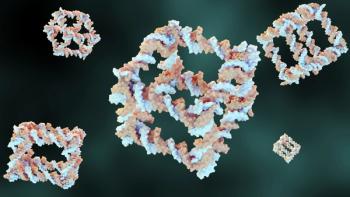
A team of researchers from Waters Corporation, led by Szabolcs Fekete, tested a new approach for separating oligonucleotides.
Advertisement
Advertisement