




A new review article provides an overview of the use of two-dimensional liquid chromatography (2D-LC) for the quantitative analysis of natural products.
A new review article provides an overview of the use of two-dimensional liquid chromatography (2D-LC) for the quantitative analysis of natural products.

Here is some of the most popular content posted on LCGC International this week.

In the final section of our interview with Christopher Pohl, he imparts knowledge to the next generation of aspiring separation scientists.
In this penultimate section of our interview with Christopher Pohl, he reflects on the history of chromatography, sharing what he deems the most important moments in the field.
In this third part of our interview with Christopher Pohl, he tells us about his most treasured accomplishments from throughout his storied career.
In this second part of our interview with Christopher Pohl, we learn about the mentors Pohl turned to throughout his career, and the important teachings he took from them.

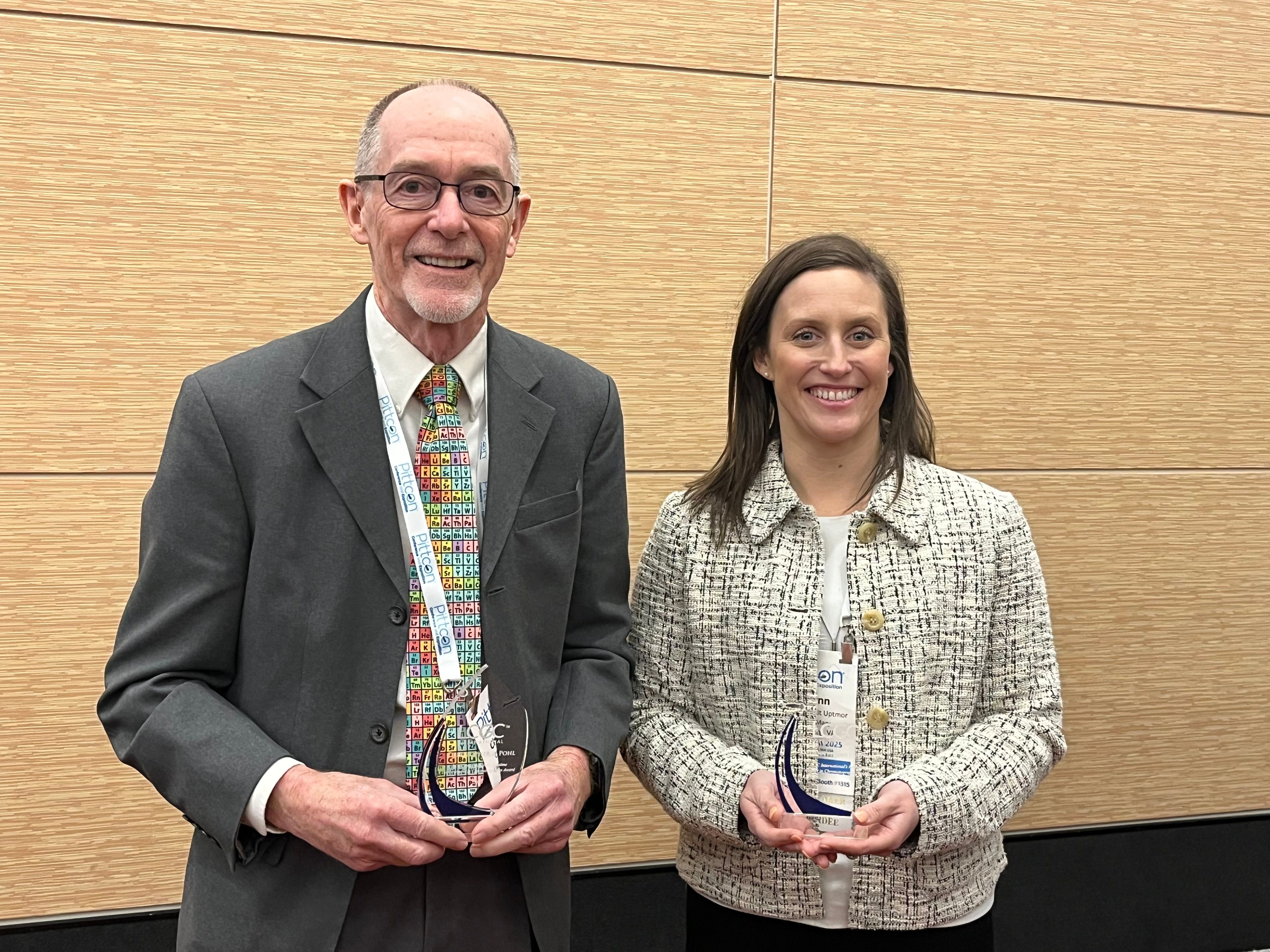
In this first part of our interview with Christopher Pohl, he discusses the 2025 LCGC Lifetime Achievement Award, and what this means to him.

Paris-Saclay University scientists used hydrophilic interaction liquid chromatography (HILIC) coupled to electrospray ionization mass spectrometry (ESI-MS) and inductively coupled plasma mass spectrometry (ICP-MS) to assess thorium’s interaction with peptides.

Ion chromatography can be utilized in various ways to analyze halogens and similar substances within inorganic matrices.

Scientists from the Henan Academy of Sciences recently developed a new technique for the determination of hydroxyl polycyclic aromatic hydrocarbons (OH-PAHs) from urine.

Scientists from the National Institutes for Food and Drug Control have characterized antibody-drug conjugates (ADCs) using various mass spectrometry (MS)-based techniques.

Scientists at the Indian Institute of Technology Delhi recently created a new machine learning (ML)-based tool for process verification during process chromatography unit operations.

Jiangsu Police Institute scientists recently created a solid-phase microextraction (SPME)-based method for determining amphetamine-type stimulants.

This article highlights a curated selection of the most popular GC-related content, with a focus on the diverse applications of the technique, as featured in LCGC.

Organic solvents are generally not compatible with ion chromatography (IC) systems. The approach presented here assists the use of organic solvents for sample preparation and provides a mechanism for the removal of the organic solvents from the chromatographic flow path.

This installment of Tips & Tricks focuses on the determination of the molar mass using a light scattering detector as an absolute detection method.

During EAS 2024, Jay Sheffer, a Product Specialist at Metrohm USA, discussed how combustion ion chromatography (CIC) can help address PFAS’ impact on the environment.

The method of standard additions (MoSA) enables quantification of volatile impurities in condensed-phase samples, such as emulsions, for which matrix-matched calibration standards are required. The technique is, however, expensive because it requires multiple analyses of each sample.

This article will discuss an ion-pair reversed-phase liquid chromatography mass spectrometry (IP-RPLC–MS) workflow for the characterization of three messenger RNA (mRNA) key critical quality attributes: 5’ Cap, ORF, and poly(A) tail.
Here is some of the most popular content posted on LCGC International this week.
Here is some of the most popular content posted on LCGC International this week.

This review aims to provide a summary of the most current analytical techniques and their applications in per- and polyfluoroalkyl substances (PFAS) research, contributing to the ongoing efforts to monitor and mitigate PFAS contamination.

Hydrophilic interaction chromatography–mass spectrometry (HILIC-MS) offers a flexible and efficient alternative to ion-pairing reversed-phase liquid chromatography (IP-RPLC) for oligonucleotide analysis, with column selectivity and mobile phase pH being key factors in optimizing retention and detection.

Scientists from Institut de Combustion, Aérothermique, Réactivité et Environnement (ICARE-CNRS) in Orléans, France and Chromatotec in Saint-Antoine, France recently created a new algorithm for detecting volatile organic compounds (VOCs) in ambient air.
Here is some of the most popular content posted on LCGC International this week.