




A recent study looks at wastewater generated by power plants, using large-volume injection ion chromatography to accurately assess corrosive anions and cations in wastewater.
A recent study looks at wastewater generated by power plants, using large-volume injection ion chromatography to accurately assess corrosive anions and cations in wastewater.

The advantages of a native anion exchange method coupled to mass spectrometry for charge heterogeneity analysis of immunoglobulin G4 (IgG4)-based mAbs are described.

At Pittcon 2024, He Nan of AbbVie gave a lecture on how to monitor N-nitrosamines via gas chromatography–electron capture detection.
The new technology can be used by analytical scientists working in a variety of industries including food and beverage, oil and gas, and more.

Scientists from Western Michigan University tested how amino acids can affect protein stability during electrothermal supercharging.
Scientists from Washington and Connecticut have created a new system to detect epithelial ovarian cancer (EOC).

Scientists recently used laser desorption ionization mass spectrometry (LDI-MS) to detect toxic alkaloids in traditional Chinese medicines (TCM).
A group of scientists recently analyzed the metabolomics of individual cells using a pneumatically assisted (PA) nanospray desorption electrospray ionization (nano-DESI) probe of their own creation.
A group of scientists created a minireview of the versatile nature of ion mobility–mass spectrometry (IM–MS), and how the technique can be used in different scenarios.

A group of scientists from the Luxembourg Institute of Science and Technology (LIST) tested different methods of using matrix-assisted laser desorption/ionization (MALDI) mass spectrometry imaging (MSI) to analyze human skin cells.

Scientists from the University of Maryland have created a system to analyze changes in a brain’s chief circadian pacemaker.

Researchers in Tianjin, China, have employed all ion unfolding–ion mobility–mass spectrometry (AIU–IM–MS) to enhance the differentiation of therapeutic polyclonal antibodies, offering insights into improvements in conformational stability and advantages in cost-effectiveness.
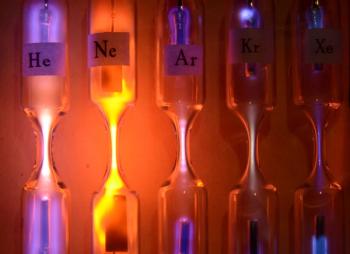
A molecular dynamics trajectory approach was shown by a research team to improve ion mobility predictions with deviations of mere percentage points from experimental values.

Liquid chromatography (LC) is a platform technology amenable to portable and “at-site” or deployable applications. This has awoken end-users to new possibilities and potential cost savings and process improvements.

Researchers from the University of Poitiers and CNES have developed a groundbreaking gas chromatography method, detailed in the journal Chemosensors, which enables the detection of amino acid-like compounds on Mars, offering a vital tool in the quest for extraterrestrial life.

The 27th International Symposium on Separation Sciences (ISSS 2023) will be held 24–27 September 2023 in Cluj-Napoca, Romania. Here’s a sneak preview of what attendees can look forwards to.
Researchers from the University of Washington have begun testing a new system to fight antimicrobial resistance by combining liquid chromatography (LC) with ion mobility (IM) separation.

This instalment of “Column Watch” presents many of the highlighted topics and trends observed at this exceptionally well-run symposium.

To further understand what role ion chromatography (IC) plays in urine analysis, scientists investigated urine pretreatment techniques and how IC systems are designed and developed to measure various chemicals.
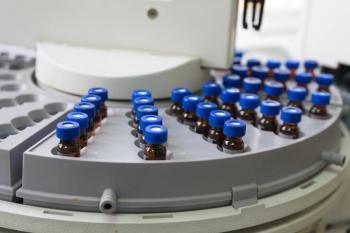
This instalment explores the challenges involved in detecting the effluent from a capillary gas chromatographic column and summarizes the many detector options.

Bjorn Berendsen of Wageningen University & Research said at NACRW 2023 that among more than 6,000 suspected per- and polyfluoroalkyl substances (PFAS), detailed information is known about relatively few.

Researchers compare the separation efficiency of olefins and paraffins using stationary phases containing silver(I) ions in ionic liquid (IL) and polymeric ionic liquid (PIL) matrices for gas chromatography techniques.

Researchers have introduced a novel primary method utilizing gas chromatography–isotope dilution infrared spectrometry (GC–IDIR) for accurate peptide purity analysis.
A new method for automatic z-axis correction during mass spectrometry imaging of uneven surfaces has been developed, allowing for accurate molecular analysis of complex samples. This advancement enhances the reliability and reproducibility of mass spectrometry imaging, enabling researchers to visualize the spatial distribution of molecules in challenging samples with uneven topographies.

Scientists from the Pacific Northwest National Laboratory are using high-resolution ion mobility spectrometry-mass spectrometry to identify unknown compounds.